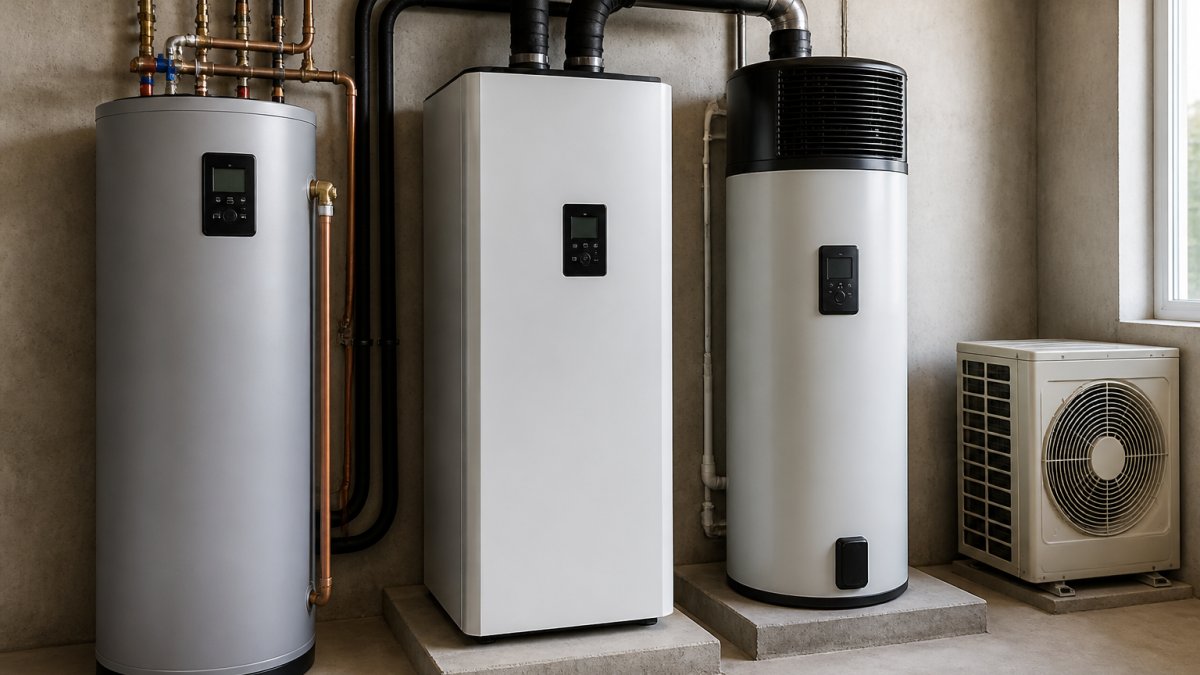
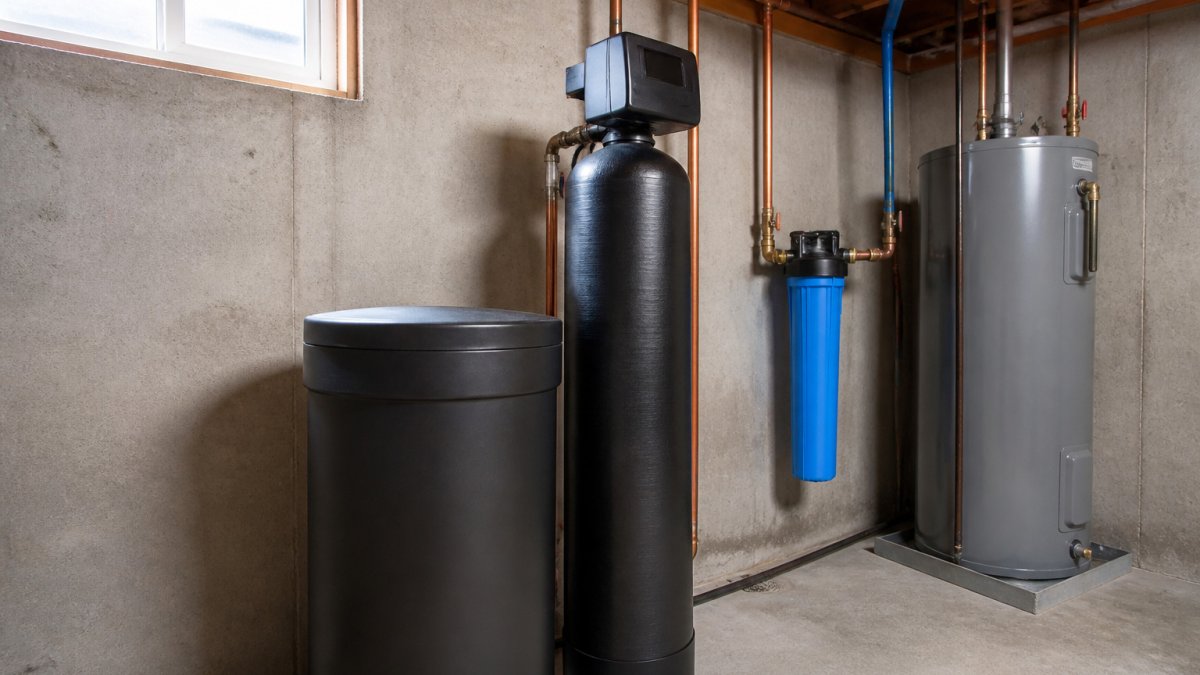
 comparison
Are Salt-Free Water Conditioners Worth It?
Last Updated: October 30, 2026
Quick Summary
Salt-free water conditioning is worth it if your main problem is scale on water heaters and fixtures and you want no salt or brine. It does not soften water or remove hardness minerals, so soap lather and shower feel usually stay the same.
- Salt-free conditioners reduce scale but leave calcium and magnesium in the water.
- They use no salt and discharge no brine, and need no regeneration cycle.
- Media must be replaced on schedule, and the replacement interval varies by model.
- Choose a salt-based softener if you want soft water for soap and laundry.
- Test your water first and size the unit to your peak flow rate.
Table of Contents
- What Salt-Free Water Conditioning Actually Does
- How Salt-Free Water Conditioners Work
- Does a Salt-Free Water Conditioner Soften Water?
- Salt-Free Water Conditioner vs Water Softener: Key Differences
- Key Benefits: Scale Control, Plumbing, and Appliances
- Salt-Free Water Conditioner Pros and Cons
- Total Cost, Maintenance, and Environmental Considerations
- Choosing the Right System for Your Home and Testing Results
- Frequently Asked Questions
Hard water quietly drains money from American homes. It leaves white scale in water heaters, clogs showerheads and coats fixtures in a film you can see. Homeowners who want relief often hear about salt-free water conditioning systems first, and for good reason: they promise scale control without the salt bags and brine tank.
Here is the short version. Salt-free conditioners target scale. They do not remove the calcium and magnesium that cause hardness. That distinction drives almost every decision about them.
What Salt-Free Water Conditioning Actually Does
A salt-free water conditioner is a device that changes how hardness minerals behave in your pipes, without removing them. Most units do this with a media that alters the crystal structure of calcium and magnesium so they are less likely to stick to surfaces.
The result is less scale on heating elements and fixtures. The minerals still pass through your home. Many homeowners find this trade-off acceptable, but it is not the same as softened water.
How Salt-Free Water Conditioners Work
Most salt-free systems rely on template-assisted crystallization or a similar media technology. Hardness minerals pass through the media and form microscopic crystals that stay suspended in the water instead of bonding to pipes and appliances.
Units typically sit on the main supply line. Water flows through a tank or cartridge, and no regeneration cycle is needed. The media is replaced on a schedule rather than recharged with salt. Check the manufacturer's replacement interval for your specific model, because it varies.
Does a Salt-Free Water Conditioner Soften Water?
No, not in the strict sense. Softening means removing calcium and magnesium ions, which is what a salt-based ion exchange softener does. A salt-free conditioner leaves those minerals in the water and works to prevent them from forming scale.
This matters if you are hoping for the silky feel of soft water in the shower or fewer soap curds on dishes. Those effects come from removing hardness, and conditioning does not remove it. Set expectations accordingly before you buy.
Salt-Free Water Conditioner vs Water Softener: Key Differences
The core difference is mechanism. A salt-based water softener uses ion exchange: water passes through a resin bed where calcium and magnesium ions swap places with sodium or potassium ions. The hardness minerals leave the water. A salt-free conditioner leaves calcium and magnesium in the water and changes how they behave so they are less likely to deposit as scale.
That single difference drives everything else, the feel of the water, the soap performance, the maintenance routine, and the environmental footprint. Here is how the two compare in practice:
| Factor | Salt-Free Conditioner | Salt-Based Softener |
|---|---|---|
| Removes hardness minerals | No | Yes |
| Uses salt | No | Yes, for regeneration |
| Discharges brine | No | Yes, during regeneration |
| Regeneration cycle | None | Periodic, typically timed or demand-initiated |
| Maintenance | Media replacement on schedule | Salt refills plus periodic resin and equipment service |
| Water feel | Unchanged hardness; scale reduction only | Softened, often described as silkier |
| Soap and detergent performance | Minimal change | Noticeably better lather and rinsing |
| Sodium added to water | None | Yes, in small amounts |
| Best for | Scale control with low upkeep | Genuinely soft water and soap performance |
If your goal is fewer spots on glassware and less scale in the water heater, a salt-free conditioner can deliver that. If your goal is soft water for shower feel, laundry, and soap lather, only ion exchange removes the hardness minerals.
Matching the technology to the outcome you actually want is the single most important decision.
What "Conditioning" Really Means
Conditioning is a broad term. In the salt-free category it usually means template-assisted crystallization or a similar media that encourages hardness minerals to form microscopic crystals that stay suspended rather than sticking to pipe walls and heating elements. The water is still hard by any standard hardness test, it just scales less.
Softening, by contrast, is a measurable removal of hardness. A softener removes hardness through ion exchange, while a conditioner does not remove hardness.
When Each System Makes Sense
- Choose salt-free conditioning if scale is your main complaint, you want no salt bags and no brine discharge, and you are comfortable with hardness minerals staying in the water.
- Choose a salt-based softener if you want soft water for bathing, laundry, and dishwashing, or if your water is very hard and you want the hardness actually gone.
- Consider both in some homes: a softener for the whole house, or a conditioner on the cold line to the kitchen if you prefer to keep minerals in drinking water.
Water Chemistry Suitability
Neither system performs the same in every home. Hardness level, iron, manganese, sediment, pH, and flow rate all affect results. High iron or sediment can foul salt-free media and shorten its life, and very hard water may overwhelm a conditioner's scale-control capacity. Test your water first, and size the unit to your peak flow rate, not the average.
A salt-free conditioner is not a filter. It does not remove iron, sediment, chlorine, or contaminants. If those are present, pretreatment or a different treatment train may be needed before either a conditioner or a softener will perform as expected.
Key Benefits: Scale Control, Plumbing, and Appliances
The main benefit is scale control. Less scale can help water heaters and tankless units run more efficiently, and fixtures may stay cleaner longer.
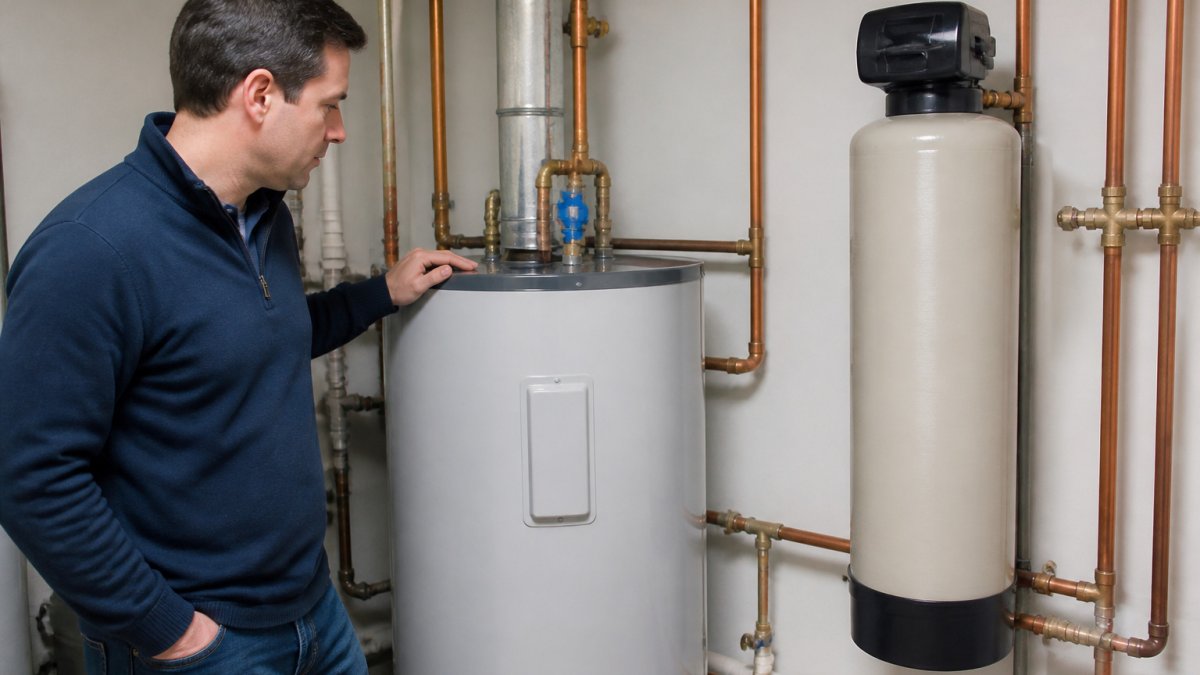
Homeowners with hard water may see fewer spots on glassware and less buildup in faucet aerators. Scale can narrow pipe bores over time.
Scale Reduction and Mineral Retention
Scale reduction is the goal, and mineral retention is the trade-off. Because calcium and magnesium stay in the water, you keep whatever natural minerals your water contains. Some people prefer that, especially if they drink from the tap.
Verify performance rather than relying on marketing. Ask manufacturers for details on their test conditions, and where possible, check the system against your own water hardness results after installation.
Salt-Free Water Conditioner Pros and Cons
Pros:
- No salt to buy or refill
- No brine discharge into the wastewater system
- No water wasted on regeneration cycles
- Low maintenance day to day
- Keeps beneficial minerals in the water
Cons:
- Does not soften water or remove hardness
- Soap lather, shower feel and spotting may not change much
- Performance depends on your water chemistry and flow rate
- Media must be replaced on schedule
Watch out: A salt-free unit that is undersized for your flow rate will underperform. Confirm the rated flow before you buy.
Total Cost, Maintenance, and Environmental Considerations
Salt-free systems are usually marketed on low operating cost, and that is fair, but "low operating cost" is not the same as "low total cost." A useful way to compare is total cost of ownership over a defined period, including purchase, installation, media replacement, and any pretreatment.
What Drives the Purchase Price
Salt-free conditioner pricing varies widely with capacity, brand, and installation complexity. A point-of-entry unit sized for a typical single-family home generally costs more than a point-of-use cartridge, and installation can add significantly if the main line needs modification, a bypass loop, or a dedicated electrical outlet. Because these figures move with the market and with each home's plumbing, ask for a written estimate that itemizes the unit, installation labor, permits if required, and the first media replacement.
Ongoing Costs to Budget For
- Media replacement. This is the main recurring expense. Replacement intervals vary by manufacturer and by water chemistry. Confirm the recommended interval for your specific model and price the replacement media before you buy.
- Pretreatment. If your water has iron, sediment, or high chlorine, you may need a sediment filter or carbon filter ahead of the conditioner. That adds both upfront and replacement-filter cost.
- Service and inspection. Even low-maintenance systems benefit from periodic inspection of fittings, bypass valves, and flow rates.
- No salt, no regeneration water. This is where salt-free systems save: no salt bags, no brine tank, and no water sent to drain during regeneration.
How That Compares to a Salt-Based Softener
A softener's recurring costs are salt and the water used during regeneration, plus periodic resin or equipment service. Salt-free systems trade those for media replacement. Which is cheaper over ten years depends on your water hardness, household water use, local salt prices, and the media interval for the unit you choose. The comparison is not universal, it is household-specific, which is why a written total-cost estimate beats a marketing claim.
Ask three questions before buying: What is the media replacement interval and cost? What pretreatment does my water require? What is the total five-year cost including installation? The answers separate a good fit from an expensive mistake.
Environmental Considerations
The environmental case for salt-free systems is real but should be stated precisely. Salt-based softeners discharge brine to the wastewater system during regeneration, and many communities have raised concerns about chloride loading in rivers and groundwater.
They are not impact-free, however. They use some energy, and the spent media must be disposed of according to local rules when replaced. Weigh the brine savings against media waste and the manufacturing footprint of the unit itself.
Health and Skin Claims: What the Evidence Supports
Salt-free conditioners do not remove hardness minerals, so they are not designed to produce the softer feel, silkier hair, or better soap lather associated with softened water. Mineral retention is a genuine difference: calcium and magnesium stay in the water, and some homeowners prefer that for drinking water.
Choosing the Right System for Your Home and Testing Results
Start with your goal. If you want scale control and minimal upkeep, a salt-free conditioner may suit you. If you want softened water for soap performance or a feel closer to soft water, a salt-based softener is the better match.
Test your water before and after installation. A hardness test shows what you are treating, and a follow-up test confirms whether the system is working.
Frequently Asked Questions
What does a salt-free water conditioner do?
A salt-free water conditioner treats hard water without adding salt or removing minerals. Most units use a media to change how calcium and magnesium behave in the water, so they form fewer hard deposits on pipes, water heaters, and fixtures. The minerals stay in the water, so it still contains calcium and magnesium. Its main job is scale reduction, not softening. Performance depends on your water hardness, flow rate, and the specific system, so test your water and compare product specifications before buying.
Does a salt-free water conditioner actually soften water?
Not in the strict sense. A water softener removes calcium and magnesium through ion exchange, which makes the water soft to the touch and improves soap lather. A salt-free water conditioner leaves those minerals in the water and changes their structure so they are less likely to stick to surfaces. Some people notice less scale, but the water is not softened in the technical sense. If soft water feel is your priority, a salt-based softener is the better fit.
Do salt-free water conditioners remove hard-water minerals?
No. Salt-free conditioners are designed to keep calcium and magnesium in the water while reducing scale buildup. Because the minerals remain, you still get the mineral content in drinking and bathing water. Some people prefer this, and it means the system does not add sodium to your water. Product claims such as scale prevention percentages come from manufacturers, so ask for test conditions and independent verification before relying on them.
How does a salt-free water conditioner compare with a traditional water softener?
A traditional water softener uses salt to remove hardness minerals, which gives soft water and better soap performance but adds sodium and produces brine discharge. A salt-free conditioner needs no salt, produces no brine, and keeps minerals in the water, but it does not soften water. Maintenance differs too: softeners need salt refills, while conditioners need media replacement on a schedule set by the manufacturer. Choose based on whether you want soft water or scale control with mineral retention.
Ready to find out what your water needs? Book your water conditioning assessment with England's Plumbing & Heating today, and get a clear recommendation for your home.