 listicle
Best Water Conditioning Systems 2026: Top 8 Picks
Table of Contents
- Quick Comparison: Best Water Conditioning Systems for 2026
- How We Evaluated These Water Conditioning Systems
- 1. SpringWell SS: Best Overall for Hardness Removal
- 2. SoftPro Elite: Best High-Efficiency Salt-Based System
- 3. Whirlpool WHES40E: Best Budget-Friendly Softener
- 4. Fleck 5600SXT: Best for Long-Term Durability and Serviceability
- 5. Yarna Capacitive Water Descaler: Best Salt-Free Option for Renters
- 6. Watts Premier OneFlow: Best Eco-Friendly Scale Prevention
- Understanding Water Hardness Levels Before You Buy
- Installation and Maintenance Requirements
- Long-Term Total Cost of Ownership
- Water Conditioning System Installation Cost: What to Expect
- Frequently Asked Questions
Last Updated: September 15, 2026
Quick Comparison: Best Water Conditioning Systems for 2026
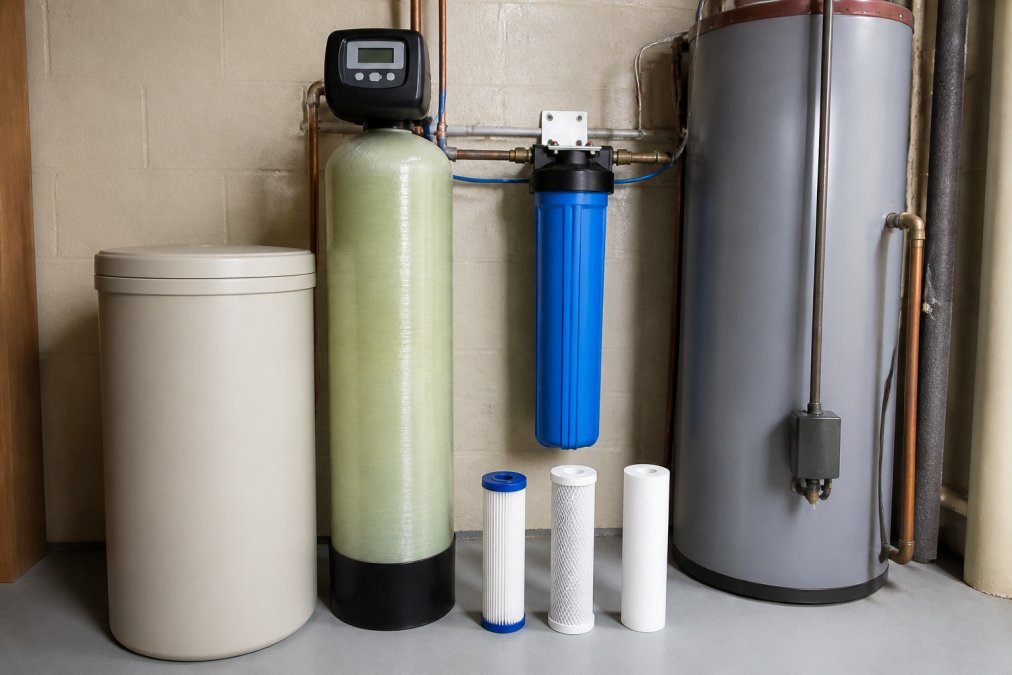
The best water conditioning systems 2026 buyers choose fall into two camps: salt-based ion exchange softeners that remove calcium and magnesium, and salt-free conditioners that prevent scale without changing water chemistry. The right pick depends on your water hardness, household size, and water source.
Here's the quick verdict before the details:
| System | Type | Best For | Starting Price |
|---|---|---|---|
| SpringWell SS | Salt-based ion exchange | Whole-house hardness removal | Contact for pricing |
| SoftPro Elite | High-efficiency salt-based | Lower salt and water waste | Contact for pricing |
| Whirlpool WHES40E | Salt-based, 40,000 grain | Budget households up to 5 people | $500 - $800 |
| Fleck 5600SXT | Salt-based, serviceable | Long-term durability | $700 - $1,200 |
| Yarna Capacitive Descaler | Salt-free electronic | Renters, no-maintenance setups | $300 |
| Watts Premier OneFlow | Salt-free TAC | Eco-friendly scale prevention | Contact for pricing |
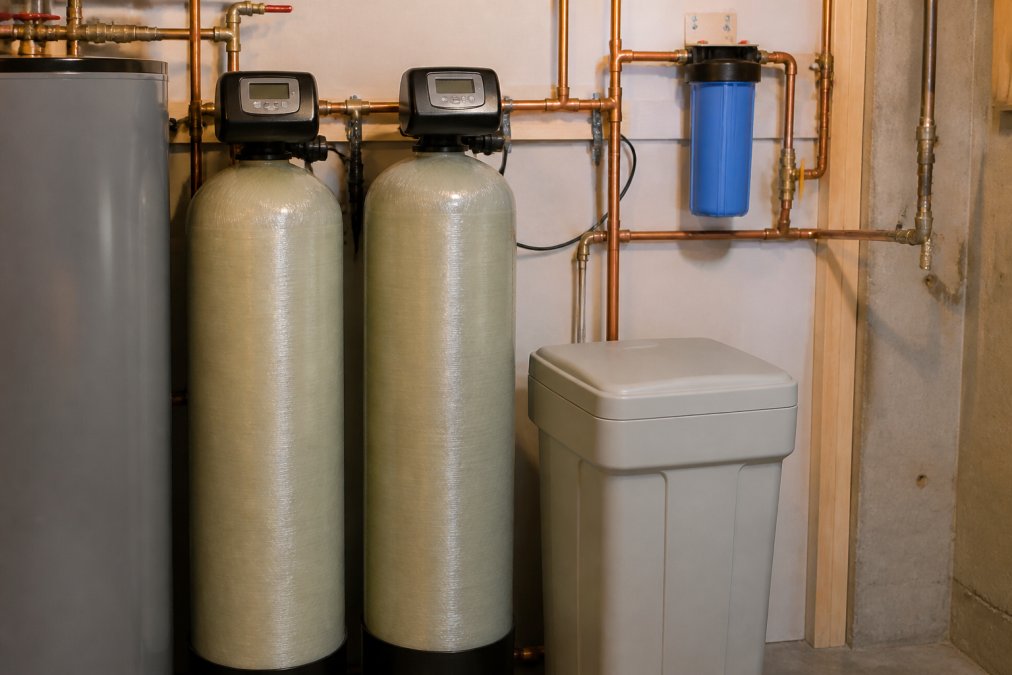
How We Evaluated These Water Conditioning Systems
We scored each system on hardness removal, grain capacity relative to household size, flow rate, serviceability, and long-term total cost of ownership. A water conditioning system manages hardness minerals, either by removing them through ion exchange or by altering how they crystallize to prevent scale.
The key number is grain capacity, which determines how much hardness a softener removes before regenerating. Undersize it and you'll regenerate constantly, wasting salt and water; oversize it and you've paid for unused capacity.
1. SpringWell SS: Best Overall for Hardness Removal
The SpringWell SS is our top pick for whole-house hardness removal because it pairs a high-efficiency electronic control head with a large resin bed that maintains strong flow rate even during peak demand. According to the Water Quality Association's guidance on ion exchange, salt-based softeners remain the most effective method for removing calcium and magnesium, and the SS delivers on that standard.
Key Specs and Performance
- Reduces water hardness by up to 97.5%
- Advanced electronic head for efficient regeneration cycles
- High flow rate capacity that maintains household water pressure
- Durable construction built for long-term reliability
Pros and Cons
Pros: Industry-leading hardness removal efficiency and durable construction.
Cons: Requires regular salt replenishment.
For most Chester County homes on well water, this is the system we'd install first. If you're weighing water softener vs water conditioner, the SS is firmly in the softener camp: it removes minerals rather than just preventing scale.
2. SoftPro Elite: Best High-Efficiency Salt-Based System
SoftPro Elite targets homeowners who want softening performance without the salt and water waste of older designs. Its upflow regeneration cuts both salt use and wastewater per cycle.
Key Specs and Performance
- Upflow regeneration to save salt and water
- Digital metered control valve for precise operation
- Includes a bypass valve for easy maintenance
- Advanced digital monitoring of system status
Pros and Cons
Pros: Lower operating costs and detailed digital monitoring.
Cons: Higher initial investment than budget models.
3. Whirlpool WHES40E: Best Budget-Friendly Softener
The Whirlpool WHES40E suits budget-conscious households of up to five people. Its 40,000-grain capacity and demand-initiated regeneration keep salt use reasonable, and it's NSF certified for hardness reduction.
Key Specs and Performance
- 40,000-grain capacity, sized for up to 5 people
- Demand-initiated regeneration to save salt
- NSF certified for hardness reduction
- Widely available at major retailers
Pros and Cons
Pros: Affordable and easy to find locally for replacement parts.
Cons: Fewer advanced features than professional-grade systems.
4. Fleck 5600SXT: Best for Long-Term Durability and Serviceability
If you plan to keep your softener for 15 years and repair rather than replace it, the Fleck 5600SXT is the one to beat. Its valve has been an industry standard for years, and its mechanical design keeps parts cheap and available.
Key Specs and Performance
- SXT digital controller with backlit display
- Proven mechanical design built for serviceability
- High-capacity resin tank options
- Parts widely available and inexpensive
Pros and Cons
Pros: Reliable mechanical performance and easy repairs.
Cons: Requires more manual setup than smart systems.
Serviceability is the real cost driver: a softener repairable in an afternoon beats a sealed unit that must be replaced entirely.
5. Yarna Capacitive Water Descaler: Best Salt-Free Option for Renters
The Yarna Capacitive Water Descaler suits renters and anyone who wants scale protection without salt, chemicals, or plumbing changes. It uses electromagnetic impulses to stop scale adhering to pipes and fixtures, and installation is genuinely DIY.
Key Specs and Performance
- Chemical-free scale prevention
- Easy DIY installation with no plumbing changes
- Compact design that fits tight spaces
- No salt or maintenance required
Pros and Cons
Pros: No salt, no chemicals, very low maintenance.
Cons: It does not remove minerals, so it does not soften water traditionally.
That limitation matters. If you want slippery-feeling soft water and spot-free dishes, this isn't it. If you want to stop scale buildup in a rental you can't modify, it works.
6. Watts Premier OneFlow: Best Eco-Friendly Scale Prevention
The Watts Premier OneFlow uses Template Assisted Crystallization to treat hard water without salt discharge or backwashing. For homeowners worried about brine entering septic or municipal systems, TAC is the cleaner route.
Key Specs and Performance
- Environmentally friendly scale control
- No electricity or backwashing required
- Retains healthy minerals in the water
- Compact, space-saving design
Pros and Cons
Pros: No wastewater production and a small footprint.
Cons: The cartridge must be replaced periodically, a recurring cost salt-based owners don't face.
According to the EPA's information on septic system care, reducing salt discharge protects both septic systems and local waterways, which is why TAC systems appeal to environmentally minded households.
Understanding Water Hardness Levels Before You Buy
Water hardness is the concentration of dissolved calcium and magnesium in your supply, measured in grains per gallon (gpg).
Hardness is only one number on the report
Why this changes the buying decision
Do not size a softener off a hardness number alone if you are on a private well. A comprehensive lab test, not a strip test, is the only reliable way to catch iron, manganese, sulfur, and pH problems before you buy equipment that cannot address them.
Well water versus municipal water
Match grain capacity to both your hardness level and household size, but match the system type to your full water report, not just the hardness line. A 40,000-grain unit sized correctly for a family of four on moderately hard water will regenerate constantly in a family of six on very hard well water, and no softener will fix an iron, manganese, or sulfur problem it was never designed to treat.
Installation and Maintenance Requirements
Long-Term Total Cost of Ownership
The five cost buckets
A simple five-year framework
If you only remember one thing from this section: a cheap softener that regenerates inefficiently is not actually cheap. Run the five-year math before you buy, and weight serviceability heavily, a repairable unit beats a sealed one over any horizon longer than the warranty.
Where the eco angle fits
Water Conditioning System Installation Cost: What to Expect
Frequently Asked Questions
What is the difference between a water softener and a water conditioner?
A water softener uses ion exchange to remove calcium and magnesium, the minerals that cause water hardness. A water conditioner, often called a salt-free conditioner, does not remove those minerals. Instead, it changes their structure using template assisted crystallization (TAC) or electromagnetic impulses to prevent scale buildup. Softeners add sodium to your water and require salt, while conditioners leave minerals in the water and need no salt or electricity.
Do water conditioners effectively remove hard water minerals?
No, salt-free water conditioners do not remove hard water minerals. They prevent those minerals from sticking to pipes and fixtures, which stops scale buildup. If you want water that lathers easily and feels soft, you need an ion exchange softener. If you only want to protect your plumbing from scale without adding salt, a conditioner like the Watts Premier OneFlow is a good fit.
What is the best water conditioning system for well water?
For well water, you need a system that handles both hardness and potential sediment or iron. A salt-based softener like the SpringWell SS is the best water conditioning system for well water because it removes hardness minerals effectively and maintains strong flow rates. Pair it with a whole-house sediment filter to protect the resin bed. Always test your well water first to confirm hardness levels and check for iron or manganese.
Are salt-free water conditioners worth the investment in 2026?
Salt-free conditioners are worth it if you want to avoid salt bags, reduce environmental impact from brine discharge, and protect pipes from scale without removing healthy minerals. They cost less to operate than softeners and need no electricity. However, they will not make your water feel soft or solve existing scale problems. Choose one if your main goal is prevention, not softening.
How much does water conditioning system installation cost?
Water conditioning system installation cost depends on the system type and your home's plumbing. Salt-based softeners need a drain line, electrical outlet, and bypass valve. Salt-free conditioners often need only a simple inline connection. Labor varies by region and system complexity. For an accurate quote, contact a licensed plumber who can assess your water quality and plumbing layout. Contact England's Plumbing & Heating for Chester County homeowners.