 listicle
Best Water Heater Brands 2026: Ranked by Plumbers
Table of Contents
- The Best Water Heater Brands of 2026: Our Top Picks
- Feature Comparison: Top Water Heater Brands at a Glance
- How We Evaluated the Best Water Heater Brands for 2026
- Tankless vs Tank Water Heater Pros and Cons
- Water Heater Lifespan and Maintenance: Protecting Your Investment
- Breaking Down the Cost of Water Heater Replacement
- Which Water Heater Brand Should You Choose?
- Frequently Asked Questions
Last Updated: September 7, 2026
The Best Water Heater Brands of 2026: Our Top Picks
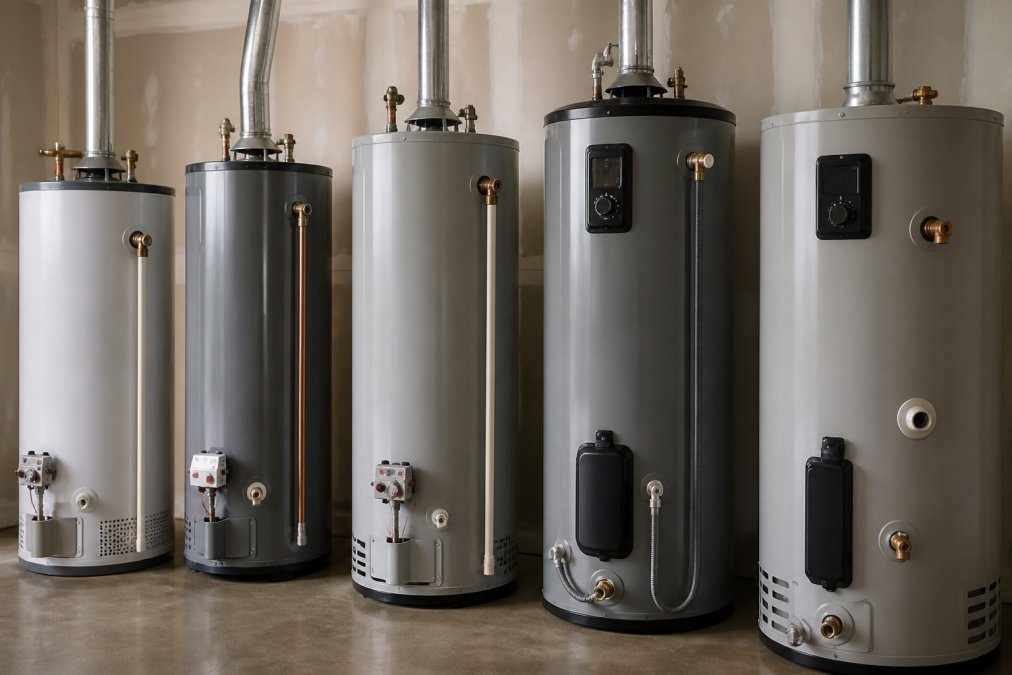
Choosing the best water heater brands 2026 has to offer comes down to how long you plan to live in your home. A storage tank unit lasts 10 to 15 years with routine maintenance, while a premium condensing tankless system can push past 20 years (energy.gov). The team at England's Plumbing & Heating has installed and serviced many major manufacturers in homes across Chester County. The best water heater brands are not always the most expensive ones, but they are consistently the ones built with serviceable parts and honest warranty support.
Below, we rank the manufacturers our technicians actually recommend, explain the tankless vs tank water heater pros and cons, and walk through what you should expect to pay for a full replacement.
Quick Picks:
- Best Overall (Professional Install): Bradford White, plumber-preferred build quality with sediment-reducing Hydrojet technology
- Best Value (Retail): A.O. Smith, strong performance per dollar with widespread parts availability
- Best for High Demand: Navien, condensing tankless efficiency with integrated recirculation
- Best Eco-Conscious: Sanden, CO2 heat pump technology with exceptional energy factor ratings
Feature Comparison: Top Water Heater Brands at a Glance
The table below summarizes how the leading manufacturers stack up across the specifications that matter most: storage capacity, energy efficiency, and installation requirements.
| Brand | Best Model Type | Energy Efficiency | Starting Price | Best For |
|---|---|---|---|---|
| Bradford White | Gas tank, hybrid electric | High (Energy Star options) | Contact for pricing | Long-term reliability with pro installation |
| Rheem | Tank, tankless, hybrid | High (smart Wi-Fi models) | Budget flexibility and retail availability | |
| A.O. Smith | Gas tank, heat pump | High (electronic gas control) | Value buyers wanting wide distribution | |
| Navien | Condensing tankless | Premium (Energy Star certified) | Large households needing endless hot water | |
| Rinnai | Condensing tankless | Premium (Smart-Circ tech) | Brand reputation and product longevity | |
| Contact for pricing | Electric tankless | High (flow control) | Electric-only homes with adequate amperage | |
| Contact for pricing | Condensing tankless | High | Retrofitting an existing tank location | |
| State | Gas and electric tank | High (self-cleaning dip tube) | Contact for pricing | Contractor-grade alternative to retail brands |
| Sanden | CO2 heat pump | Exceptional (low-GWP refrigerant) | Eco-conscious homeowners maximizing savings |
How We Evaluated the Best Water Heater Brands for 2026
When evaluating manufacturers, criteria such as build quality, energy efficiency, warranty coverage, parts availability, and ease of service are important. A brand that fails on parts availability can leave a family without hot water for weeks waiting on a back-ordered thermostat.
The uniform energy factor (UEF) rating matters more than the older energy factor (EF) metric because it accounts for standby heat loss under standardized testing. We also weigh anode rod quality heavily, since that sacrificial rod determines how long the glass-lined tank resists corrosion.
Tankless vs Tank Water Heater Pros and Cons
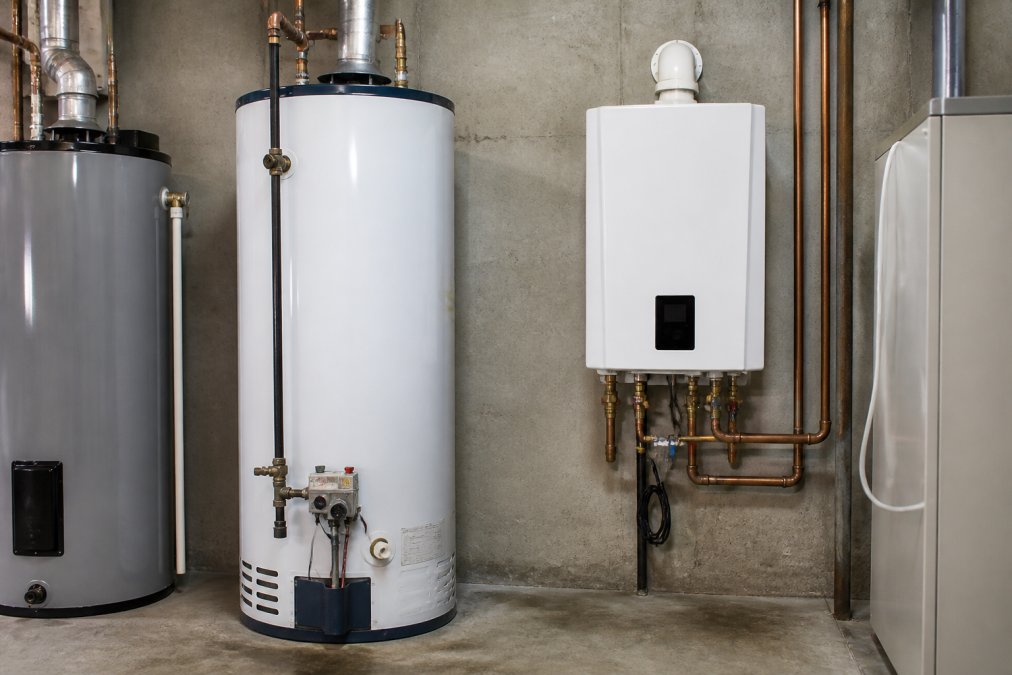
The tankless vs tank water heater pros and cons debate usually comes down to your household's hot water demand and budget. Tank water heaters store 40 to 75 gallons and reheat continuously, while tankless units heat water on demand.
Tank water heaters:
- Lower upfront cost and simpler installation
- Reliable during power outages (gas models with pilot light)
- Higher standby heat loss and shorter lifespan (10-15 years)
- Easier to service and repair
Tankless water heaters:
- Higher energy efficiency with no standby heat loss
- Longer lifespan (20+ years) when maintained
- Compact wall-mounted design frees floor space
- Higher upfront cost and requires professional installation
For many families, a high-efficiency tank unit can offer a good balance of cost and reliability. Tankless systems can be beneficial in larger homes with high simultaneous demand, like two showers and a dishwasher at once.
Water Heater Lifespan and Maintenance: Protecting Your Investment
A standard tank unit lasts 10 to 15 years, while tankless models can reach 20 years with annual descaling. The single most effective maintenance task is flushing the tank annually to remove sediment buildup.
Preventative maintenance also includes checking the anode rod every few years and replacing it before it dissolves completely. Once it is gone, the tank itself starts rusting from the inside. Homes with hard water should inspect the anode rod more frequently, sometimes every two years instead of five.
Regional Water Quality: The Overlooked Lifespan Variable
Many brand guides overlook the impact of local water chemistry on water heater longevity. The U.S. Geological Survey reports that more than 85 percent of American homes have hard water (usgs.gov).
Inside your tank, dissolved minerals settle on the bottom, directly above the burner or heating element. That sediment layer acts as an insulator, forcing the unit to run longer and hotter, resulting in higher energy bills and accelerated tank corrosion.
A thermal expansion tank is another critical component that many homeowners overlook. As water heats, it expands, and without an expansion tank to absorb the pressure, your water heater and plumbing system experience unnecessary stress. Local building codes increasingly require expansion tanks on closed-loop systems.
Matching Maintenance to Your Water Profile
Before you buy any water heater, request a simple water test from your municipal supplier or use an at-home test strip kit. The two numbers that matter are hardness (grains per gallon) and pH level. Water below 6.5 pH is acidic and will corrode tanks and anode rods faster regardless of brand. Water above 8.5 pH is alkaline and accelerates scale formation.
For homes with hard water above 7 grains per gallon, consider these adjustments:
- Install a water softener or scale inhibitor before the water heater inlet. A whole-house softener can extend tank life by 30 to 50 percent by eliminating scale formation at the source.
- Upgrade to a powered anode rod. Traditional magnesium anode rods dissolve quickly in hard water. Powered titanium anode rods (available from brands like Corro-Protec) use a low-voltage current to prevent corrosion without sacrificing themselves, lasting the full life of the tank.
- Flush twice annually instead of once. Homes with hard water accumulate sediment roughly twice as fast, so adjust your maintenance schedule accordingly.
- Replace the anode rod on a 2-year cycle rather than the standard 5-year interval. The rod costs $40 to $80 and takes a plumber under an hour to swap, which is far cheaper than replacing a tank that rusts from the inside out.
The Water Quality Factor in Brand Selection
When you compare the best water heater brands, ask how each manufacturer handles sediment and corrosion. Bradford White's Hydrojet Total Performance System keeps sediment suspended so it exits through the drain valve rather than settling. Rheem's hybrid models include a self-cleaning feature on select units.
For homes with known hard water issues, the brand choice matters less than the water treatment strategy. A mid-tier tank with a powered anode rod and annual flushing will outlast a premium tank with no water treatment.
A thermal expansion tank is another critical component that many homeowners overlook. As water heats, it expands, and without an expansion tank to absorb the pressure, your water heater and plumbing system experience unnecessary stress. Local building codes increasingly require expansion tanks on closed-loop systems.
Breaking Down the Cost of Water Heater Replacement
The cost of water heater replacement varies widely based on unit type, fuel source, and installation complexity. A standard 40-gallon gas tank unit costs less than a condensing tankless system, but the gap narrows when you factor in energy savings over the unit's lifespan.
The total cost includes the unit itself, permits, removal of the old heater, and any necessary upgrades to venting material or gas piping.
Realistic Price Ranges for 2026
Here is what you might budget for a complete replacement, including standard installation labor:
| Unit Type | Unit Cost (Equipment Only) | Installed Cost Range | Typical Lifespan |
|---|---|---|---|
| Contact for pricing | 10-12 years | ||
| Contact for pricing | 12-15 years | ||
| Contact for pricing | 10-15 years | ||
| Contact for pricing | 10-15 years | ||
| Contact for pricing | 20+ years | ||
| Electric tankless | 20+ years | ||
| Contact for pricing | 15+ years |
These installed prices assume a straightforward replacement in the same location with existing venting and gas lines that meet current code. If you are switching fuel types or moving the unit, add $500 to $2,000 for new venting, gas line upsizing, or electrical panel work.
Federal Tax Credits and Utility Rebates: The Money You Are Leaving on the Table
The Inflation Reduction Act of 2022 created the Energy Efficient Home Improvement Credit, which remains in effect through 2032. For water heaters, this federal tax credit covers 30 percent of the cost of qualifying heat pump water heaters, up to $2,000 per year (irs.gov). A $2,500 hybrid heat pump unit could net you a $750 credit at tax time. The credit applies to both equipment and installation costs, with no income cap for eligibility.
Condensing tankless gas water heaters with a UEF of 0.95 or higher may qualify for a separate credit of up to $600. Standard tank units, even high-efficiency models, do not qualify for federal credits.
Beyond federal incentives, most states and many municipal utilities offer additional rebates that stack with the federal credit. For example:
- California offers self-generation incentive program rebates for heat pump water heaters ranging from $500 to $1,000 depending on income level.
- New York utilities like Con Edison provide $500 to $1,000 rebates for heat pump models.
- Massachusetts Mass Save program offers up to $750 for heat pump water heater installation.
- Colorado offers a state tax credit of $400 for heat pump water heaters on top of the federal credit.
Total Cost of Ownership: Beyond the Sticker Price
A standard gas tank unit with a UEF of 0.62 has certain operating costs per year for a family of four. A heat pump water heater with a UEF of 3.0 or higher has different operating costs per year. Over a 10-year ownership period, the annual savings can add up, potentially offsetting the higher upfront cost.
Condensing tankless units are more efficient than standard tanks but less efficient than heat pumps. Annual operating costs can vary for a family of four. The advantage of tankless is lifespan: a longer service life means you replace the unit less often than a tank model.
Hidden Costs That Blow Up Budgets
Cost items that can surprise homeowners during replacement include:
- Venting upgrades. Older gas tanks often vent through a standard chimney or B-vent. High-efficiency condensing units require PVC venting, which means running new pipe to an exterior wall. This adds $300 to $800 to the project.
- Gas line upsizing. Tankless units demand 150,000 to 200,000 BTU per hour, while a standard tank needs only 40,000 BTU. If your existing gas line is undersized, a plumber must run a new line from the meter, adding $500 to $1,500.
- Expansion tank and code compliance. Many municipalities now require a thermal expansion tank on all new installations. At $50 to $100 for the part plus labor, this is minor, but failing to include it can fail inspection and delay your project.
Which Water Heater Brand Should You Choose?
The right brand for your home depends on your fuel source, household size, and whether you prioritize upfront savings or long-term efficiency. For homeowners who want professional-grade durability, Bradford White is a highly regarded option. Its Hydrojet Total Performance System actively reduces sediment buildup, and the professional-only distribution model means units are installed by trained professionals.
That is where England's Plumbing & Heating fits into the picture. Since 1989, our team has helped homeowners across West Grove and Chester County select, install, and maintain the right water heater for their needs. We handle everything from water heater installation and repair to gas piping and water conditioning, so your new unit performs exactly as designed.
If you are replacing an aging unit or upgrading to a more efficient system, we recommend scheduling a professional assessment before you buy. Reach out to England's Plumbing & Heating online or through live chat to discuss your options, and get a straight answer about which of the best water heater brands fits your home and budget.
Frequently Asked Questions
What brand of water heater is the most reliable?
Plumbers consistently rank Bradford White and Navien among the most reliable brands because of their build quality and advanced features like sediment reduction systems. Bradford White's Hydrojet Total Performance System and Navien's condensing technology are designed for long-term durability. For tankless options, Rinnai also has an excellent track record for longevity. The key to reliability is choosing a professional-grade model and having it installed and maintained correctly.
Is AO Smith or Rheem better?
Both A.O. Smith and Rheem are major manufacturers that offer reliable units across various price points. A.O. Smith is often praised for its high-efficiency heat pump models and strong value, while Rheem provides a broad range of options with smart home features like Wi-Fi monitoring. The better choice depends on your budget, preferred fuel type, and whether you prioritize smart technology or specific efficiency ratings. Always compare the specific model's uniform energy factor, not just the brand name.
How long should a water heater last before I need to replace it?
A traditional tank water heater typically lasts 8 to 12 years, while tankless models can last 20 years or more with proper maintenance. To maximize lifespan, flush the tank annually to remove sediment buildup and check the anode rod every few years, replacing it when it's worn. Hard water can shorten a unit's life due to scale accumulation. If your unit is near the end of this range and repairs are frequent, replacement is often more cost-effective.
What should I look for when choosing a new water heater in 2026?
Start by determining your fuel type and space constraints. Compare the first-hour rating for tank models or the flow rate in gallons per minute for tankless units. For efficiency, look for a high uniform energy factor and Energy Star certification to qualify for rebates. Consider the cost of water heater replacement, which includes not just the unit but installation labor costs. Also, check warranty coverage and whether the brand requires professional installation.
Choosing a water heater brand is a 10 to 20 year decision, and the cheapest upfront option rarely wins over the long term. England's Plumbing & Heating has guided Chester County homeowners through this choice since 1989, and we can help you compare professional-grade units against your home's actual needs. Book online today and let our experienced team handle your water heater installation with precision, from the first assessment to the final inspection.