 how-to
Gas Furnace Ignition Failure: 7 Troubleshooting Steps
Table of Contents
- Safety First: Triage Before You Touch Anything
- Step 1: Check the Thermostat and Power Supply
- Step 2: Inspect the Air Filter and Airflow
- Step 3: Verify the Gas Supply and Gas Valve
- Step 4: Diagnose a Gas Furnace Ignitor Not Working
- Step 5: How to Tell If a Furnace Ignitor Is Bad
- Step 6: Clear Furnace Ignition Proving Failure
- Step 7: Read Error Codes and Diagnostic Lights
- Frequently Asked Questions
Last Updated: October 21, 2026
Safety First: Triage Before You Touch Anything
A furnace ignition failure is a comfort problem, but it can also be a safety problem. Before you troubleshoot anything, treat the situation as a safety triage.
Here's how to triage in under two minutes:
- Smell gas? Get out. Don't flip switches, don't use your phone inside, don't light anything. Leave the door open behind you and call your gas utility from outside.
- No gas smell, but the furnace is silent and cold? You can proceed to the checks below.
- Burning smell, soot, or a yellow, lazy flame? Shut the system off at the thermostat and call a professional.
A furnace ignition failure is simply the system's failure to light the burners during startup. Most of the time it's a simple fix.
This guide walks through seven diagnostic steps in order. The sequence below mirrors how technicians work through a no-heat call.
Step 1: Check the Thermostat and Power Supply
The most common cause of a furnace that won't ignite is embarrassingly simple: the thermostat isn't calling for heat.
Work through this checklist:
- Set the thermostat to HEAT, not COOL or AUTO. Nudge the setpoint a few degrees above room temperature.
- Replace the thermostat batteries. Dead batteries are a frequent culprit, especially on older units.
- Check the furnace switch. There's usually a light-switch-style power switch near the furnace. Make sure it's ON.
- Check the circuit breaker. Look for a tripped breaker in your panel and reset it once.
If the breaker trips again immediately, stop. That points to a wiring or component fault that needs a technician.
Also confirm the furnace door panel is fully seated. Many units have a safety switch that cuts power when the panel is loose.
Step 2: Inspect the Air Filter and Airflow
A clogged air filter can cause ignition failure by overheating the system. When airflow is restricted, the furnace's limit switch trips and shuts down the burners before they can run.
Pull the filter and hold it up to a light. If you can't see through it, replace it.
Signs of restricted airflow:
- The furnace runs briefly, then shuts off
- The blower keeps running after the burners stop
- Rooms heat unevenly
- The filter is gray, matted, or visibly loaded
Replace the filter with the correct size and check it monthly during heating season. This one habit prevents a surprising number of no-heat calls.
Step 3: Verify the Gas Supply and Gas Valve
No gas means no flame. Confirm the supply is actually on before you dig deeper.
- Check other gas appliances. If the stove and water heater work, gas is reaching the house.
- Find the gas shutoff valve near the furnace and confirm it's parallel to the pipe (open), not perpendicular (closed).
- Look at the gas valve on the furnace itself. It should be in the ON position.
If other appliances are also out, call your gas utility. That's a supply issue, not a furnace issue.
If the gas valve is open and other appliances work but the furnace still won't light, the problem is downstream. Move to the ignition components.
Step 4: Diagnose a Gas Furnace Ignitor Not Working
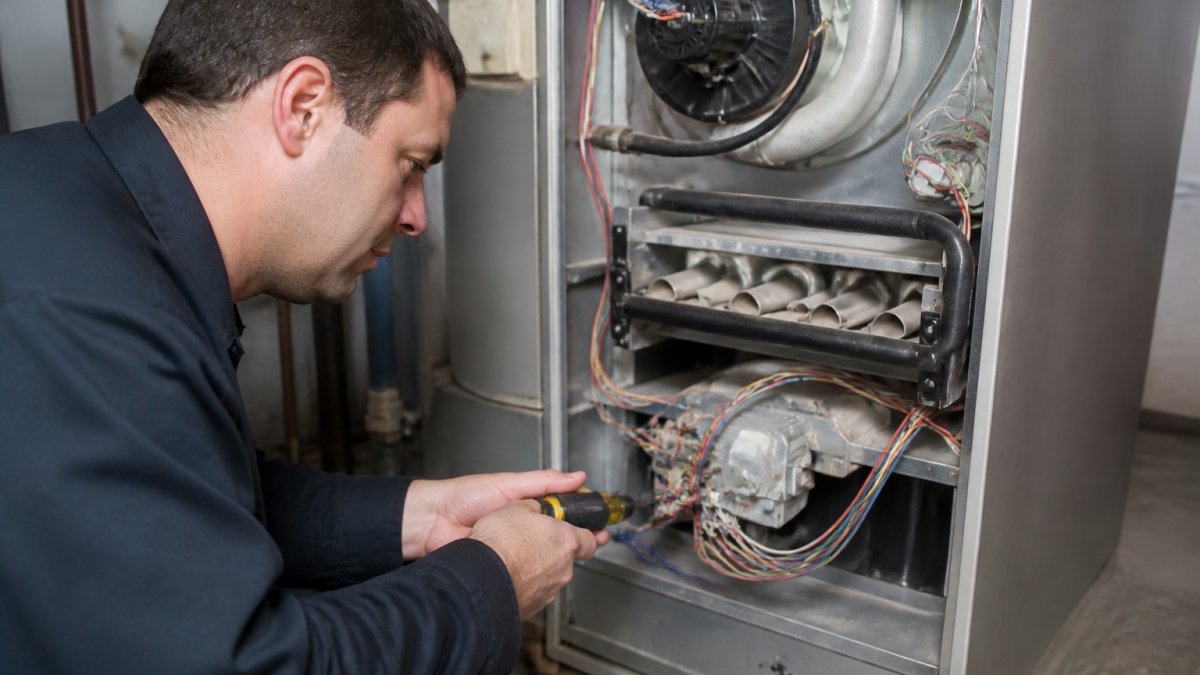
When a gas furnace ignitor not working is the cause, the furnace usually goes through its startup sequence and then shuts down without a flame.
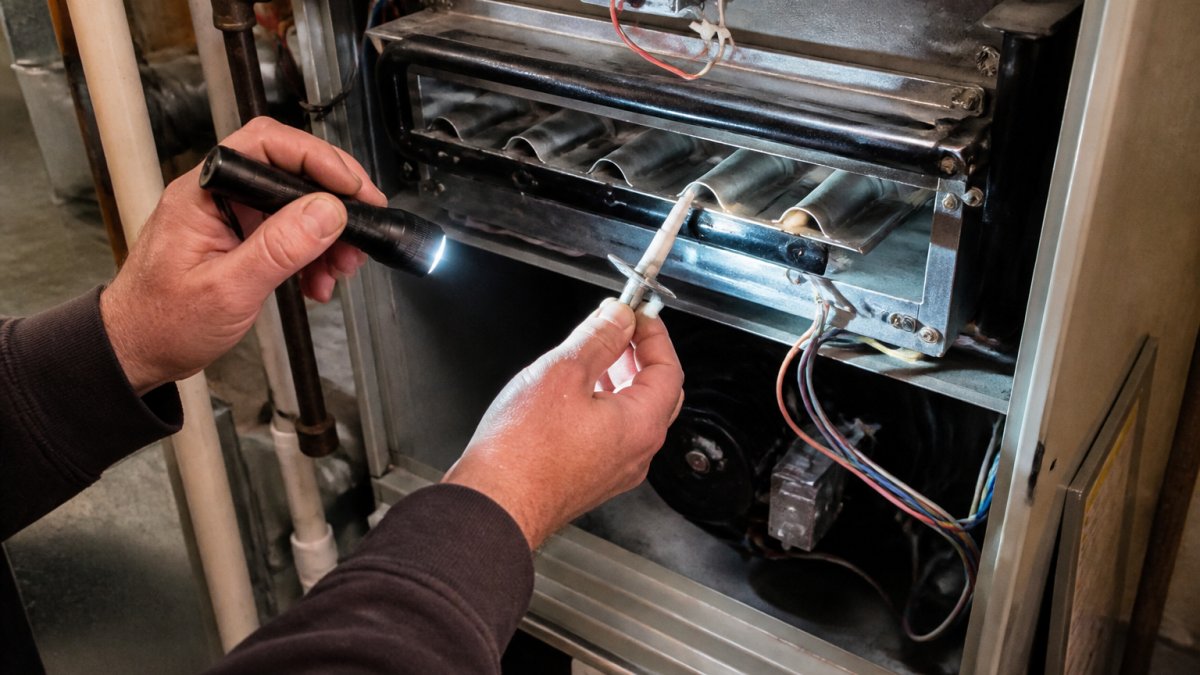
The startup sequence matters. A furnace typically:
- Calls the inducer motor to purge the heat exchanger
- Proves airflow with a pressure switch
- Energizes the igniter
- Opens the gas valve
- Confirms flame with the flame sensor
If any step fails, the system locks out. Knowing where it stops tells you what to check.
Match What You Observe to the Likely Cause
Most homeowners can't watch the control board, but they can watch and listen. The symptom you notice usually points to a specific stage of the sequence. Use this map before you open any panel:
| What you see or hear | Where the sequence likely stopped | First safe check |
|---|---|---|
| Thermostat clicks, but the furnace is completely silent | Before the inducer motor | Thermostat mode and setpoint, furnace power switch, door panel switch, circuit breaker |
| Inducer motor runs, then stops after a short time with no igniter glow | Airflow proving (pressure switch) | Air filter, condensate trap and drain line, blocked flue or intake, pressure-switch tubing |
| Inducer runs, but the igniter never glows | Igniter energizing | Igniter for cracks or contamination, igniter wiring and connector |
| You hear repeated clicking but no flame | Spark ignition | Electrode gap, dirty or misaligned electrode, cracked ceramic insulator |
| Igniter glows, gas valve clicks, but no flame | Gas delivery at the burner | Gas shutoff valve position, other gas appliances, gas valve on the furnace |
| Burners light, then shut off after a few seconds | Flame proving | Flame sensor cleanliness and position, burner condition |
| Burners light, run briefly, then the blower continues and the system locks out | Limit or rollout switch | Airflow restriction, blocked flue, or a combustion problem that needs a technician |
A common pattern technicians see is a furnace that runs the inducer, clicks, and locks out with no glow. That usually means the igniter circuit, not the gas supply. The reverse, a bright glow with no flame, points toward gas delivery or the gas valve.
Hot-Surface vs. Spark Ignition Systems
Ignition types fail differently, and the instructions that apply to one may not apply to another. Check the label on the furnace or the owner's manual to confirm which system you have before following any relight or cleaning step.
| System | How It Works | Common Failure Sign | What to Check |
|---|---|---|---|
| Hot-surface igniter | A ceramic element glows orange to light the gas | No glow, or a cracked element | Look for a glow during startup; inspect for cracks |
| Spark igniter | A spark jumps across a gap to light the gas | Clicking with no flame | Check for a visible spark and clean electrodes |
| Standing pilot | A small pilot flame stays lit constantly | Pilot is out | Relight per the unit's label, or call for service |
If you have a hot-surface igniter, watch for the glow. No glow means the element or its circuit is the problem. A spark system that clicks without lighting usually has a dirty or misaligned electrode.
Step 5: How to Tell If a Furnace Ignitor Is Bad
Learning how to tell if a furnace ignitor is bad saves you a service call, but only when you check safely. With power off, inspect the igniter visually.
Signs a hot-surface igniter has failed:
- A visible crack or chip in the ceramic element
- A white, cloudy, or blistered appearance on the element
- No glow during startup, even though the furnace runs its sequence
- A reading of no continuity with a multimeter, if you're comfortable testing it
A spark igniter that's bad often shows a worn or dirty electrode tip, or a cracked ceramic insulator.
The furnace igniter lifespan varies with use. Hot-surface igniters are wear items that eventually fail, and replacing one is a routine repair. If yours has lasted many heating seasons, a failed element is a likely and expected culprit.
If the igniter looks intact and glows but the furnace still won't light, the problem is elsewhere. Keep going.
Step 6: Clear Furnace Ignition Proving Failure
A furnace ignition proving failure means the system lit the gas but couldn't confirm a flame, so it shut the valve for safety. The usual suspect is the flame sensor.
The flame sensor is a small metal rod in the burner flame path. It sends a signal to the control board confirming a flame. When it's coated with carbon or corrosion, the signal weakens and the board shuts the furnace down.
Safe Homeowner Steps
These checks stay on the safe side of the line: no gas valve work, no combustion adjustments, no electrical testing beyond a visual inspection with power off.
- Locate the flame sensor near the burners, held by a single screw or clip
- With power off at the furnace switch and the thermostat set to OFF, remove it and gently clean the rod with fine steel wool or emery cloth
- Wipe the rod clean and reinstall it in the same position and orientation
- Restore power and call for heat
If the furnace lights and stays lit, the cleaning likely solved it. If it lights, runs a short while, then shuts off again, the flame sensor, its wiring, or the control board is still the likely cause.
Step 7: Read Error Codes and Diagnostic Lights
Modern furnaces tell you what's wrong if you know where to look. The control board has a diagnostic light or a small display that flashes a fault code when ignition fails.
To read it:
- Find the sight glass on the lower furnace panel
- Count the flashes and note any pauses
- Match the code to the sticker on the furnace door or the owner's manual
Common codes point to specific faults: a pressure switch issue, a flame-proving error, or an open limit. The code narrows the search fast.
If the code points to a failed component or the furnace keeps locking out after your checks, it's time for a professional. England's Plumbing & Heating handles gas furnace diagnostics and repair for homeowners across the area. Book online when you're ready.
Frequently Asked Questions
How do you reset a furnace ignition switch?
Most furnaces don't have a reset switch for the ignition system itself. Instead, turn the thermostat to off, locate the furnace power switch (usually a light switch near the unit), turn it off for 30 seconds, then back on. This resets the control board. If the furnace still won't ignite, the issue is likely a failed igniter, flame sensor, or gas supply problem that needs professional diagnosis.
Why does my gas furnace click but fail to ignite?
Clicking usually means the spark igniter is trying to light the gas but the burner isn't catching. Common causes include a closed gas valve, low gas pressure, a dirty burner, or a faulty flame sensor that shuts the gas off immediately. If you hear repeated clicking without a flame, turn the furnace off and call a technician. Continuing to let it click can flood the combustion chamber with gas.
What is the average lifespan of a furnace igniter?
A hot-surface igniter typically lasts 3 to 7 years, depending on usage and furnace maintenance. Spark igniters can last longer but are subject to carbon buildup. If your furnace igniter lifespan has been shorter than expected, check for dirty filters, frequent short cycling, or voltage issues. Replacing a failed igniter is a common repair, but the underlying cause should be verified by a professional.
When should you call a professional for a furnace ignition problem?
Call a professional immediately if you smell gas, hear hissing near the furnace, see soot or yellow flames, or if the furnace repeatedly locks out after resetting. Also call if you've replaced the igniter and the furnace still won't light. DIY repair is limited to thermostat batteries, filter changes, and resetting breakers. Any work inside the combustion chamber or gas valve requires a licensed HVAC technician.
A furnace that won't ignite is frustrating, but the steps above solve most cases. When the checks point to a failed part, a gas concern, or a fault you can't trace, don't guess. England's Plumbing & Heating brings experienced heating technicians to your door, backed by service since 1989. We diagnose ignition faults, handle gas piping safely, and repair or replace the components that fail. Get started with England's Plumbing & Heating and book your furnace service online today.