 how-to
How Often to Change Water Filter Cartridges: A Practical Guide
Last Updated: November 4, 2026
Quick Summary
Change water filter cartridges on the manufacturer's schedule, then adjust for your water and usage. Pitcher filters often need changing every 1 to 2 months, fridge filters about every 6 months, and whole-house sediment filters every 3 to 12 months.
- Pitcher filters often need replacing every 1 to 2 months with regular use.
- Fridge filters are often due every 6 months, sometimes sooner.
- Whole-house sediment filters typically need changing every 3 to 12 months.
- Replace early if flow slows, chlorine taste returns, or water looks cloudy or gritty.
- Track gallons used, since capacity is rated in gallons rather than months.
Table of Contents
- Why Filter Replacement Timing Matters for Your Water Quality
- General Replacement Frequency Guidelines by Filter Type
- Factors That Shorten or Extend Filter Lifespan
- Signs a Water Filter Needs Replacing Now
- How Often to Change Water Filter Cartridges on Well Water
- Testing Your Water and Comparing Generic vs. OEM Cartridges
- Scheduling Your Next Filter Change With England's Plumbing & Heating
- Frequently Asked Questions
Why Filter Replacement Timing Matters for Your Water Quality
Most homeowners change a water filter when they remember to, not when it needs changing. That habit can quietly cut into your water quality.
The right timing depends on your water, your usage, and your filter type. Generic advice like "every six to twelve months" gives a starting point, but it misses a lot.
Here's the core idea: the filter does its job until it can't. Once it's saturated, contaminants can pass straight through, so replacing your water filter cartridges on time protects the water you drink, cook with, and bathe in.
General Replacement Frequency Guidelines by Filter Type
Filter type sets the baseline. Manufacturers usually print a replacement schedule for each cartridge, and that schedule is the best first reference. Use it as your starting point, then adjust for your home.
Pitcher and Fridge Filters
Pitcher and refrigerator filters are the easiest to forget. Check the cartridge packaging for the rated capacity and recommended timing for your model.
- Pitcher filters: often every 1 to 2 months with regular use
- Fridge filters: often every 6 months, sometimes sooner
- Reset the indicator light or timer each time you swap the cartridge
Whole-House and Shower Filters
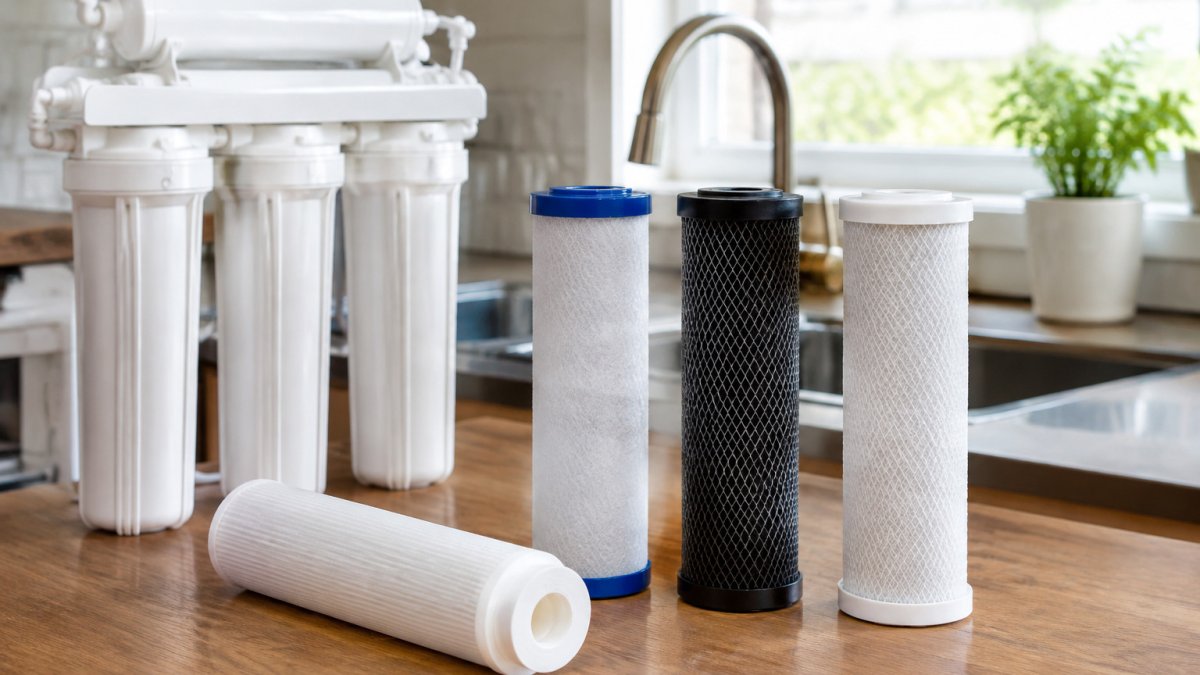
Whole-house systems handle far more water, so their cartridges wear faster in many homes. Sediment filters often need changing every 3 to 12 months. Carbon stages may last longer but still need scheduled replacement. Shower filters vary widely, so follow the printed guidance on your model.
The table below summarises the replacement timing the article gives for each filter type.
| Filter type | Typical replacement | Note |
|---|---|---|
| Pitcher filters | Every 1 to 2 months | With regular use |
| Fridge filters | Every 6 months | Sometimes sooner |
| Whole-house sediment filters | Every 3 to 12 months | Varies with water and use |
| Whole-house carbon stages | Longer than sediment | Still need scheduled replacement |
Factors That Shorten or Extend Filter Lifespan
Two filters with the same rating can last very different lengths of time. The reason is that a cartridge is a fixed amount of media and surface area, and every gallon that passes through deposits something on it. Once the pores and binding sites fill, the cartridge stops removing contaminants and flow drops.
- Water hardness: Hardness is measured in grains per gallon (gpg). Hardness is measured in grains per gallon (gpg), and higher numbers indicate harder water. Every gallon of hard water carries dissolved calcium and magnesium that can precipitate as scale on carbon and sediment media. In very hard water, carbon cartridges can load up well before their rated life. A water softener ahead of the filter can reduce that load.
- Sediment levels: This is the single biggest wildcard. Municipal water is treated and usually low in sediment, but wells, older galvanized pipes, and homes downstream of construction or road work can carry visible grit. A sediment pre-filter is designed to be the sacrificial stage that protects the carbon stage behind it. If your pre-filter looks brown in a month, your carbon stage is working harder than its rating assumes.
- Household size and usage: Filter capacity is rated in gallons, not months. A two-person household using about 60 gallons a day passes roughly 1,800 gallons a month; a family of five with laundry, showers, and outdoor use can pass 300 or more gallons a day. Divide the rated capacity by your actual daily gallons to get a realistic interval. Many pitcher and fridge filters are rated for a limited number of gallons, so a heavy-drinking household can use one up much faster than the calendar suggests.
- Chlorine and chloramine: Carbon removes chlorine by chemical reaction, not just physical trapping, so the media is consumed. High chlorine residual (common at the tap in many municipal systems) shortens carbon life. Chloramine is harder to remove than free chlorine and demands catalytic carbon; a standard carbon block can exhaust faster against chloramine. If your utility disinfects with chloramine, check that the cartridge is rated for it.
- Water pressure and temperature: Excess pressure stresses housings, o-rings, and seals and can channel water past the media instead of through it. Hot water above the cartridge's rated temperature can degrade media and gaskets. Keep whole-house pressure in the normal residential range (roughly 40 to 80 psi) and install filters on cold lines unless the cartridge is rated otherwise.
- Iron and manganese: Even at low levels, dissolved iron can feed bacteria and coat media, and oxidized iron plugs sediment filters quickly. If you see rust staining in sinks or toilets, test for iron before blaming the cartridge.
A useful habit is to write the install date and the meter reading on the housing with a marker. Then track flow and taste over the months. That record tells you more about your home than any general chart, because it ties cartridge life to actual gallons used rather than the calendar.
Changing stages in the right order helps each one do its job.
Signs a Water Filter Needs Replacing Now
Don't wait for the calendar alone. Watch for these warning signs:
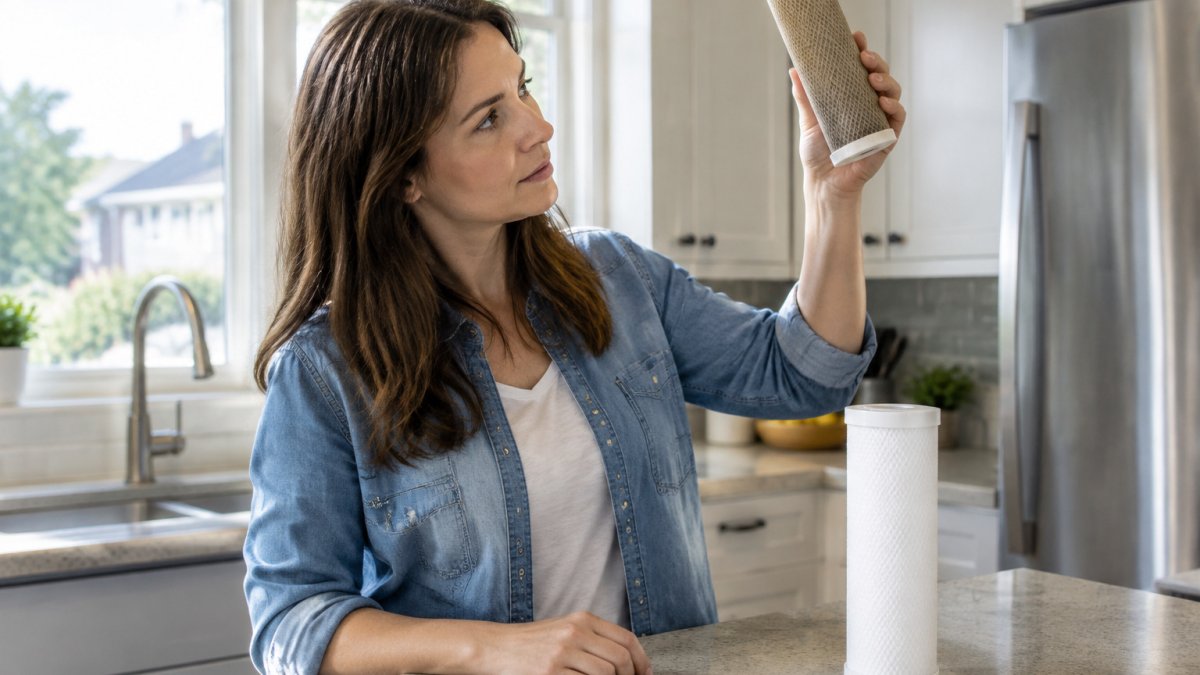
- Reduced water flow or noticeably slower faucet output
- Chlorine taste or odor returning in your drinking water
- Cloudy, discolored, or gritty water
- A filter that looks dark, cracked, or visibly coated
- Pressure drop across a whole-house system
- An indicator light or alert on the system
If you see any of these, change the cartridge early. Holding on to a clogged filter is one of the most common mistakes we run into.
How Often to Change Water Filter Cartridges on Well Water
Well water behaves differently from municipal supply. It often carries more sediment, iron, and minerals, so cartridges load up faster. The exact interval for changing sediment pre-filters on a well depends on your well's output and water conditions.
Hardness also matters here. A softener or conditioning system ahead of your filters can lengthen cartridge life, but it needs its own maintenance. Keep both systems on a shared schedule so one doesn't quietly stress the other. If you rely on a well, consider testing your water periodically to see what your filters are catching.
Testing Your Water and Comparing Generic vs. OEM Cartridges
Most replacement guides tell you to follow the calendar. A better approach is to measure your water, because the test results tell you which filter stage is working hardest and whether the manufacturer's interval fits your home. This is the step most homeowners skip, and it is the one that turns a guess into a schedule.
Testing without a lab
You do not need a full laboratory panel to make a replacement decision. Two inexpensive tools cover most of it:
- TDS meter: A total dissolved solids meter reads conductivity and reports in parts per million (ppm). It does not tell you whether water is safe, and it does not measure sediment or most contaminants directly. What it does well is establish a baseline. Test your raw tap water, then test the filtered water. A reverse-osmosis system should pull TDS down dramatically; a carbon or pitcher filter may barely move it, because carbon targets chlorine and organics, not dissolved minerals. If filtered TDS starts climbing back toward the raw reading, the membrane or media is losing effectiveness.
- Test strips: Chlorine, hardness, and pH strips are cheap and fast. A chlorine strip at the tap and after the filter shows whether the carbon is still doing its job, if chlorine reads the same on both sides, the media is exhausted regardless of the calendar. Hardness strips confirm whether a softener is working and how much scale load your cartridges face.
For wells, or if you suspect iron, manganese, arsenic, or bacteria, use a certified laboratory test. Many state and county health departments publish lists of certified labs, and a basic panel is a modest one-time cost compared with a year of premature cartridge changes. Testing periodically, and after any change in taste, color, or flow, is a sensible habit.
Generic vs. OEM cartridges
Generic water filter cartridges are sometimes less expensive than manufacturer-branded (OEM) versions. The question is whether the savings survive contact with your water.
- Check the certification, not the claim. For health-related claims in the United States, look for certification to NSF/ANSI standards, such as NSF/ANSI 53 for health-effect reduction (the EPA). A cartridge that claims "removes lead" without a certification listing is making an unverified claim. Check the certifying body's online listing for the exact model.
- Compare rated capacity and flow rate, not just price. A cheap cartridge rated for 300 gallons is not cheaper than an OEM cartridge rated for 500 gallons if your household uses 200 gallons a month, the generic may need changing nearly twice as often. Divide price by rated gallons to compare cost per gallon treated.
- Fit and seals matter. Third-party cartridges that fit poorly can bypass water around the media or leak at the o-ring. A bypassing cartridge delivers unfiltered water while looking installed correctly.
- Warranty and system compatibility. Some whole-house and under-sink systems specify OEM cartridges as a condition of warranty. Read the warranty before switching.
A practical rule: use OEM or certified-compatible cartridges for the stage that protects health (drinking water carbon, RO membrane), and consider generics where the stage is sacrificial and easy to inspect (sediment pre-filters).
Watch out: a generic cartridge that is not certified to the standard your system relies on can pass water that looks and tastes fine while missing the contaminant you bought the filter for, verify the certification listing before you trust the savings.
Scheduling Your Next Filter Change With England's Plumbing & Heating
Set a reminder the day you install or change a cartridge. Use the manufacturer schedule as a baseline, then adjust based on the signs above and any water test results. Mark the date on the housing or in your calendar so the change happens on time.
If your system is hard to service or you're not sure which stage needs attention, England's Plumbing & Heating can help. Our team can help with filter changes, water conditioning service, and well-related maintenance. You can book online or reach out to our team for help planning your next change.
Frequently Asked Questions
How long should a water filter cartridge last?
Most cartridges last between three and six months, though the exact interval depends on the manufacturer's rated capacity in gallons and on your water conditions. Sediment cartridges often need changing sooner in areas with cloudy or particle-heavy water, while carbon blocks can last longer in softer water. Check the rated gallon capacity printed on the cartridge, track your usage, and replace it at whichever comes first: the time limit or the capacity limit. Filters that go past their rated life stop removing contaminants effectively.
Do you really need to replace a water filter every 6 months?
Six months is a common starting point, not a universal rule. Some systems on low-usage household taps can go longer, while heavy-use or high-sediment systems may need changes every three months. The safest approach is to follow the manufacturer's guidance, then adjust based on pressure drop, taste changes, and visible buildup. Testing your water periodically can confirm whether your current schedule is adequate for your situation.
How do I know if my water filter is clogged?
Common signs include a noticeable drop in water flow, sputtering from the tap, a change in taste or odor such as a return of chlorine smell, or visible discoloration or sediment in the water. A cartridge that has been in place well past its rated life is likely clogged even if flow still seems acceptable, because contaminants can begin passing through once the media is saturated. When in doubt, replace the cartridge and see whether flow and taste recover.
What happens if you don't change your water filter on time?
A filter past its service life can lose its ability to trap sediment and reduce contaminants, and captured material may release back into the water. Saturated carbon can also encourage bacterial growth inside the housing. Reduced flow puts extra strain on your fixtures and the filter housing. Staying on a replacement schedule protects both water quality and the equipment you rely on.