 how-to
Identifying Poor Quality Plumbing Workmanship at Home
Last Updated: November 2, 2026
Quick Summary
Poor quality plumbing work usually shows up as leaks, loose fixtures, drips at joints, slow drains, or messy caulk that appears soon after a job. Watch for a pattern of these signs, since they point to the installation itself rather than normal wear.
- Check under every sink for drips or damp spots, using a dry paper towel under each connection.
- Push on each faucet, showerhead, and toilet base; any wobble deserves a closer look.
- Run hot and cold water for two minutes each, then re-check joints, since some leaks only appear under heat.
- Defects that appear within weeks or months of a job point to the work; slow aging suggests normal wear.
- Document defects with photos, a dated log, and a written notice to the contractor before escalating.
Table of Contents
- What Poor Quality Plumbing Workmanship Looks Like
- Visible Warning Signs: Leaks, Loose Fixtures and Caulking
- Common Plumbing Installation Mistakes That Show Up Later
- How to Check a Plumber's Work Room by Room
- Telling Workmanship Defects Apart From Normal Wear
- What to Do About a Bad Plumbing Job
- Questions to Ask a Plumber Before Hiring Them Again
- Frequently Asked Questions
What Poor Quality Plumbing Workmanship Looks Like
Poor quality plumbing work is often easy to spot once you know what to look for. Most of the time, it shows up as a leak, a loose fixture, or a drain that never quite clears. Problems like these are common in homes of every age, and many of them can be traced back to how the original installation was done.
Plumbing workmanship is the quality of the installation and repair work itself. It covers how pipes are cut, joined, supported, sealed, and tested. Poor work often looks fine on the day it is finished and then fails slowly.
Here is what poor workmanship usually looks like:
- Pipes that rattle, sag, or move when water runs
- Joints that drip, weep, or show white mineral crust
- Fixtures that wobble when you lean on them
- Drains that back up or drain slowly
- Caulk that is messy, cracked, or peeling
- Water pressure that drops sharply at some fixtures
None of these signs proves the plumber did bad work by itself. Old pipes wear out, and hard water causes damage too. The key is pattern. When several of these show up soon after a job, the work itself is the likely cause.
Visible Warning Signs: Leaks, Loose Fixtures and Caulking
Start with what you can see. Walk through each bathroom and kitchen after a plumbing job and look hard at the work.
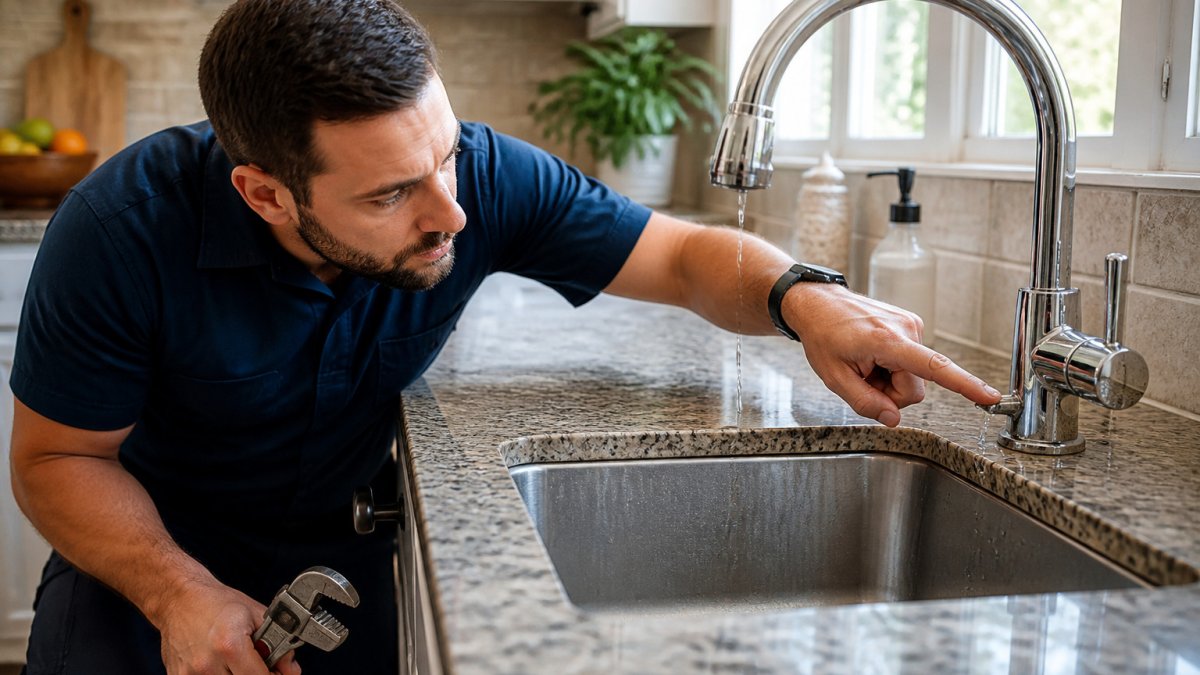
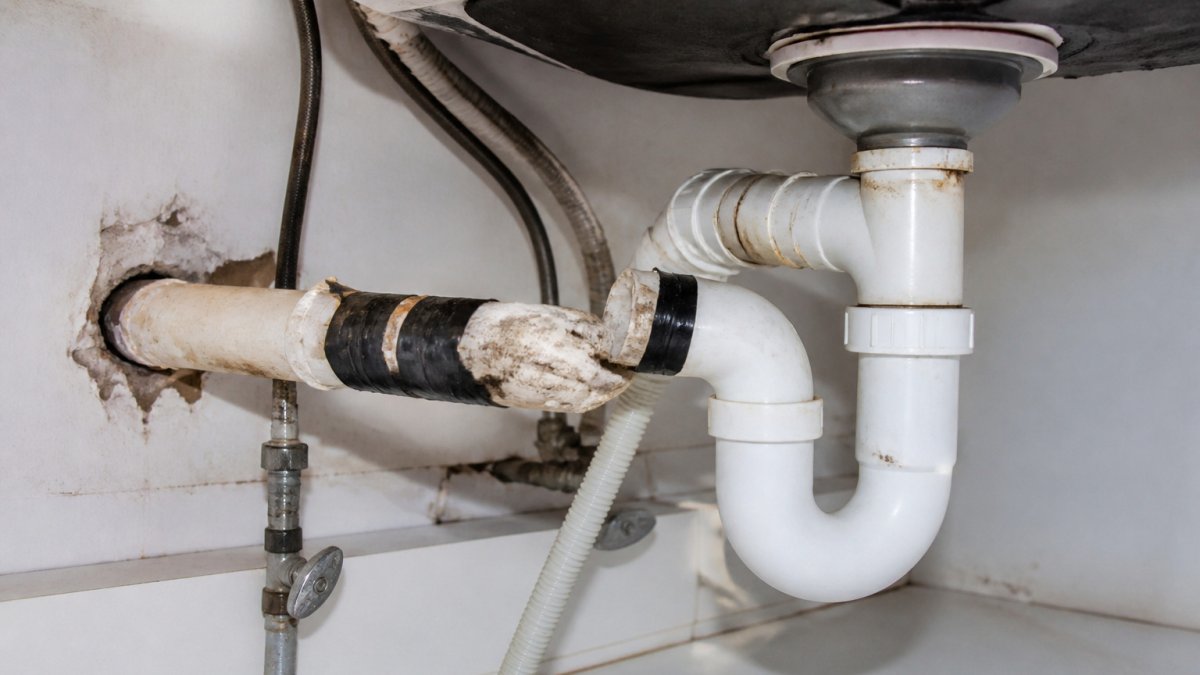
Dripping faucets and small leaks are the most common signs. A drip under a sink, around a shutoff valve, or at a connection point often means a joint was not tightened or sealed correctly. Place a dry paper towel under each connection and check it after a few hours.
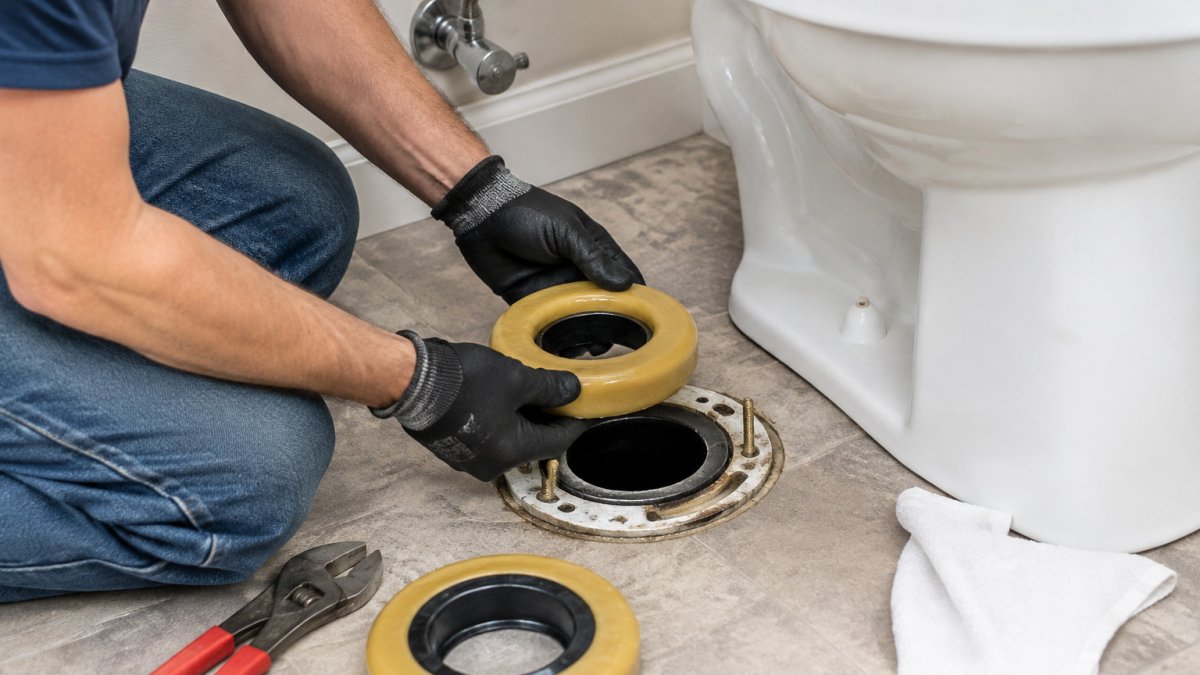
Loose fixtures are another clear warning. A faucet, showerhead, or toilet that moves when you touch it was not mounted securely. Grab each fixture and gently push it. Any wobble deserves a closer look.
Caulking also tells a story. Good caulk is smooth, even, and tight against both surfaces. Poor caulk looks lumpy, has gaps, or pulls away from the tub or sink. Caulk that cracks within a few months often means the surface was not cleaned or prepared before it was applied.
A simple checklist helps:
- Check under every sink for drips or damp spots
- Push on each faucet, showerhead, and toilet base
- Look for uneven or messy caulk lines
- Run each tap and watch for splashing or spraying at joints
Common Plumbing Installation Mistakes That Show Up Later
Some installation mistakes stay hidden for months. They only appear when pressure changes, when water heats up, or when the house settles.
Improperly supported pipes are a common problem. Long runs of pipe need brackets at regular intervals. Without them, pipes sag and stress their joints. Over time, the joints loosen and leak.
Loose-fitting joints are another frequent issue. A fitting that is not fully seated or tightened can hold for a day or two and then start to weep. This is one reason to watch for slow leaks after any new install.
Drain problems often come from a poor slope. Drain lines need a steady downward angle so that water and waste move freely. A flat or reversed slope causes slow drains and repeated clogs.
Uneven water pressure can point to undersized lines, a partly closed valve left behind, or a restriction at a fixture. If one tap works well and another barely flows, check the work near the weak fixture first.
Watch for these mistakes in particular:
- Pipes with no support over long horizontal runs
- Joints that were not fully tightened or sealed
- Drains with a flat or backward slope
- Fixtures mounted to weak or unsupported surfaces
- Missing or incorrect venting, which causes gurgling drains
Many of these problems are easier and less costly to fix when caught early, before water damages walls, floors, or cabinets.
How to Check a Plumber's Work Room by Room
A room-by-room check works best as a sequence: inspect, operate, then verify. Do the visual pass first while everything is dry, then run water, then re-check the same joints for moisture.
Kitchen. Open the cabinet under the sink and look at every supply connection, the P-trap, and the shutoff valves.
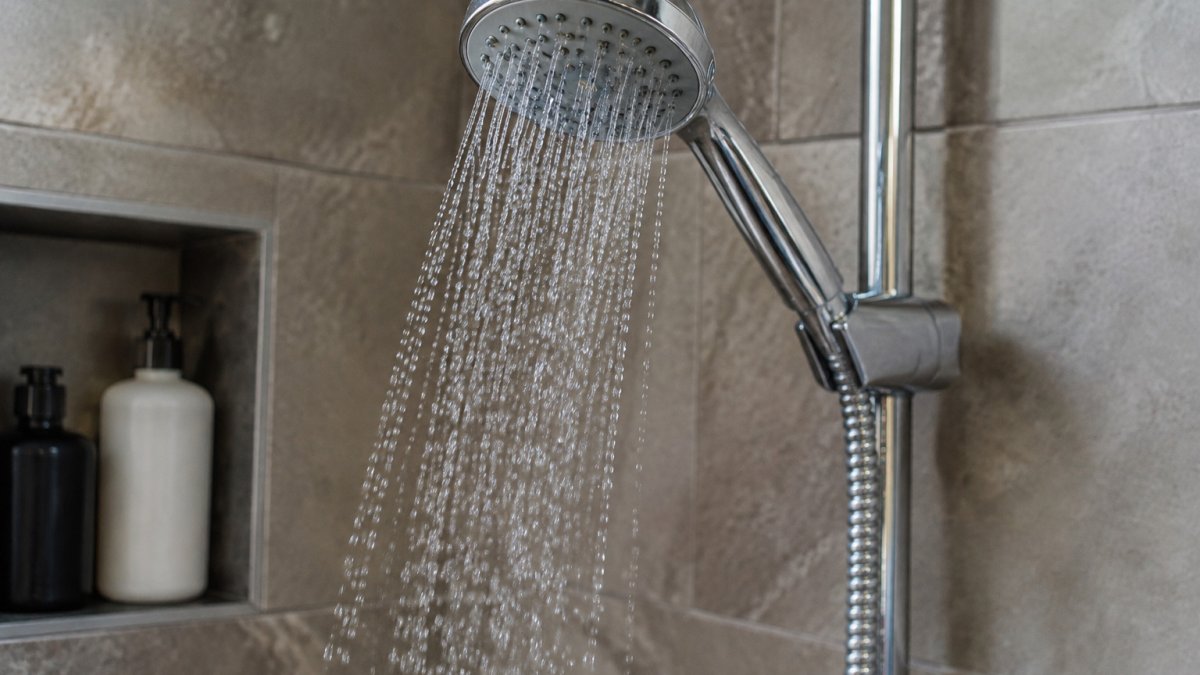
Bathroom. Run the tub and shower together, then separately. Watch the showerhead arm where it enters the wall for movement, and check the caulk line at the tub edge for gaps.
Laundry area. Run the washing machine through a full fill-and-drain cycle. Check both supply hoses at the valve and at the machine, and look at the standpipe or drain connection for backup.
Water heater area. Look at the inlet and outlet connections, the T&P valve, and the discharge line. The discharge line should be secured and routed to a drain or as close to the floor as local requirements allow.
Exterior hose bibs. Turn each on and off, then check the mounting and the interior penetration for drips. A hose bib that moves in the wall was not secured to the framing.
Use a simple pass/fail record for each item: dry joint, stable fixture, free drainage, steady pressure. Anything that fails gets a photo and a note with the room and date.
A basic performance test rounds out the visual pass. Fill a sink and time how long it takes to drain; compare it to a fixture in another room. Run two fixtures at once and see whether pressure holds.
Use this quick reference to see what to check in each area and what a failure usually means.
| Area | Check | Failure sign |
|---|---|---|
| Kitchen | Joints under sink, 2-minute hot and cold runs | Weeping at a joint |
| Bathroom | Showerhead arm, tub caulk line, toilet base | Movement, gaps, moisture |
| Laundry | Hose bulges, cracks, drain backup | Replace the hose |
| Water heater | Inlet, outlet, T&P valve, discharge line | Moisture or white crust |
| Exterior hose bibs | Turn on and off, check mounting | Drips or movement in the wall |
Telling Workmanship Defects Apart From Normal Wear
Not every problem is a plumber's fault. Pipes age, seals wear down, and water chemistry takes its toll. The trick is telling the difference.
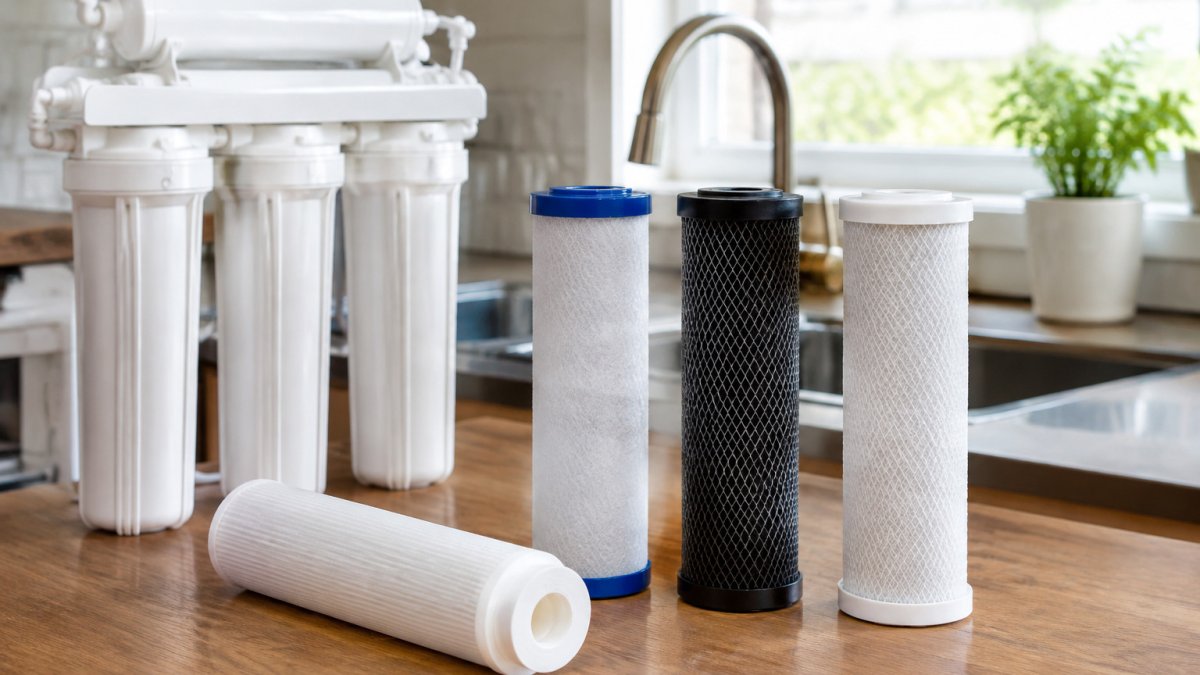
Hard water causes white or gray crust on faucets, showerheads, and fixture bases. That buildup can clog flow and make a fixture look worn, even when it was installed correctly. Learn more about how to spot hard water damage before you blame the installer.
Normal wear usually develops slowly over years. Workmanship defects tend to show up within weeks or months of the job. If a leak starts right after an installation, that timing points to the work.
Ask yourself these questions:
- Did the problem start soon after the job?
- Is the leak at a joint or connection the plumber touched?
- Does the defect look like a mounting or sealing issue rather than age?
- Is the same problem happening in more than one place?
If you answer yes to most of these, the work is the likely cause.
What to Do About a Bad Plumbing Job
Act in a fixed order so you preserve both the fix and your claim. First, stop the damage. Shut off the fixture supply valve or the main shutoff if water is spreading. Then document before you call.
Document the defect. Take wide photos showing the room and close-ups of the joint or fixture, plus a short video of any drip or spray. Record the date, the room, and what you were doing when you saw it.
Notify in writing. Send the contractor an email or text that states the problem, attaches the photos, and asks for a written repair plan and a date. Keep every reply.
Check the warranty. Plumbing contractors often warranty workmanship for a set period, though terms vary widely. Read the contract or invoice for what is covered, how long it lasts, and whether it transfers.
Escalate in steps. If the contractor does not respond or refuses to fix a defect, ask for the license number and confirm it with the state licensing board.
Know when to stop using a fixture. Call an emergency plumber and stop using the fixture if you see water near electrical outlets or a panel, smell gas, have a sewage backup, see a sudden burst, or notice ceiling stains that are spreading.
Get a second opinion when the explanation does not fit. If the first plumber's account conflicts with what you see, a second inspection can confirm whether the work was done properly.
Watch out: do not let a contractor talk you out of a written record. Verbal promises are hard to enforce, and a paper trail is what licensing boards and courts actually use.
Questions to Ask a Plumber Before Hiring Them Again
Before you rehire a plumber, or hire a new one, ask questions that reveal how they work.
Start with licensing and insurance. Ask for proof of both. Then ask how they test their work after an installation. A good plumber checks pressure, runs fixtures, and inspects joints before leaving. Ask what warranty they offer and what it covers.
Ask whether permits are needed for the job and whether the work will be inspected. Many local jurisdictions require permits for certain plumbing work, and inspections confirm the job meets code.
Good questions to ask include:
- Are you licensed and insured for this work?
- How do you test your work before you leave?
- What warranty do you offer, and how long does it last?
- Will you pull a permit, and will the work be inspected?
- How quickly can you come back if a problem shows up?
Clear, honest answers are a good sign. Vague answers or pressure to skip permits are a warning sign.
If you are ready to get your plumbing checked, you can book a plumbing service appointment with England's Plumbing & Heating for current availability and pricing. You can also read our guide to finding reliable plumbers to compare your options before making a decision.
Frequently Asked Questions
How can you tell if a plumber did a bad job?
Start with what you can see and hear. Look for loose or wobbly faucets and showerheads, drips at connections, caulking that is messy or missing, and pipes that are not secured to framing. Then run each fixture and watch for slow drainage, uneven water pressure, or banging in the pipes when water shuts off. Any of these can point to a rushed installation. Keep photos and dates, because a written record makes it far easier to request a repair or raise a dispute later.
What is considered poor workmanship in plumbing?
Poor workmanship is work that does not meet accepted installation standards or the manufacturer's instructions. Common examples include pipe joints that are loose or improperly sealed, pipes left without proper support, fixtures mounted unevenly, and drains with the wrong slope. Some defects cause leaks right away, while others only appear after weeks of use. Local building codes and permit requirements set the baseline, so check whether the work was inspected.
What should you do if a plumbing repair fails?
Stop using the affected fixture if you see active leaking, a spreading water stain, or a gas smell. Shut off the local valve or the main water supply if needed, and call an emergency plumber for gas or flooding. For a non-urgent failure, document the problem with dated photos and video, then contact the company in writing and request a repair under any warranty. Keep copies of invoices and permits in case you need to escalate.
What are some examples of poor workmanship during a plumbing installation?
Typical examples include supply lines that are kinked or pinched, compression fittings that are overtightened or not fully seated, and water heaters with missing or incorrect expansion and pressure relief provisions. Drain lines may be installed without adequate slope, and vent pipes may be left out or undersized. Each of these can cause slow drains, gurgling, or leaks. Asking the plumber to explain the installation and point out these items is a reasonable step.