 how-to
How to Price a Toilet Wax Ring Replacement Job
Quick Summary
A toilet wax ring replacement usually costs a small amount for the ring itself, with most of the bill coming from labor to pull and reset the toilet. Because labor rates vary widely by market, the installed total varies too, so compare quotes on the same scope rather than on a single national number.
- The wax ring is inexpensive, so labor makes up most of the final bill.
- Plumbers commonly bill a flat rate or an hourly rate plus a trip charge; ask which applies.
- Make sure every quote covers removal, flange inspection, new bolts, reinstallation, and a leak test.
- A cracked or corroded flange adds repair cost and the ring alone will not stop the leak.
- Confirm the leak is from the wax seal, not the supply line or tank, before replacing the ring.
Table of Contents
- How to Price a Toilet Wax Ring Replacement Job
- What a Toilet Wax Ring Replacement Costs Today
- Itemized Cost Breakdown: Materials, Labor, and Total Service
- Signs Your Toilet Wax Ring Has Failed
- Labor Cost to Replace a Wax Ring on a Toilet
- DIY Toilet Wax Ring Replacement, Step by Step
- Toilet Flange Repair Cost and When It Adds to the Bill
- How to Compare Plumber Quotes and Book Your Repair
- Frequently Asked Questions
How to Price a Toilet Wax Ring Replacement Job
Last Updated: November 6, 2026
What a Toilet Wax Ring Replacement Costs Today
A toilet wax ring replacement usually runs from a modest parts cost to a professional service call with labor on top. The wax ring itself is inexpensive, so most of the final bill comes from labor, the time it takes to pull the toilet, reset it, and confirm the seal holds. This article breaks down those pieces so you can judge a quote before you agree to one.
Pricing for this repair depends on local labor rates, the complexity of the job, and whether anything else needs fixing. We can't publish a flat rate here, but the structure below will help you check any estimate you receive.
For a current quote on your specific toilet, contact England's Plumbing & Heating directly. The breakdown that follows shows what a fair estimate should contain.
Itemized Cost Breakdown: Materials, Labor, and Total Service
Most quotes combine three line items: materials, labor, and any extra parts. Separating them makes the bill easier to judge, and it lets you compare a parts-only DIY cost against a full professional service price without conflating the two.
Materials (parts only). A standard wax ring is one of the least expensive plumbing parts.
Labor. Labor is where the price moves. A straightforward swap, shut off the water, pull the toilet, scrape the old wax, set a new ring, reset and test, is generally a short job once the toilet is loose.
Total professional service. The installed cost combines materials, labor, and any diagnostic or trip charge. Because labor rates and service-call fees vary by market, the installed total varies widely. That is why a single national number is misleading.
How to read a quote. Add up the parts line, the labor line, and any trip charge, then compare that total against the scope each plumber lists. If one quote is dramatically lower, look for what it leaves out, flange inspection, new bolts, leak testing, or haul-away of the old ring and debris.
Signs Your Toilet Wax Ring Has Failed
A failed wax ring rarely announces itself. The seal between the toilet base and the drain flange can break down slowly, and the first clue is often a stain, a smell, or a rocking toilet.
Watch for these warning signs:
- Water pooling around the base after flushing
- A soft or discolored subfloor near the toilet
- A rocking or wobbly toilet that wasn't loose before
- A persistent sewer odor in the bathroom
- Moisture or staining on the ceiling below
A leak from the supply line or tank is a different problem and needs a different fix. Shut the water valve, dry the area, and check whether water reappears from under the base. If it does, the wax ring is the likely cause.
Labor Cost to Replace a Wax Ring on a Toilet
Labor usually accounts for most of a wax ring replacement bill. The work itself is simple, but it is physically demanding and requires care so the toilet seals properly.
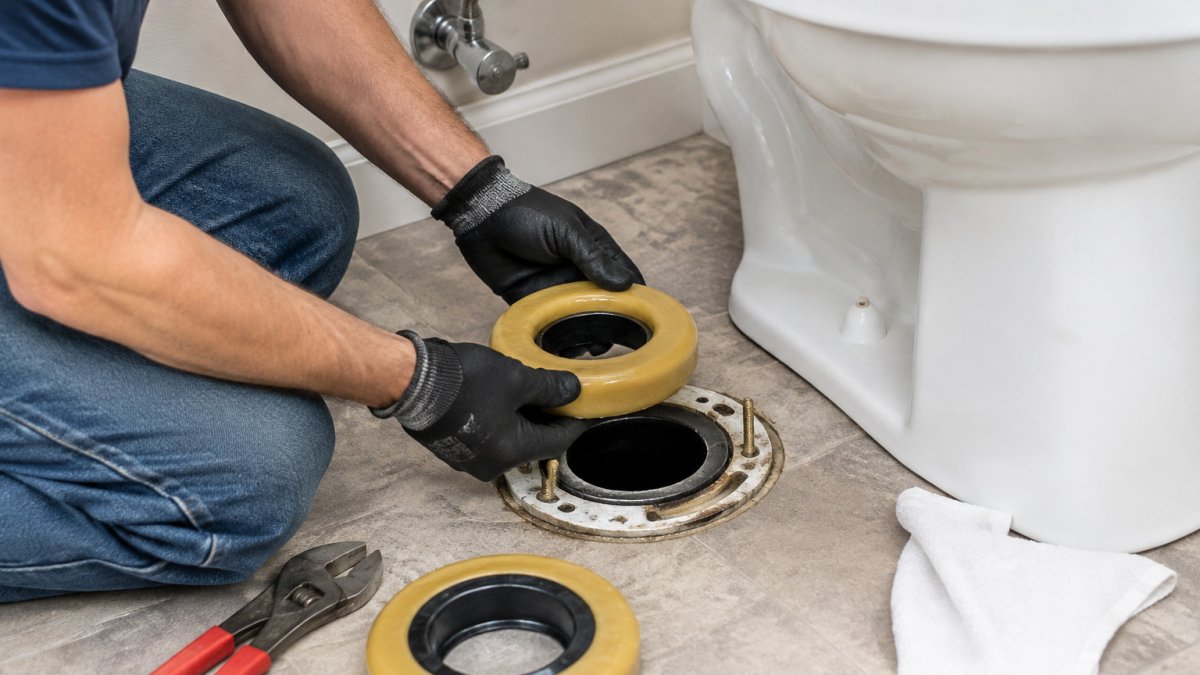
A typical sequence includes shutting off the water, disconnecting the supply line, removing the bolt caps, lifting the toilet, scraping off the old ring, inspecting the flange, installing the new ring, and resetting the toilet level. A plumber then tests for leaks.
Labor takes longer when the flange is cracked, the bolts are corroded, or the floor is uneven. Each added step should appear on the quote with its own explanation. If a plumber adds charges without describing the work, ask for a written breakdown before approving the job.
DIY Toilet Wax Ring Replacement, Step by Step
A confident homeowner can replace a wax ring with basic tools. Plan for a few hours, keep the bathroom clear, and read the whole sequence before you start so you are not improvising with the toilet off the flange.
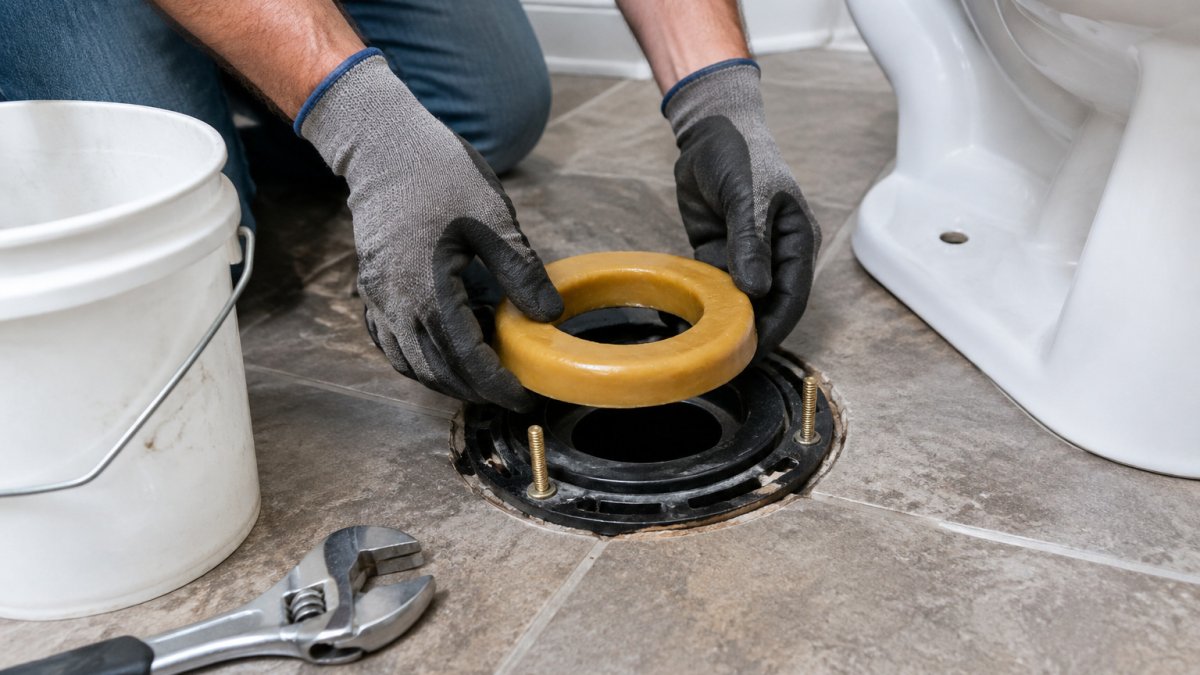
Before you begin: confirm it is the wax ring. A leak around the base can come from the wax seal, but it can also come from the supply line, the tank-to-bowl gasket, the fill or flush valve, or simple condensation on a cold tank.
What you will need:
- A replacement wax ring or wax-free seal (match the type to your flange height)
- New closet bolts and washers
- An adjustable wrench or socket set
- A putty knife or stiff scraper
- A bucket, sponges, rags, and a towel
- Gloves and safety glasses
- A level (a small torpedo level is enough)
Steps:
- Shut off the water at the valve and flush to empty the tank. Sponge out any water left in the tank and bowl so it does not spill when you lift the toilet.
- Disconnect the supply line at the tank and set the line aside.
- Remove the caps and nuts from the base bolts. If the nuts are corroded, apply penetrating oil and wait before forcing them, snapping a bolt is a bigger job.
- Lift the toilet straight up, keeping it level, and set it on a towel away from the drain. Get a helper for a heavy or one-piece toilet.
- Scrape off the old wax completely from both the flange and the toilet base. Old wax left in place prevents the new ring from seating.
- Inspect the flange. Look for cracks, corrosion, a flange sitting below floor level, or a floor that is not level. These change which seal you need and may mean the flange itself needs repair.
- Set the new ring on the flange (or on the toilet base, following the product instructions), then lower the toilet onto the bolts, keeping it level.
- Press down evenly and tighten the nuts gradually, alternating sides. Snug them evenly and stop when the toilet no longer rocks.
- Reconnect the supply line, turn the water on, and let the tank fill. Check the supply connection for drips before flushing.
- Flush several times and watch the base and the floor around it for any sign of moisture. Wipe the base dry first so a new leak is visible.
Watch out: Overtightening the nuts can crack the porcelain base, and a toilet that rocks after installation will break the seal again. If the base still rocks after snugging, do not keep tightening, check whether the flange or floor is uneven and address that instead.
If something goes wrong:
- Water still appears at the base after flushing. The ring may be misaligned or the flange may be damaged. Pull the toilet and inspect before adding another ring.
- Sewer smell persists. Check that the ring seated fully and that the flange is not cracked; a gap lets gas escape.
- The toilet rocks. Stop and check floor level and flange height rather than forcing the bolts.
- A bolt spins or snaps. You may need a flange repair kit or a bolt extractor; this is the point where many homeowners call a plumber.
After the install: run water and flush for a day or two and check the base and the ceiling below (if the bathroom is upstairs) for any new staining. A correctly seated ring with a sound flange should stay dry. If the leak returns, the cause is usually the flange or the floor, not the ring itself.
The article lays out the core DIY steps and what to check when a leak returns, which a quick-reference table can summarise.
| Problem | Likely cause | Fix |
|---|---|---|
| Water appears at base after flushing | Ring misaligned or flange damaged | Pull toilet and inspect before re-ringing |
| Sewer smell persists | Ring not fully seated or cracked flange | Check seating and flange for cracks |
| Toilet rocks | Uneven floor or flange height | Check floor level and flange height, don't overtighten |
| Bolt spins or snaps | Corroded or seized bolt | Use a flange repair kit or bolt extractor |
Toilet Flange Repair Cost and When It Adds to the Bill
The flange, the fitting bolted to the floor that the toilet drains into, is the most common reason a simple swap turns into a larger job. A cracked or corroded flange cannot hold a seal, so the ring alone will not stop the leak.
Flange repair can be as minor as replacing the bolts or as involved as cutting out and resetting the fitting. A flange sitting below floor level may need a spacer or an extra-thick ring. Uneven floors can also call for a wax-free seal or a different installation approach.
Ask the plumber to inspect the flange before quoting the job. A flange problem is worth knowing about early, because it changes both the parts and the labor.
How to Compare Plumber Quotes and Book Your Repair
When you have two or three quotes, compare scope first and price second. A low number that leaves out the flange inspection or the leak test may cost more later.
Confirm each quote includes:
- Removal and reinstallation of the toilet
- A new wax ring or wax-free seal, plus new bolts
- Flange inspection, with repair listed separately
- A leak test and written warranty on the work
- Any trip or diagnostic charge stated up front
If you want a clear, itemized estimate for your toilet, book a toilet repair with England's Plumbing & Heating and we will walk through the scope with you. You can also review why homeowners in Chester County choose us before deciding. For more guidance before you call anyone, read questions to ask before hiring a plumber. If the leak is part of a bigger problem, how to handle a boiler breakdown before calling for help explains what to check first, and how to fix a leaking toilet step by step covers the diagnosis in more detail.
England's Plumbing & Heating has served Chester County since 1989, handling toilet repairs, water heaters, well pumps, and gas piping with the same care. Book online or reach out for a clear estimate on your next toilet repair.
Frequently Asked Questions
How much will a plumber charge to change the wax ring on a toilet?
Most plumbers charge a service call fee plus labor for a wax ring swap, and the total depends on your region, time of day, and whether the toilet must be pulled and reset. The wax ring itself is a small part of the bill, usually a few dollars. Ask for an itemized quote that lists the service fee, labor hours, parts, and any flange or bolt replacement before you approve the work, so you can compare estimates accurately.
Can you replace a toilet wax ring yourself?
Yes, many homeowners replace a wax ring themselves with basic hand tools, a replacement kit, and about one to two hours. The job requires removing the toilet, cleaning the old wax from the flange, setting a new ring, and reinstalling the bowl with fresh bolts. Shut off the water supply, cap the drain to block sewer gas, and test for leaks after reinstalling. If the flange is cracked or the floor is soft, call a licensed plumber instead of forcing the repair.
How to tell if a toilet has a bad wax ring?
Common signs include water pooling at the base of the toilet, a rocking bowl, a persistent sewer odor near the bathroom, staining on the subfloor, and soft or discolored flooring around the toilet. Leaks from a failed wax ring often appear only when the toilet is flushed, so check the base carefully during and after use. A tank-to-bowl leak or a supply line drip can look similar, so confirm the source before you assume the ring has failed.
How often does a wax ring on a toilet need to be replaced?
A wax ring has no fixed lifespan and is usually replaced only when it fails, when the toilet is removed for another repair, or when the floor is replaced. Many rings last for decades if the toilet stays level and undisturbed. Replacing the ring when you pull a toilet for flooring or remodeling is a sensible habit, since the cost of the part is low compared with the labor of pulling the toilet again later.