 how-to
Boiler Breakdown? What to Do Before You Call for Help
Last Updated: October 24, 2026
Quick Summary
For a boiler breakdown, first check the thermostat, power, and fuel supply, then look for danger signs like gas smells or leaks. If it is safe, press the reset button once and read the pressure gauge. Call for emergency service if you smell gas, a CO alarm sounds, or water leaks near electrical parts.
- Never open the sealed combustion chamber or adjust gas-side components; those tasks require a licensed technician.
- If the boiler locks out again after one reset, stop pressing reset and call a technician.
- Keep electric space heaters at least 3 feet from anything flammable and plug them directly into a wall outlet.
- Never bring a gas grill, camp stove, or portable generator indoors because they produce carbon monoxide.
- Keep the thermostat no lower than 55°F and let a thin stream run from the farthest faucet to protect pipes.
Table of Contents
- What to Do When a Boiler Breaks Down: First Steps
- Boiler Troubleshooting Steps You Can Safely Try
- When a Boiler Breakdown Becomes an Emergency
- Temporary Heat During a Boiler Breakdown: What Works and What's Safe
- Safe Space Heater Use While You Wait for Repair
- Protecting Pipes and Preventing Freeze Damage
- What to Tell the Technician and How to Prepare for the Visit
- Book Your Emergency Heating Service
- Frequently Asked Questions
What to Do When a Boiler Breaks Down: First Steps
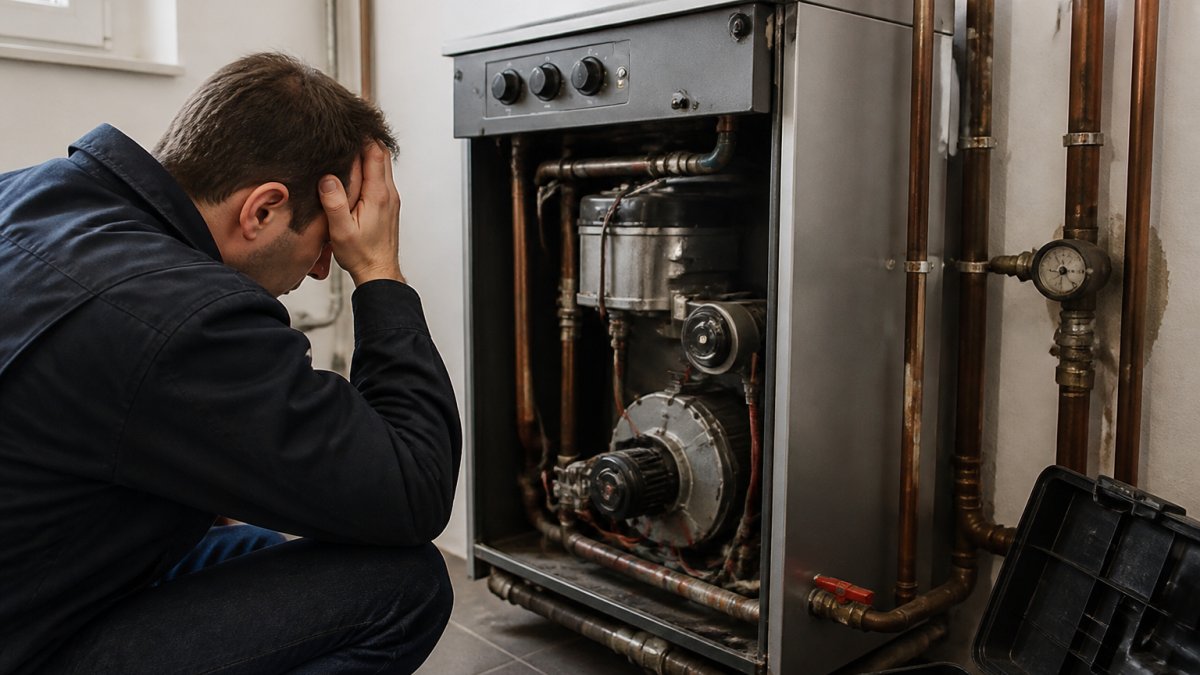
A boiler breakdown usually hits at the worst possible moment: a cold morning, a house full of people, and no hot water. The first hour matters most, and a few quick checks solve a surprising share of no-heat calls.
Stay calm and work through the basics before you touch anything else.
- Confirm the problem is the boiler, not one room.
- Check the thermostat, power, and fuel supply.
- Look and listen for danger signs.
- Only then try a safe reset.
If you smell gas or see water pouring from the unit, stop and call for help right away.
Check the Thermostat, Power, and Fuel Supply
Start with the simplest causes, because they are more common than a failed part. A thermostat in the wrong mode or a tripped breaker can mimic a full boiler failure.
- Thermostat: Make sure it is set to heat and above the current room temperature.
- Power: Check the breaker panel for a tripped switch and reset it once.
- Fuel: Confirm your propane tank or oil tank is not empty, and that the fuel delivery valve is open.
A blank display points to power. A lit display with a fault code points to the boiler itself. Write the code down; it saves time later.
Look for Warning Signs: Gas Smells, Carbon Monoxide, and Leaks
Some boiler problems are dangerous, and no amount of troubleshooting is worth the risk. Stop and act if you notice any of these:
- A rotten egg or sulfur smell near the boiler or gas line
- A hissing sound at a gas connection
- Soot, scorch marks, or a yellow flame instead of blue
If you smell gas, leave the building and call your gas utility from outside. For suspected carbon monoxide, get everyone into fresh air and call 911. The U.S. Consumer Product Safety Commission guidance on carbon monoxide explains why CO alarms belong near sleeping areas.
Boiler Troubleshooting Steps You Can Safely Try
A boiler is not a furnace, and the checks that are safe on one are not always safe on the other. The goal is narrow: rule out simple causes, confirm what the boiler is telling you, and stop before you reach a task that belongs to a licensed technician.
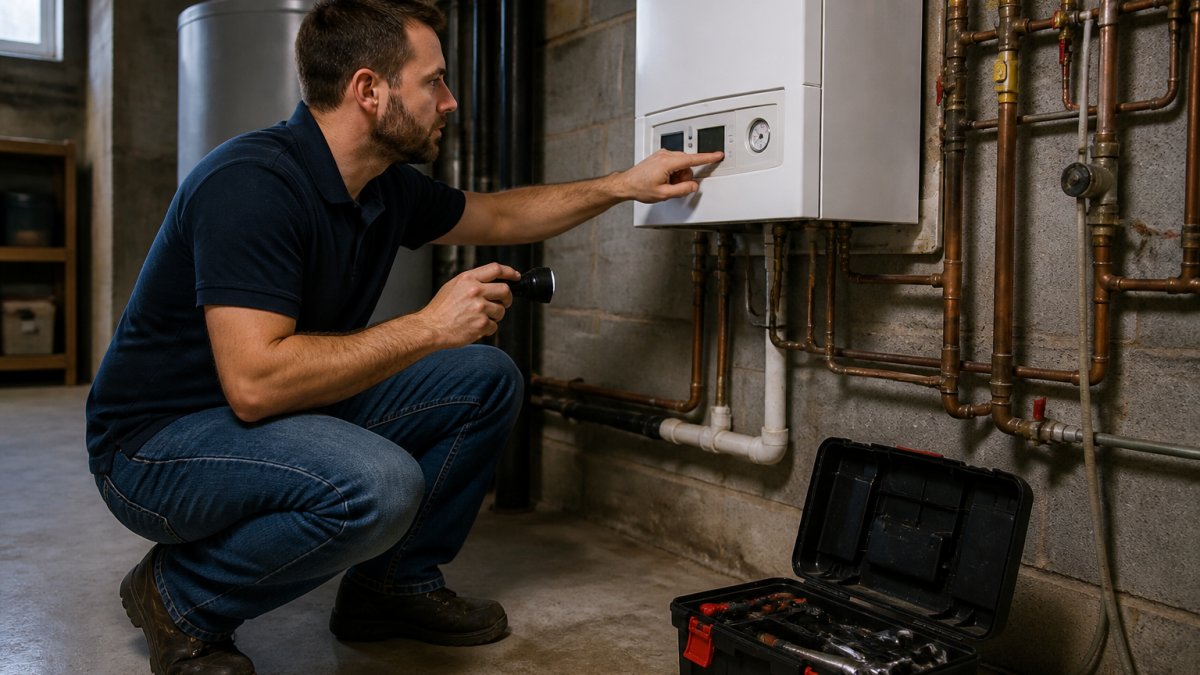
Know the Line: What You Can Do and What You Cannot
Before you touch the boiler, sort the tasks into three buckets, the step most generic heating guides skip, and the one that keeps you safe.
Safe for most homeowners:
- Confirming the thermostat is set to heat and above room temperature
- Resetting a tripped breaker once at the panel
- Pressing the boiler reset button once
Leave to a licensed technician:
- Opening the boiler case or burner cover
- Adjusting the gas valve, burner, or combustion settings
- Repairing or replacing the expansion tank, circulator pump, or pressure relief valve
Stop and call for emergency service:
- A gas smell, a CO alarm, or soot and scorch marks
- Water leaking near electrical components
- Repeated lockouts after one reset
Reset the Boiler Once and Read the Pressure Gauge
Press the reset button once, then wait a few minutes. If the boiler fires, you may have had a temporary lockout from a brief fuel interruption, a power blip, or a condensate hiccup.
Next, read the pressure gauge. Most residential hot-water systems run best in the range printed on the unit or in the manual; a common range is roughly 12 to 25 psi when cold, but use your own unit's number.
Write down the pressure reading and the error code. Both save time on the service call.
Bleed Radiators and Check the Condensate Pipe
Cold radiators at the top with warm bottoms usually mean trapped air. Bleed each radiator with a radiator key until water runs steady, working from the radiator closest to the boiler outward, then check the pressure gauge, bleeding releases water and can drop system pressure.
On a condensing boiler, find the white plastic condensate pipe that drains outside; in freezing weather it can ice over and shut the boiler down. Pour warm, not boiling, water along the pipe to thaw it.
What the Display Code Is Telling You
A blank display points to power: check the breaker, the boiler switch, and the thermostat batteries. A lit display with a fault code points to the boiler itself. Codes vary by manufacturer, so look yours up in the manual or on the manufacturer's website rather than guessing. Common patterns include low-pressure, ignition, and condensate or flue faults. Record the code exactly as shown; the technician will use it to bring the right part on the first visit.
When a Boiler Breakdown Becomes an Emergency
A boiler breakdown turns into an emergency when safety or health is on the line, not just comfort. Call for emergency service when you have no heat in freezing temperatures, a gas smell, a CO alarm, or water leaking near electrical parts.
Unsure whether your situation counts? Our guide on what is considered a plumbing emergency walks homeowners through the decision. If you have already decided this is urgent, see emergency boiler repair services for the next step.
- Call now: gas smell, CO alarm, flooding, sparks
- Call today: no heat with temperatures below freezing
- Can wait for a scheduled visit: lukewarm water, one cold radiator, odd noises
Temporary Heat During a Boiler Breakdown: What Works and What's Safe
Temporary heat keeps pipes and people safe while you wait for a technician, but the options are not interchangeable. Pick by safety first, then by suitability for the room and length of wait, then by cost.
| Option | Best for | Safety notes | Relative cost |
|---|---|---|---|
| Electric space heater | One occupied room, short waits | Keep at least 3 feet from anything flammable; plug directly into a wall outlet (Keep Warm and Safe This Winter: Tips for Using Generators, Furnaces and Space Heaters) | Moderate to run; adds to the electric bill |
| Fireplace or wood stove | Homes with a working, inspected flue | Vent properly; never leave unattended; keep a screen | Low if wood is on hand; higher if you buy fuel |
| Layered clothing and blankets | Short waits, overnight | No fire or CO risk | None |
| Electric blanket | Bedrooms | Check cords; do not overload outlets; do not use with an extension cord | Low |
| Hotel or family stay | Long outages, deep cold | Safest option when indoor temperatures drop | Highest, but protects health and pipes |
The Options You Must Never Use Indoors
Never bring a gas grill, camp stove, kerosene heater not rated for indoor use, or portable generator indoors. These produce carbon monoxide, an odorless gas that kills people every year in exactly this situation: a heating failure, a cold night, and a device brought inside for warmth. A generator belongs outdoors, well away from windows and doors. A portable heater is fine when it is electric and used correctly; a fuel-burning device indoors is not.
Match the Option to the Wait
A few hours is a blanket-and-layers problem. An overnight wait in freezing weather is a pipe-protection problem, where the priority shifts from comfort to keeping the house above freezing. A multi-day wait in a cold snap is a health problem, especially for older adults, infants, and anyone with a chronic condition; a hotel stay is often the cheapest safe option once you count the cost of a burst pipe or a hospital visit.
Keep the House Above Freezing
Even with the boiler down, the house has residual heat. Keep interior doors open so warmth circulates, close off unused rooms only if they have no plumbing on exterior walls, and keep the thermostat no lower than 55°F if the system can still circulate. If the boiler is completely down, one electric heater in the room with the most exposed plumbing beats heating a bedroom.
Safe Space Heater Use While You Wait for Repair
Safe space heater use comes down to placement, supervision, and power. Most home heating fires trace back to heaters placed too close to furniture, curtains, or bedding.
- Keep the heater on a hard, level surface, never on carpet edges or near paper.
- Leave at least 3 feet of clear space on all sides.
- Plug directly into a wall outlet, not a power strip.
The National Fire Protection Association home heating safety tips note that heating equipment is a leading cause of home fires in cold months. One heater, one room, one outlet is the rule.
Protecting Pipes and Preventing Freeze Damage
Frozen pipes can cost far more than the boiler repair itself. When the heat is out, protect the pipes most likely to freeze: those in exterior walls, crawl spaces, garages, and attics.
- Open cabinet doors under sinks on exterior walls.
- Let a thin stream of water run from the farthest faucet.
- Wrap exposed pipes with foam insulation or towels.
If a pipe has already frozen, our guide on how to thaw frozen pipes safely covers the step-by-step method. Watch out: never use a torch or open flame on a pipe.
What to Tell the Technician and How to Prepare for the Visit
A clear report speeds up the repair and can cut the bill. Have these ready when you call:
- Boiler make, model, and age
- The error code on the display
- What you already tried, and what happened
- Whether you smell gas or see leaks
- The pressure gauge reading
- Your address and the best number to reach you
Clear a path to the boiler, move stored items away, and secure pets. If you want to prevent the next breakdown, our heating system maintenance tips cover the annual tune-up that keeps a system reliable.
Book Your Emergency Heating Service
A boiler breakdown is stressful, but you now have a plan: check the basics, watch for danger signs, try only safe steps, and call for help when it counts.
England's Plumbing & Heating has served Chester County since 1989 with experienced heating professionals, gas piping work, and responsive support. Get started with England's Plumbing & Heating and see our full heating services to book your repair today.
Frequently Asked Questions
What should I do first if my boiler breaks down?
Check the thermostat, power switch, and fuel supply first. If the boiler has power and fuel but still won't fire, try a single reset. If you smell gas or suspect carbon monoxide, leave the house and call 911 or your gas utility from outside. Do not attempt repeated resets or open any panels. If the reset doesn't restore heat, call a licensed heating technician for emergency service.
Is it safe to use a space heater during a boiler breakdown?
Electric space heaters are generally safe when used correctly, but follow these rules: plug directly into a wall outlet, never use an extension cord, keep the heater at least 3 feet from furniture, curtains, and bedding, and never leave it running unattended or while you sleep. Avoid unvented gas or kerosene heaters indoors because they release carbon monoxide. Check that your smoke and CO alarms work before using any temporary heater.
How can I keep my house warm while waiting for boiler repair?
Close off unused rooms, place rolled towels at the bottom of doors, and let sunlight in during the day. Wear layers and use blankets. For temporary heat, choose a electric space heater with tip-over protection and keep it in the room you use most. Never use a gas oven or stovetop to heat your home. If temperatures drop below 20°F, open cabinet doors under sinks on exterior walls to let warm air reach the pipes.
When should a boiler breakdown be treated as an emergency?
Treat it as an emergency if you smell gas, hear a hissing sound near the boiler or gas line, see soot or yellow flames, or if your carbon monoxide alarm sounds. Also call immediately if outdoor temperatures are below 20°F, if anyone in the home is elderly, very young, or has health issues, or if pipes are at risk of freezing. In those cases, do not wait for a regular appointment.