 how-to
How to Troubleshoot Low Water Pressure in Your Shower
Last Updated: November 5, 2026
Quick Summary
Low water pressure in a shower usually comes from one of three places: a clogged showerhead, a restricted flow restrictor or valve, or a whole-house supply problem. Start by checking whether only the shower is weak or every fixture is affected, since that pattern points to the cause. Then clean the showerhead and test pressure with a gauge.
- Check whether only the shower or every fixture in the house is affected.
- Soak the showerhead in white vinegar for at least one hour to remove mineral buildup.
- Check the flow restrictor and make sure every shower valve is fully open.
- Normal readings are about 40 to 80 psi at the main; above 80 psi stresses pipes.
- Never adjust the regulator more than a quarter turn at a time, and call a plumber if unsure.
Table of Contents
- Start With the Pattern: Is It Only the Shower?
- Clean the Showerhead and Remove Mineral Buildup
- Check the Flow Restrictor and Shower Valves
- Test Pressure With a Gauge and Check Your Regulator
- Troubleshooting Low Pressure From a Well Pump
- Apartments, Rentals and Shared Buildings
- Booking a Plumber for Your Low Pressure Problem
- Frequently Asked Questions
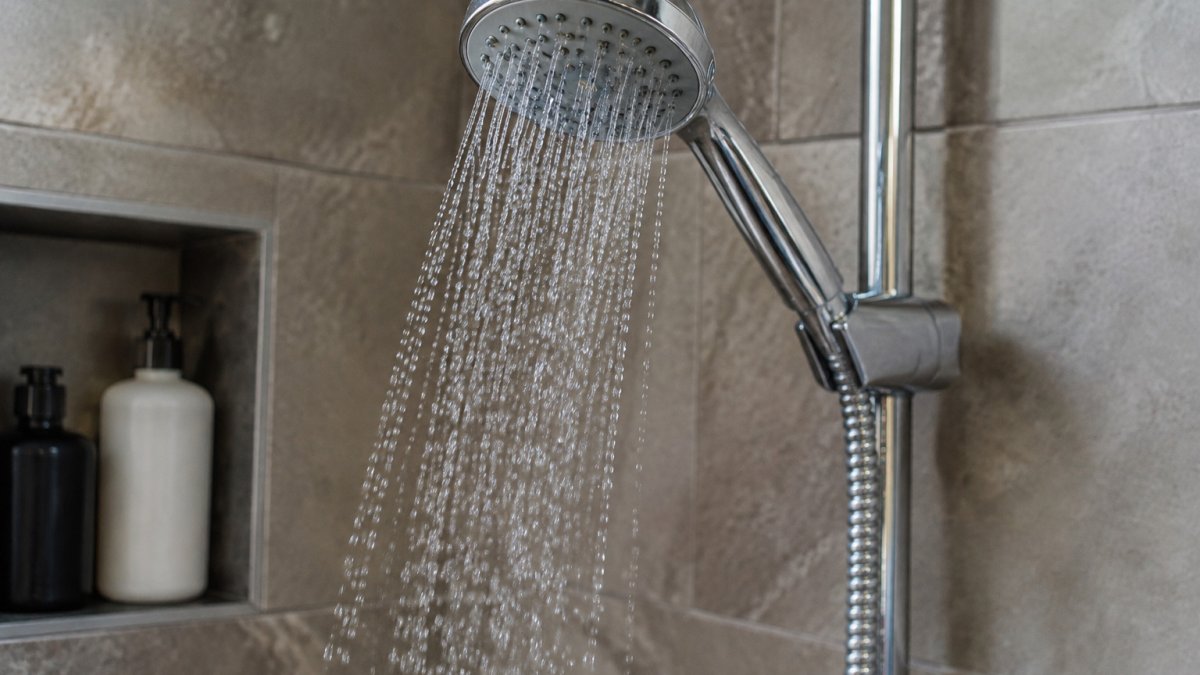
If your shower trickles when it should roar, you are not alone. Low water pressure in the shower is one of the most common complaints homeowners raise, and it is also one of the easier problems to narrow down.
Start with the pattern. Check whether the low pressure affects only the shower or every faucet and fixture in the house. A weak showerhead alone points to a very different cause than a whole-house drop.
Start With the Pattern: Is It Only the Shower?
The fastest way to narrow the cause is to run the sink, tub and outdoor hose at the same time you run the shower. Watch the flow at each one. The results sort the problem into one of two buckets.
Build a three-question decision tree
Before you touch a wrench, answer three questions in order. Each answer eliminates a whole category of causes.
Question 1: Is the weak flow only at this shower, or at every fixture?
- Only this shower: the cause is almost always at the fixture or its valve, a clogged showerhead, a flow restrictor, a partially closed shower valve, or a failing cartridge. Skip to the showerhead and valve sections.
- Every fixture in the house: the cause is upstream, the main shutoff, the pressure regulator, the well pump and tank, or a main-line leak. Start with the gauge and regulator section.
- This shower plus one nearby fixture: suspect a shared branch line, a partially closed valve on that branch, or a cartridge that serves both.
Question 2: If more than one shower is affected, is it one shower or all showers?
- One shower only: fixture-level problem. Clean the head, check the restrictor, inspect the cartridge.
- All showers but sinks are fine: the problem sits in the shower branch or the mixing valve, not the main supply.
- All showers and all sinks: whole-house supply problem. Go to the gauge and regulator section.
Question 3: Is the weak flow only on hot water, only on cold, or both?
- Hot only: check the water heater first, sediment, a failed dip tube, or a partially closed valve on the hot outlet. Test the hot tap at the sink; if it is weak there too, the restriction is upstream of the shower valve.
- Cold only: less common, but it points to a clogged cold-side cartridge port or a closed cold shutoff.
- Both hot and cold equally weak: the restriction is in the showerhead, the flow restrictor, or the shared mixing valve, not the water heater.
- Pressure drops only when the temperature is turned toward hot: this is a classic mixing-valve or cartridge symptom, not a supply problem. See the valve section.
When the whole house is affected
If every faucet and fixture is weak, the problem is likely in the supply itself. Common causes include:
- A partially closed main shutoff valve
- A failing or undersized well pump or pressure tank
- A faulty pressure regulator
- A leak in the main line
A whole-house drop is less likely to be caused by the showerhead. Start with the main valve and the pressure system before touching the shower.
When only hot water is weak
If only the hot side is low, check the water heater first. Sediment buildup inside the tank can restrict flow, and a partially closed valve on the hot supply line can cause the same symptom. Test the hot tap at the sink. If it is weak there too, the problem sits upstream of the shower valve.
Watch out: a shower that weakens only as you turn the handle toward hot can point to a failing cartridge or mixing valve rather than the water heater.
Clean the Showerhead and Remove Mineral Buildup
Mineral deposits are the most common cause of weak shower flow in a single fixture. Hard water leaves limescale inside the nozzles, and over time the holes clog.
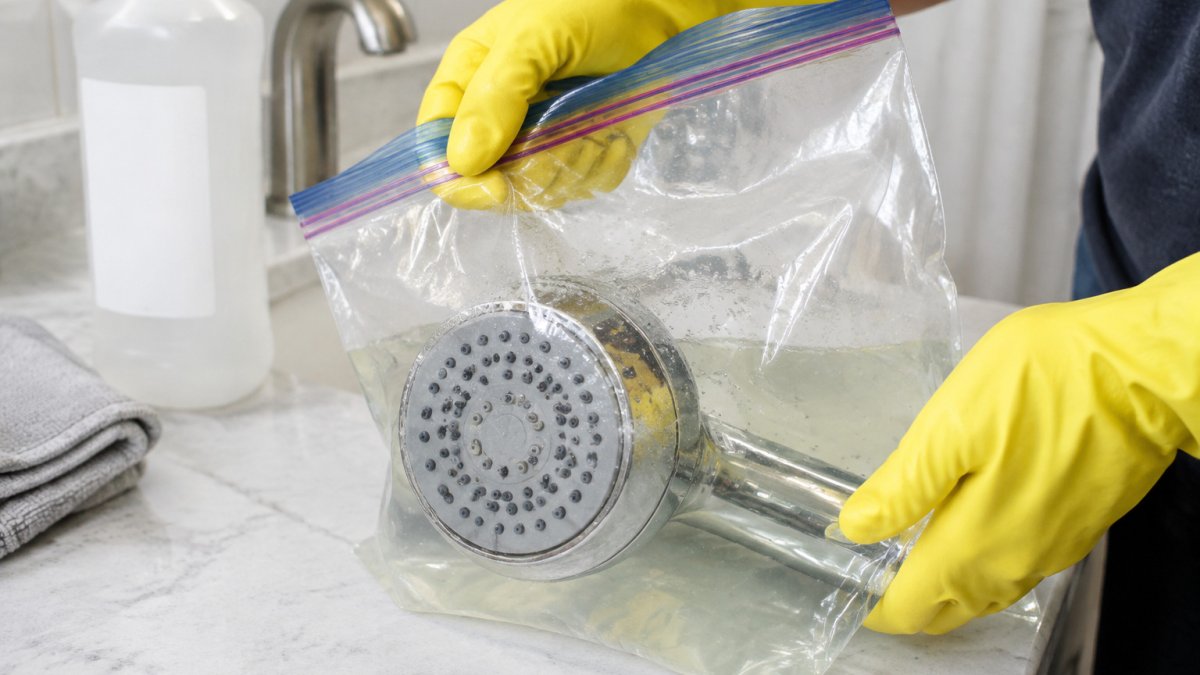
How to clean it:
- Remove the showerhead by hand or with an adjustable wrench wrapped in a cloth.
- Fill a plastic bag with white vinegar and tie it around the showerhead so the nozzles are fully submerged.
- Leave it soaking for at least one hour, or overnight for heavy scale.
- Scrub the face with an old toothbrush to clear loose debris.
- Run hot water through the head for a minute, then reinstall it.
Many homeowners find that cleaning alone restores most of the lost pressure. If flow stays weak after cleaning, the problem lies elsewhere in the system.
Check the Flow Restrictor and Shower Valves
Some showerheads include a flow restrictor, a small disc or insert designed to conserve water. A restrictor can also get clogged with sediment or be installed backward. Remove the showerhead and look inside the connection for a washer-like part. Clear any debris and confirm it is seated correctly.
Next, check the shower valve. Many shower valves include a control or shutoff valve that can be partially closed during past repairs. Make sure every valve on the supply line is fully open.
Test Pressure With a Gauge and Check Your Regulator
A pressure gauge gives you a number instead of a guess, and it separates two things homeowners constantly confuse: pressure (how hard the water pushes, measured in psi) and flow (how many gallons per minute come out of the fixture). For a clear walkthrough, see step-by-step gauge testing. A shower can feel weak because pressure is low, because flow is restricted at the head, or both.
A basic hose-bib gauge is available at most hardware stores. Choose one with a lazy hand or a recorded peak reading if you want to catch spikes.
Safe testing steps:
- Attach the gauge to an outdoor hose bib or a utility sink faucet, ideally the one closest to where the main line enters the house.
- Open the faucet fully and read the static pressure with nothing else running.
- Compare the reading to the range your home's system is designed for. Many homes run within a moderate pressure range, and fixture components are generally rated for a maximum pressure that should not be exceeded.
- Close the faucet, remove the gauge, and drain any water.
- Repeat at a second fixture, one near the main and one at the far end of the house, to see whether pressure drops along the run.
How to read the result:
- 40 to 80 psi at the main, but the shower still feels weak: pressure is fine, so the restriction is at the fixture. Clean the showerhead, check the flow restrictor, and inspect the cartridge.
- Below about 40 psi at the main: the supply or regulator is the problem. Go to the regulator check below.
- Above about 80 psi: pressure is too high, which stresses pipes, supply lines, and fixtures. Do not "fix" a weak shower by raising pressure further, address the restriction instead.
- Normal at the main but low at the far fixture: a partially closed valve, a clogged cartridge, or a narrowed older pipe is dropping pressure along the run.
If pressure reads well below normal, check the pressure regulator, usually found near the main line where water enters the house. A failing regulator can drop pressure across the entire home.
The gauge readings and what they mean are summarised below.
| Reading | What it means | Next step |
|---|---|---|
| 40 to 80 psi at the main, shower still weak | Pressure is fine; restriction is at the fixture | Clean head, check restrictor, inspect cartridge |
| Below about 40 psi at the main | Supply or regulator is the problem | Check the pressure regulator |
| Above about 80 psi | Pressure is too high and stresses pipes | Address the restriction, do not raise pressure |
| Normal at main, low at far fixture | Partially closed valve or clogged cartridge | Check valves and cartridge along the run |
Troubleshooting Low Pressure From a Well Pump
Homes with private wells rely on a pump and a pressure tank to deliver water. If the whole house has weak pressure and the home uses a well, check these first:
- Listen for the pump cycling on and off. Constant running or frequent short cycles can signal a failing pressure switch or a leak.
- Look at the pressure gauge on the tank. A gauge that reads low when the pump is off can point to a waterlogged tank.
- Check that the well's storage or drawdown has not dropped, which can reduce flow during heavy use.
Well pump repair is specialized work. A pump that is failing or undersized needs professional diagnosis, and England's Plumbing & Heating provides well pump repair and replacement services.
Apartments, Rentals and Shared Buildings
If you rent or live in a shared building, many of the fixes above are not yours to make. Valves, regulators and the main line often belong to the building owner or property manager. Before you take apart the showerhead, ask whether the problem affects other units. A building-wide drop usually means the landlord needs to call a plumber. A weak shower alone is more likely a fixture issue you can clean yourself.
Keep notes on when the problem happens and what you tried. That record helps the property manager act faster.
Booking a Plumber for Your Low Pressure Problem
Some causes call for a professional: a failing well pump, a bad pressure regulator, a leak, or a valve that cannot be cleared by hand. Before you book, gather three things: the pattern you observed, your gauge reading if you took one, and what you already cleaned or checked.
Costs vary with the repair, so ask for a written estimate before any work begins. England's Plumbing & Heating offers online booking and live chat support, so you can schedule a visit and describe the symptoms in advance.
Frequently Asked Questions
Why is my shower the only place with low water pressure?
When only the shower is weak, the problem is usually local rather than in the main supply. The most common causes are a clogged or mineral-crusted showerhead, a partially closed shutoff or control valve, a flow restrictor, or a worn cartridge in the shower valve. Test the other fixtures in your home first. If the kitchen sink and other taps run strong, start with the showerhead and the valve serving the shower. If every fixture is weak, the issue is more likely the whole-house supply, a regulator, or your well pump.
What is the most common cause of low water pressure in a shower?
Mineral deposits, also called limescale, are the most common cause in homes with hard water. Calcium and magnesium build up inside showerhead nozzles and restrict flow. Soaking the head in white vinegar for several hours usually dissolves the scale. Debris from recent plumbing work or sediment in the water line can also block flow, and a clean head often restores pressure immediately. Check the head before assuming a bigger plumbing problem.
How can I boost water pressure in my shower?
Start with free fixes: clean the showerhead, make sure the shutoff valve under the shower is fully open, and check whether a water-saving flow restrictor is installed in the head or arm. Removing an unnecessary restrictor can noticeably increase flow, but confirm that your water heater and local rules allow it. If these steps do not help, a pressure gauge can show whether the supply is low, and a licensed plumber can check the pressure regulator or shower valve cartridge.
When should I call a professional for shower pressure issues?
Call a licensed plumber if the whole house has weak pressure, if pressure drops suddenly without an obvious cause, if you suspect a leak, or if the shower valve, cartridge or regulator needs replacement. Gas or water-heater work should always go to a professional. Well owners should call for pump, pressure tank or pressure switch problems, since these involve electrical components and can damage the pump if handled incorrectly.
Need help now? Schedule a visit with England's Plumbing & Heating and get your shower pressure back on track.