 how-to
Questions to Ask Before Hiring a Plumber
Table of Contents
- Verify License, Insurance, and Bonding
- Ask Plumber Interview Questions for Homeowners
- Get Clear Plumbing Estimate Questions Answered
- Understand Questions to Ask About Plumbing Warranties
- Create a Plumber Hiring Checklist
- Identify Red Flags and High-Pressure Tactics
- Prepare for the Service Call
- Frequently Asked Questions
Last Updated: October 17, 2026
Verify License, Insurance, and Bonding
Start with the license. Ask for the license number and check it with your state's licensing board.
Next, confirm liability insurance. Ask for proof of current coverage. It protects your home if the plumber damages your property; without it, you're liable for repairs.
Finally, ask about bonding. A bond is a financial guarantee that covers your losses if the plumber doesn't complete the work or violates the contract.
Ask Plumber Interview Questions for Homeowners
The right questions separate qualified contractors from unprepared ones. Use these when you call for a quote.
Experience with Your Specific Problem
Ask directly: "How many jobs like mine have you completed?" Relevant experience means they know the common pitfalls and work faster.
Follow up with specifics. For a water heater replacement, ask how many they've installed in the last year.
Ask about the toughest version of your problem: "What's the most complicated [repair type] you've tackled?" A plumber who's seen unusual situations spots issues before they become expensive.
Training and Certifications
Certifications show ongoing professional development. Ask what training they've completed in the last two years. Plumbing codes change. New materials and techniques emerge.
Ask about apprenticeships and journeyman status. In most states, plumbers must complete an apprenticeship and pass a journeyman exam, a baseline of competence.
Ask if they specialize. Some focus on new construction, others on repairs and maintenance, and some hold certifications in water quality or gas piping.
References and Online Reviews
Request at least three references from recent jobs and call them.
Check reviews on Google, Yelp, and the Better Business Bureau.
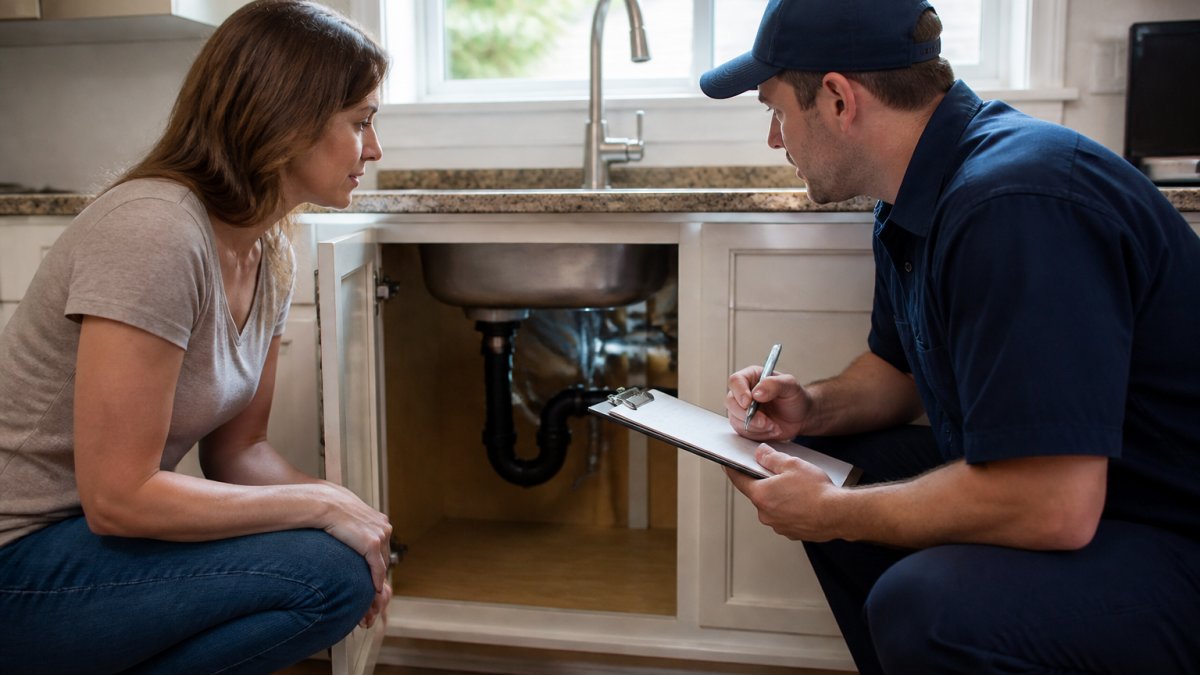
Ask about their warranty on past work. If they stand behind their jobs, they'll have a track record of warranty claims being resolved fairly. This confidence signals quality work.
Get Clear Plumbing Estimate Questions Answered
A written estimate is your protection, it spells out exactly what you're paying for. Never hire based on a phone quote alone.
What's Included in the Written Estimate
A solid estimate breaks down the work into clear sections. Ask for these details:
- Service call fee (if applicable)
- Labor costs and hourly rate or flat rate
- Materials needed with costs listed separately
- Timeline for completion
- Any permits required and who pays for them
- Cleanup and disposal of old materials
Ask what happens if they find additional problems: will they call before proceeding, and will there be extra charges? A professional explains their process upfront.
Ask if the estimate includes a site visit. The best estimates come after an in-person inspection; phone estimates are often inaccurate because plumbers can't see the actual conditions.
How to Compare Multiple Quotes Line by Line
Most homeowners collect two or three quotes and pick the lowest number, the wrong comparison. Two estimates can look similar on the bottom line while covering completely different work. Build a comparison sheet with one column per plumber and one row per line item.
Use these rows on your comparison sheet:
- Scope of work: Is the plumber replacing the same parts, or is one quote patching a section while another replaces the full run? A patch that fails in a year is not cheaper.
- Materials and brands: Ask for the make and model of fixtures, pipe, and fittings. A quote using a builder-grade water heater is not comparable to one using a longer-warranty unit, even at the same labor price.
- Exclusions: Look for what is not included, drywall repair, permit fees, haul-away, or restoration after access cuts. Exclusions are where low quotes hide their real cost.
- Labor basis: Confirm whether labor is hourly with an estimate range or a flat rate. An hourly quote with no cap can grow; a flat rate shifts that risk to the plumber.
- Permits: Confirm who pulls the permit and who pays the fee. Unpermitted work can complicate a future sale or insurance claim.
- Warranty terms: Compare labor warranty length and what triggers a free return visit, not just the manufacturer warranty on parts.
- Payment schedule: Note deposit amount, progress payments, and whether final payment is due on completion and inspection.
Pricing Model and Additional Charges
Understand how they charge. Hourly rates suit unpredictable repairs; flat rates suit standard jobs like water heater installation.
Ask what triggers additional charges: hidden problems behind walls, travel time, or after-hours and weekend emergency fees.
Get clarity on materials: some charge cost-plus markup, others include them in a flat rate. Ask which applies.
If a plumber refuses to provide a written estimate or won't explain their pricing structure, move on. Vague pricing leads to disputes and unexpected bills.
Understand Questions to Ask About Plumbing Warranties
A warranty protects you after the work is done and shows the plumber believes in it.
Ask about workmanship warranties: how long they guarantee their labor (typically one to five years) and whether return visits are covered if the same problem reoccurs.
Ask about material warranties. The plumber doesn't control manufacturer warranties on pipes or fixtures, but should explain what's covered and for how long.
Ask what happens if something fails during the warranty period: a free return or a service fee?
Create a Plumber Hiring Checklist
Use this checklist to compare plumbers and track your evaluation:
- License verified with state licensing board
- Current liability insurance confirmed
- Bonding in place (if applicable)
- At least three recent references checked
- Online reviews reviewed on Google and Better Business Bureau
- Experience with your specific problem confirmed
- Relevant certifications and training discussed
- Written estimate received with detailed breakdown
- Pricing model explained (hourly or flat rate)
- Additional charges and emergency fees clarified
- Workmanship warranty terms in writing
- Material warranty terms explained
Don't rush. Vetting plumbers now saves money and headaches later.
Identify Red Flags and High-Pressure Tactics
Certain warning signs suggest you should look elsewhere. Treat this as a screening checklist you run before you sign anything, not a list of suspicions to keep to yourself.
High-Pressure Sales Tactics
Pressure to decide immediately is a major red flag. A legitimate plumber gives you time to think and compare quotes. If they push for a same-day decision or threaten to move to another customer, they're using pressure tactics.
Watch for these specific patterns:
- The "today-only" discount that expires the moment the technician leaves your driveway.
- Fear framing, claims that a small leak will imminently cause catastrophic damage unless you authorize a large repair on the spot.
- Upselling without diagnosis, recommending a full system replacement before anyone has inspected the actual failure point.
- Refusal to put the recommendation in writing so you can get a second opinion.
- Scare language about permits or code used to justify work you did not ask for.
A simple counter: ask the plumber to write down the recommended repair, the reason for it, and the price, and tell them you will call back after reviewing it. A professional will agree. A high-pressure operator will resist.
Quote and Credential Red Flags
Quotes that are dramatically lower than others warrant caution. Sometimes a low quote means the plumber cuts corners or underestimates the work.
Unwillingness to provide references or a written estimate suggests they have something to hide. Professionals document their work and stand behind it.
Vague answers about their experience are concerning.
Cash-only payments with no receipt are risky. You lose documentation and consumer protection. Always get an itemized receipt.
How to Verify a Suspicious Claim
When something feels off, verify it rather than argue about it:
- License: Ask for the license number and check it against your state's licensing board lookup. A legitimate plumber will give the number without hesitation.
- Insurance: Request a certificate of insurance showing current general liability coverage and the policy effective dates. Call the insurer's number on the certificate to confirm it is active.
- Permits: Ask for the permit number once work begins. You can confirm an open permit with your local building department.
- References: Call at least two references and ask whether the final bill matched the estimate and whether the plumber returned for any follow-up.
If a plumber cannot or will not produce a license number, proof of insurance, or a written estimate, stop the conversation. No amount of verbal reassurance replaces documentation.
What to Do If the Repair Fails or a Dispute Arises
Even with a careful hire, things can go wrong. Knowing the steps in advance keeps a small problem from becoming an expensive one.
- Document everything immediately. Photograph the failure, keep the original estimate and any change orders, and save receipts and text or email threads. A written record is the backbone of any warranty claim.
- Notify the plumber in writing. Send an email or text describing the problem, the date it appeared, and what you want, a return visit under warranty, a refund, or a corrected repair. Keep it factual.
- Read the warranty terms you were given. Confirm the labor warranty length and what triggers a free return visit. Most workmanship warranties cover the plumber's labor for a set period; manufacturer warranties cover the parts.
- Escalate in order. If the plumber does not respond, contact the company owner in writing, then your state licensing board, then your state consumer protection office. For insurance-related disputes, contact the insurer listed on the certificate of insurance.
- Protect your payment. If a dispute is unresolved, do not make a final payment you have not agreed to. Pay by credit card where possible so you have a chargeback option, and never pay the full balance before the work is inspected and complete.
Before you hire, ask the plumber one direct question: "If this repair fails within your warranty period, what is your process for a return visit?" The answer tells you more about how they handle disputes than any review you will read.
Prepare for the Service Call
Once you've hired a plumber, prepare your home for their arrival.
Clear access to the problem area.
Shut off water if you have an active leak.
Have your questions written down. During the service call, ask about what they're finding.
Ask the plumber to explain the work as they do it.
Hiring the right plumber starts with asking the right questions before they ever arrive at your home. Verify credentials, understand their experience, get everything in writing, and watch for pressure tactics. These steps protect your home and your wallet.
Choosing a plumber is one of the most important home maintenance decisions you'll make.
Frequently Asked Questions
What are the most important questions to ask before hiring a plumber?
Start by verifying the plumber's license, insurance, and bonding status with your state licensing board. Ask about their experience with your specific plumbing problem, certifications, and references from recent customers. Request a written estimate that itemizes labor costs and materials, and clarify their pricing model (hourly rate or flat-rate pricing). Finally, ask about warranty coverage and what happens if the repair fails.
How do I verify a plumber's license and insurance?
Contact your state's licensing board or plumbing contractor association to confirm the plumber holds a valid license. Ask the plumber directly for proof of liability insurance and bonding. Request their insurance company name and policy number, then verify coverage is current. Never hire an unlicensed plumber, licensing ensures they've met training requirements and follow building codes.
What should a plumbing estimate include?
A detailed estimate should list specific labor costs, materials needed with descriptions, the scope of work, project timeline, payment terms, and any warranty information. It should break down what you're paying for so there are no surprises. Ask whether the estimate includes disposal of old fixtures or cleanup, and whether additional charges might apply if the plumber discovers hidden problems once work begins.
What questions should I ask about a plumber's warranty?
Ask how long the workmanship warranty covers their labor (typically 1-5 years), whether it covers parts or just labor, and what the process is if a problem arises after work is complete. Find out if the warranty is transferable if you sell your home, and whether it covers emergency repairs. Get the warranty terms in writing so you have documentation for future reference or disputes.