 listicle
Why Switch Plumbing Service Providers: 7 Signs
Table of Contents
- 7 Reasons to Switch Plumbing Service Providers
- Signs of Poor Plumbing Workmanship to Watch For
- Questions to Ask a Plumber Before Hiring
- Plumbing Service Maintenance Plans: Are They Worth It?
- Contractual Considerations When You Switch Plumbing Providers
- The Switching Checklist: How to Change Providers Without Disruption
- What Reliable Plumbing Service Actually Looks Like
- Frequently Asked Questions
Last Updated: August 23, 2026
Knowing when to switch plumbing service providers is one of those decisions homeowners put off far too long. A missed appointment here, a vague invoice there, and suddenly you've lost weeks of productivity and hundreds of dollars to a contractor who doesn't value your time. At England's Plumbing & Heating, we've seen firsthand what poor plumbing service costs homeowners: water damage that spreads, billing disputes that drag on, and emergencies that get triaged to the bottom of someone else's queue. Below, we'll walk through the seven clearest signs it's time to switch plumbing service providers, what good workmanship actually looks like, and exactly how to make the transition without disruption.
The core tension in this decision is simple: loyalty to a familiar contractor feels safe, but staying with a provider who underdelivers costs you more over time, in repairs, stress, and risk.
7 Reasons to Switch Plumbing Service Providers
Switching plumbing providers isn't a decision most homeowners make lightly. But there are specific, recognizable patterns that signal a provider relationship has run its course.
No Upfront Pricing or Written Estimates
Any reputable plumbing contractor should provide written estimates before work begins. A verbal quote is not a binding agreement, and without documentation, you have no recourse when the final invoice looks nothing like what you discussed. According to the Federal Trade Commission's consumer guidance on service contracts, written agreements protect both parties and are a baseline expectation for home service work.
The absence of upfront pricing is a red flag, not an industry quirk. Reliable contractors can assess a job, provide itemized labor costs and material costs, and commit to a number before touching your pipes. If your current provider consistently refuses to do this, that's a structural problem, not a one-time oversight.
Slow Emergency Response Times
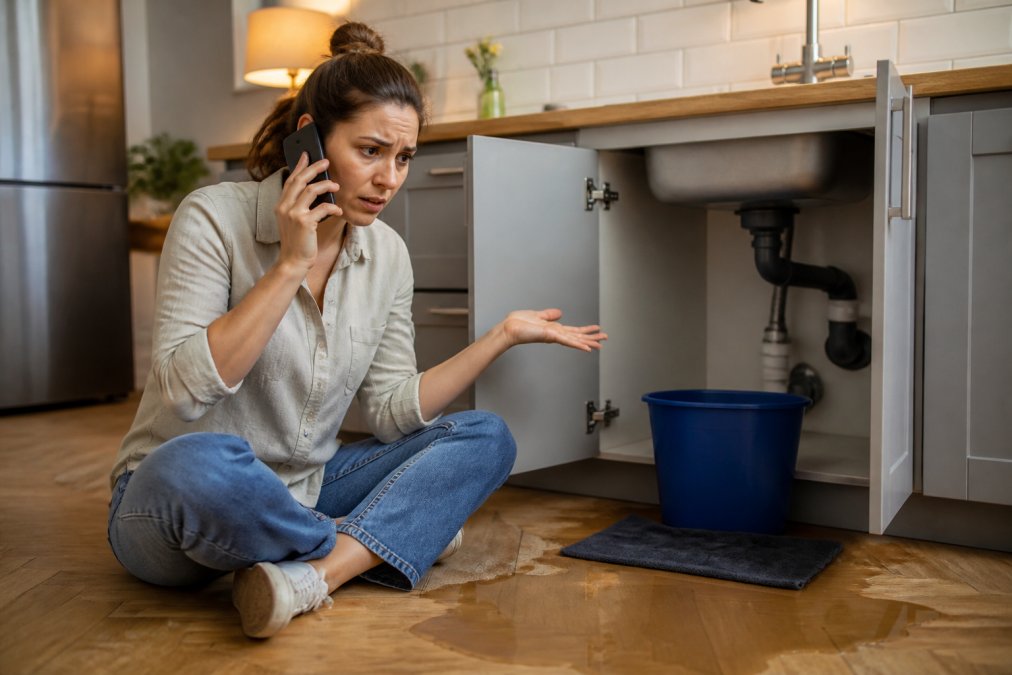
A plumbing emergency, a burst pipe, a failed well pump, a gas line concern, can cause serious water damage within hours. Emergency response time is one of the most practical measures of a provider's service reliability. If your contractor routinely takes more than a few hours to respond to urgent service calls, or doesn't offer after-hours coverage at all, your home is exposed every time something goes wrong.
A common complaint among homeowners who decide to switch plumbing service providers is exactly this: they took time off work, waited hours for a technician, and still didn't get a confirmed arrival window. That's not acceptable. Providers who value your business build emergency response into their service model, it's not an afterthought.
Repeated Billing Disputes and Surprise Labor Costs
One billing surprise might be a miscommunication. Repeated billing disputes are a pattern. If you regularly find yourself negotiating invoices after the fact, questioning line items, or discovering charges for work you didn't authorize, that's a sign the provider lacks professional accountability.
Surprise labor costs are particularly common when a contractor doesn't use itemized invoicing or fails to document scope changes during a job. A trustworthy plumber will flag additional work before doing it, confirm your approval, and reflect that clearly in the final bill. If that's not your experience, it's time to look elsewhere.
Signs of Poor Plumbing Workmanship to Watch For
Poor plumbing workmanship is the kind of thing that reveals itself slowly, until it doesn't. A pipe joint that wasn't properly sealed, a water heater installed without adequate pressure relief, or a well pump wired incorrectly can all sit dormant for months before causing a serious failure.
The International Association of Plumbing and Mechanical Officials' installation standards set clear expectations for installation quality across residential plumbing systems. If your contractor's work consistently falls short of these standards, the consequences compound over time.
Watch for these specific signs of poor workmanship:
- Recurring leaks at the same connection points after repeated repairs
- Fixtures or valves that were replaced but still perform poorly
- Visible corrosion or improper materials used on joints and fittings
- Work completed without permits where local code requires them
- No follow-up or quality check after a major installation
A plumber who dismisses your concerns about recurring issues, rather than diagnosing the root cause, is prioritizing the service call over the actual fix. That's a critical distinction. Good workmanship means the problem doesn't come back.
Questions to Ask a Plumber Before Hiring
The right questions before hiring a plumber separate professional contractors from those who will cost you more in the long run. Ask them directly, a contractor who gets defensive about basic credentialing questions is telling you something important.
Licensing, Insurance, and Technician Certification
Licensing requirements for plumbers vary by state, but most states require licensed contractors for residential plumbing work beyond basic repairs. In Pennsylvania, plumbing contractors must meet specific licensing standards, which are managed at the local level, with oversight from the Pennsylvania Department of Labor & Industry for code enforcement and inspector accreditation (pa.gov). Technician certification through recognized trade programs indicates ongoing professional development.
Ask specifically:
- Is your company licensed in this state, and can you provide your license number?
- Do you carry general liability insurance and workers' compensation coverage?
- Are your technicians certified, and do they receive ongoing training?
- Will the person who gives the estimate be the same technician doing the work?
These aren't unreasonable questions. They're the baseline for professional accountability.
Service Scope: Residential vs. Commercial Plumbing Requirements
Residential plumbing and commercial plumbing involve different regulatory requirements, infrastructure complexity, and trade experience. A contractor who primarily handles commercial plumbing may not have the right diagnostic tools or familiarity with residential systems, particularly specialty setups like private well systems, water conditioning equipment, or residential gas piping.
Before hiring, confirm that the provider has documented experience with your specific type of system. For homeowners on private wells, this is especially important: well pump repair and replacement requires knowledge of pressure tanks, pump sizing, and water quality testing that not every general plumber carries.
| Question | What a Good Answer Looks Like |
|---|---|
| Are you licensed and insured? | Provides license number and proof of coverage on request |
| Do you give written estimates? | Yes, before work begins, with itemized labor and material costs |
| What's your emergency response time? | Specific window, not "as soon as possible" |
| Do you handle residential well systems? | Confirms experience with pumps, pressure tanks, and water quality |
| Will you pull permits for this job? | Yes, wherever local code requires them |
| What's your workmanship guarantee? | Specific terms, not a vague reassurance |
Plumbing Service Maintenance Plans: Are They Worth It?
Plumbing service maintenance plans are annual agreements between homeowners and providers that cover regular inspections, preventative maintenance, and priority scheduling for service calls. For most homeowners with aging systems, they're worth serious consideration.
The core value of a maintenance plan is preventative maintenance. A technician who inspects your water heater, checks your well pump pressure, and tests your water conditioning system annually will catch small problems before they become expensive failures. This is particularly relevant for homes with systems over ten years old, where component degradation accelerates.
That said, not all maintenance plans are equal. Before signing, review:
- What's included: Annual inspections only, or does it cover minor repairs?
- Priority service: Does the plan guarantee faster emergency response?
- Discounts: Are there reduced rates on labor costs for plan members?
- Transferability: Does the plan transfer if you sell the home?
Customer stickiness is a real dynamic in the plumbing industry, providers who offer maintenance plans build recurring revenue by creating genuine value for homeowners. When that value is real, it benefits both sides. When it's a billing mechanism without substance, it's a reason to switch.
Contractual Considerations When You Switch Plumbing Providers
Before you switch plumbing service providers, review any existing agreements with your current contractor. Many homeowners don't realize they've signed service agreements that include cancellation terms, notice periods, or clauses that restrict your ability to use another provider for specific systems.
Check for:
- Active maintenance contracts: Do you owe a cancellation fee, or can you exit at the end of the current term?
- Equipment warranties tied to the provider: Some water heater or HVAC installations come with warranties that require the original installer to perform service. Switching could void those terms.
- Financing agreements: If your current provider financed an installation, confirm that switching service contractors doesn't affect your financing arrangement.
- Permit documentation: Request copies of all permits pulled for work done on your home. These belong to you and you'll need them for future work or resale.
Most homeowners can switch without financial penalty if they're not under an active contract. The key is to confirm before you cancel, not after.
The Switching Checklist: How to Change Providers Without Disruption
Switching plumbing providers is straightforward when you're organized. The biggest mistake homeowners make is canceling their current provider before the new one is fully vetted and scheduled.
Before you switch:
- Review all active contracts or maintenance agreements with your current provider
- Request copies of all permits, invoices, and service records from your current contractor
- Confirm the new provider is licensed, insured, and familiar with your system type
- Get a written estimate for any immediate work needed
- Verify emergency response availability and contact protocols
When you make the switch:
- Notify your current provider in writing, referencing any contractual notice requirements
- Transfer all service records to your new provider before the first appointment
- Confirm that any equipment warranties are not affected by the change
- Schedule a full system assessment with the new provider so they understand your plumbing infrastructure
After the switch:
- Evaluate the first service call: was the technician on time, communicative, and thorough?
- Confirm that invoices match the written estimate you received
- Ask about preventative maintenance options for the coming year
What Reliable Plumbing Service Actually Looks Like
Reliable plumbing service is defined by consistency across three dimensions: communication, technical competence, and professional accountability. A provider who delivers on all three rarely gives homeowners a reason to switch plumbing service providers in the first place.
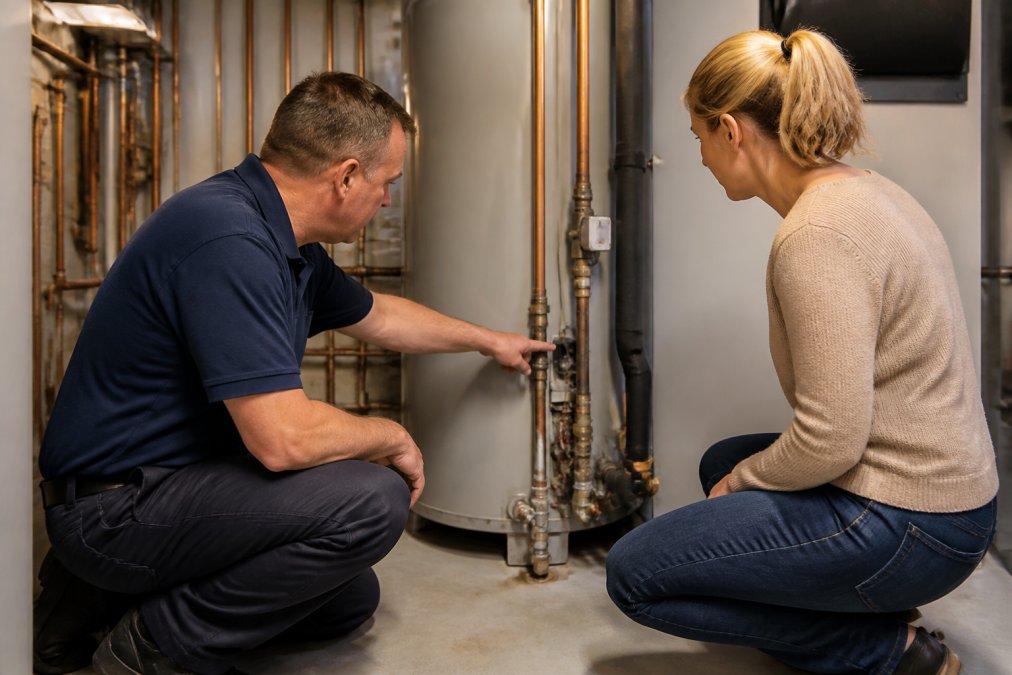
Communication means arriving when scheduled, providing status updates during a job, and explaining what was done and why. It also means personalized service, a technician who remembers your system, knows your history, and treats your home with care. That's not a luxury. It's the baseline for any service relationship worth maintaining.
Technical competence means the work is done correctly the first time. Troubleshooting is systematic, diagnostic tools are used properly, and the technician has the trade experience to handle your specific system, whether that's a private well pump, a gas line, or a water conditioning system. Recurring issues after a repair are a failure of competence, not bad luck.
Professional accountability means written estimates, proper permits, clear invoicing, and a workmanship guarantee that the contractor actually stands behind. When something goes wrong, and in plumbing, something eventually will, a reliable provider takes ownership and fixes it without a billing dispute.
England's Plumbing & Heating has delivered this standard of residential plumbing and heating service since 1989. With experience across well pump repairs, water heater installations, gas piping, and water conditioning, the team brings the kind of trade depth that generalist contractors can't match. Online booking and live chat support make scheduling straightforward, no waiting on hold to confirm an appointment.
What most providers get wrong is treating each service call as a transaction. The best local contractors treat it as a relationship. That distinction shows up in every interaction, from the first estimate to the follow-up after a major installation.
Choosing the right plumbing provider isn't just about fixing what's broken today, it's about having a contractor you can trust when something goes wrong at 9 PM on a Thursday. If your current provider consistently misses on pricing transparency, response times, or workmanship quality, the cost of staying is higher than the cost of switching. England's Plumbing & Heating offers experienced residential plumbing and heating service, well pump expertise, professional water heater installation, and the kind of responsive communication that makes the whole experience less stressful. Book online to get started with a provider who shows up, does the work right, and stands behind it.
Frequently Asked Questions
Q: What are the red flags that indicate you need a new plumber?
A: The clearest red flags include repeated late arrivals or no-shows, vague or verbal-only estimates that balloon into surprise charges, recurring issues that were supposedly fixed, and a reluctance to provide proof of licensing or insurance. Poor workmanship signs, such as visible leaks at joints, improperly supported pipes, or code violations, are also strong indicators that it's time to switch plumbing service providers before a small problem becomes a costly one.
Q: Are plumbing service maintenance plans worth the investment?
A: For most homeowners, yes. A plumbing service maintenance plan typically covers annual inspections, preventive maintenance, and priority scheduling for emergency service calls. Catching a failing water heater anode rod or a slow-developing leak early is far cheaper than emergency water damage mitigation. The value depends on the specific terms, confirm what's included, whether discounts apply to labor costs and material costs, and how emergency response is handled before committing.
Q: How do you verify if a plumbing company is properly licensed and insured?
A: Ask the provider directly for their state plumbing license number and certificate of insurance, then verify both independently. In Pennsylvania, plumber licensing is managed at the local level, with oversight from the Pennsylvania Department of Labor & Industry for code enforcement and inspector accreditation. Confirm that general liability insurance and workers' compensation are current. A reputable local contractor will share this documentation without hesitation, any reluctance is itself a red flag.
Q: How often should you have your home plumbing system inspected?
A: A full plumbing inspection once a year is a reasonable baseline for most homes. Older properties, homes on private well systems, or houses with aging plumbing infrastructure may benefit from inspections every six months. Annual inspections typically cover water heater condition, pipe integrity, fixture performance, and water pressure. Homes with known issues, such as hard water or previous water damage, should schedule preventive maintenance more frequently to avoid compounding problems.