 listicle
Gas Line Safety Inspection Cost: Complete Pricing Guide
Table of Contents
- What a Gas Line Safety Inspection Includes
- Gas Line Inspection Cost Breakdown for 2026
- Gas Line Pressure Test Cost: What Moves the Number
- Free Utility Inspections vs. Private Contractor Checks
- How Often to Inspect Gas Lines in Your Home
- Why Hiring a Licensed Gas Plumber Matters
- Signs You Need an Inspection Right Now
- Conclusion: Protect Your Home Without Overpaying
- Frequently Asked Questions
Last Updated: September 6, 2026
This guide from England's Plumbing & Heating breaks down what a gas line safety inspection covers, where the money goes, and how to approach budgeting for this essential service.
The team at England's Plumbing & Heating has performed gas piping work across Chester County since 1989. Below, we'll show you how to budget for a gas line safety inspection, when to schedule one, and which red flags mean you should call a professional today.
What a Gas Line Safety Inspection Includes
A professional gas line safety inspection is a systematic evaluation of your home's gas system integrity, covering both visible components and the pressurized lines you cannot see. Most inspections include a visual assessment of all accessible piping followed by leak detection or pressure testing where needed.
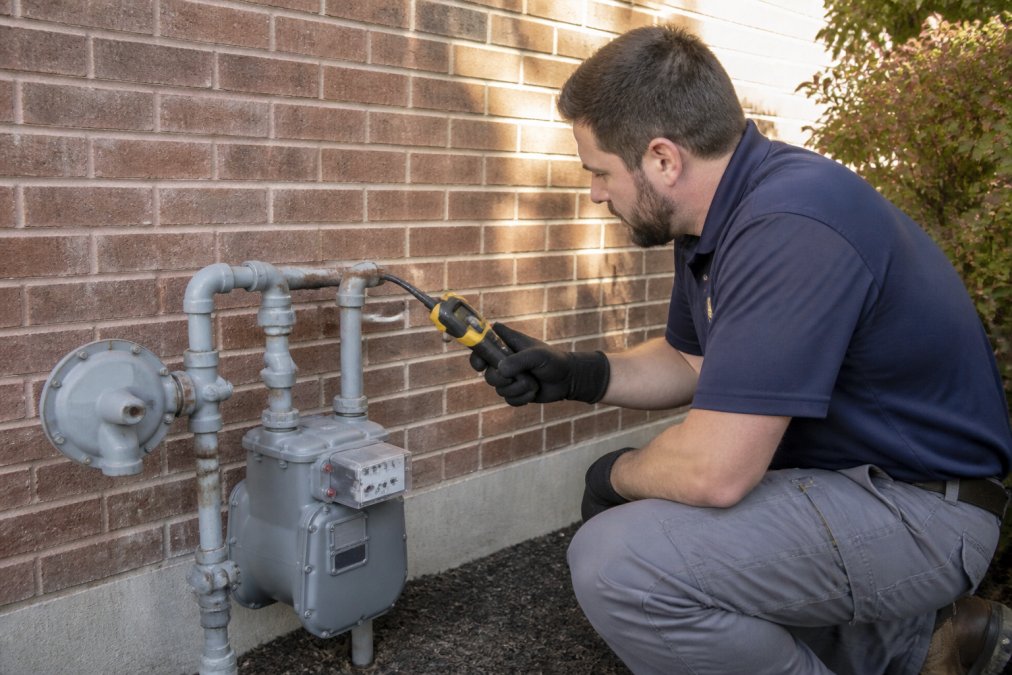
The scope of your inspection matters more than the price tag. A thorough inspector will examine the service line where it enters your home, the meter connections, shut-off valves, and every exposed section of pipe, plus appliance connections to furnaces, water heaters, and stoves, the most common failure points.
Visual Assessment of Exposed Piping
The plumber examines every accessible inch of your gas piping for rust, pitting, physical damage, or improper installation. This step also includes checking that pipes are properly supported and that no flammable materials are stored too close to gas equipment.
Leak Detection and Pressure Testing
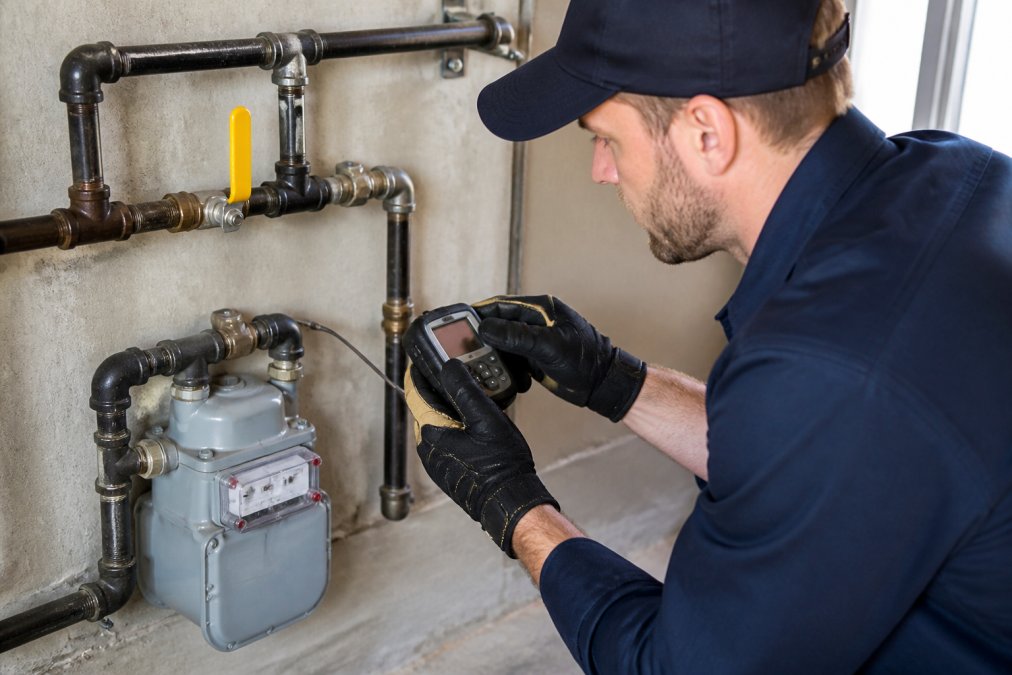
The inspector uses an electronic gas detector to sweep connections and joints, or applies a soapy solution to fittings to reveal escaping gas through visible bubbles. For a more thorough assessment, a gas pressure test uses a manometer to pressurize the system and confirm it holds pressure, verifying the integrity of the entire line, including sections hidden behind walls or underground.
Gas Line Inspection Cost Breakdown for 2026
The cost of a gas line safety inspection is a range that shifts based on your home's age, piping material, system complexity, and where you live.
Base Cost Tiers by Scope of Work
A standard gas system inspection with visual checks and basic leak detection averages $100 to $150 per service, according to Angi's gas line cost guide. More comprehensive services that include pressure testing and underground line verification run higher, with specialized providers like John Moore Services' gas line inspection pricing listing $400 to $650 for detailed testing that includes underground piping.
| Inspection Type | Typical Cost | What's Included | Best For |
|---|---|---|---|
| Basic visual inspection | $100-$150 | Visual piping check, leak detection sweep | Routine safety verification |
| Standard inspection with pressure test | $150-$200 | Visual check, manometer pressure test, appliance connections | Annual maintenance |
| Comprehensive testing | $400-$650 | Full pressure test, underground piping assessment | Older homes, suspected issues |
| Utility-required inspection | $0 | Utility-owned equipment check | Compliance with utility mandates |
How Home Age and Piping Material Move the Price
The single biggest cost multiplier is the age and material of your gas piping. Homes built before 1970 typically have black iron or galvanized steel pipes that develop corrosion over decades, requiring more careful joint checks and pressure testing that often requires isolating sections. Homes built before 1970 typically have black iron or galvanized steel pipes that develop corrosion over decades, requiring more careful joint checks and pressure testing that often requires isolating sections, which can impact the cost.
Newer homes built after 2000 with corrugated stainless steel tubing (CSST) or properly installed copper piping are faster to inspect because these materials resist corrosion. However, CSST installed before 2006 may lack proper bonding and grounding, requiring a specialized inspection.
Regional Cost Variance: What You Pay Depends on Where You Live
Most published cost guides give a national average, but labor rates for licensed gas plumbers track closely with local cost of living. For specific pricing in Chester County, please contact us for a quote.
When you receive a quote, ask whether it includes travel time and the first 30 minutes of diagnostic work, some contractors bundle these into a flat fee, while others add them as line items.
System Complexity: The Hidden Cost Driver
A single-family home with one furnace, one water heater, and a stove can be inspected in under an hour. Add a gas fireplace, pool heater, outdoor grill line, or detached garage heater, and the inspection time grows with each appliance connection, another potential leak point.
Underground piping requires either excavation access or specialized electronic leak detection equipment that can trace the line without digging, and that cost shows up in your quote. If your property has underground gas lines serving a detached garage or pool house, a comprehensive inspection will be necessary.
What the Quote Should Include
A professional quote should itemize the scope of work: visual inspection of all accessible piping, leak detection sweep at all fittings and connections, pressure test if included, and a written report of findings. If a contractor quotes a flat fee without describing what is covered, ask for specifics, a vague quote often leads to upsells.
Gas Line Pressure Test Cost: What Moves the Number
A gas line pressure test is a significant factor in your total inspection bill. The test requires a manometer and can take longer for homes with multiple appliances or extensive piping runs.
Underground piping requires excavation access or specialized testing equipment, which contributes to the cost of comprehensive services. Older pipes with corrosion take longer to test safely, and complex layouts, multiple stories, or gas appliances in detached structures also add time.
Free Utility Inspections vs. Private Contractor Checks
Not every gas line inspection costs money. Utility companies routinely perform no-cost inspections of their own equipment, including the service line up to the meter and sometimes the meter itself. Programs run by providers like National Grid's service line inspections and NYSEG's gas safety inspection program cover utility-owned infrastructure at no charge to the customer. Some utilities also offer periodic leak surveys using specialized detection equipment.
A utility inspection covers the utility's equipment only, the service line and meter. Everything past the meter, the pipes running to your furnace, water heater, and stove, is your responsibility. A private contractor inspection covers the full interior system and is the only way to verify safety of your home's gas lines.
How Often to Inspect Gas Lines in Your Home
Annual inspection is the standard recommendation for residential gas systems. Homes with older piping, particularly galvanized steel or black iron pipes with visible corrosion, benefit from more frequent checks. Newer homes may stretch to every two years, but annual maintenance remains the safest baseline.
Gas leaks rarely announce themselves dramatically. The mercaptan odor added to natural gas is a warning system, but small leaks can be slow, and corrosion develops over time. A yearly inspection catches these issues while they are inexpensive to fix.
Why Hiring a Licensed Gas Plumber Matters
Gas line work is not a handyman job. A licensed gas plumber has the training to understand pressure dynamics, the equipment to test systems properly, and the knowledge of local building codes. You are paying for expertise that directly reduces your risk of a dangerous failure.
Gas line safety inspection cost should never be the deciding factor when choosing who performs the work. The cheapest bid is not a bargain if the inspector misses a corroded fitting. England's Plumbing & Heating has provided safe, professional gas piping services across Chester County since 1989, and we offer online booking and live chat for scheduling.
Signs You Need an Inspection Right Now
Some situations cannot wait for an annual appointment. If you smell gas, leave the house and call your utility provider immediately. A hissing sound near your furnace or gas meter, dying houseplants near a gas line, or higher than normal gas bills without a change in usage all point to a possible leak.
Visible corrosion on exposed pipes, soot around appliance connections, or a gas appliance that will not light properly warrant prompt attention. If you are buying a home, a gas line inspection should be part of your home inspection report. Carbon monoxide detectors are essential complements to gas line inspections.
What You Can Safely Check Yourself (And What You Cannot)
Homeowners can safely perform a few basic checks between professional inspections, the key is knowing exactly where the boundary lies.
Safe for homeowners to check:
- The soap bubble test on exposed fittings. Mix a teaspoon of dish soap with water in a spray bottle. Spray the solution on every exposed gas fitting, where pipes connect to appliances, at shut-off valves, and at threaded joints. If bubbles form and grow, you have a leak. If you find bubbles, turn off the gas at the appliance shut-off valve if you can do so safely, and call a licensed plumber.
- Visual inspection of exposed piping. Look for rust, green corrosion on copper fittings, dents, or signs that a pipe has been bumped or moved. Check that pipes are securely supported and not sagging.
- Checking the shut-off valve. Locate the main gas shut-off valve where the gas line enters your home. Confirm you can turn it with a wrench. If it is stuck or rusted, that is a finding to report to a professional.
- Monitoring your gas bill. A sudden increase without a corresponding change in weather or appliance use can indicate a slow leak.
Never attempt yourself:
- Pressure testing with a manometer. Pressurizing the gas line requires training and specialized equipment. A mistake can cause a catastrophic leak or an explosion.
- Disconnecting or tightening any gas fitting. Even a quarter-turn on a fitting can damage the threads or the pipe seal, turning a minor issue into a major leak.
- Using an electronic gas detector. Consumer-grade detectors are unreliable for this purpose. Professional detectors are calibrated and used by trained inspectors who understand how to interpret readings.
- Working on the gas meter or the utility side of the system. That equipment belongs to the utility company, and tampering with it is both dangerous and illegal.
Homebuyer Red Flags: What to Look For in an Inspection Report
If you are buying a home, the seller's disclosure and the home inspection report are your first line of defense. But not every finding is a safety hazard, some are code technicalities that pose no immediate danger. Knowing the difference prevents you from walking away from a good home over a minor issue, or worse, buying a home with a hidden hazard.
Technicality-level findings (negotiate, but do not panic):
- Missing drip legs. A drip leg (also called a sediment trap) is a short vertical pipe that catches debris before it enters the appliance. Older homes often lack them. This is a code violation but rarely an immediate safety hazard.
- Improper pipe support spacing. Gas pipes must be supported at specific intervals. Missing supports are a code issue that a plumber can correct.
- Unbonded CSST. If the home has corrugated stainless steel tubing installed before 2006, it may lack proper bonding. This is a correction, not an emergency, but it should be fixed.
Safety-hazard findings (require immediate attention or a price reduction):
- Active leak at any fitting. This is non-negotiable. A leak must be repaired before closing.
- Severe corrosion or pitting on steel pipe. Surface rust is one thing; pitting that weakens the pipe wall is another. If the inspector notes deep corrosion, the pipe section needs replacement.
- Evidence of a previous fire or heat damage near gas lines. This compromises the integrity of the piping.
- Gas appliance connections that show soot or signs of backdrafting. This indicates incomplete combustion and potential carbon monoxide risk.
When reviewing an inspection report, ask the inspector to classify each finding as a "safety hazard" or a "code technicality." If the report lists only technicalities, you can negotiate for repairs or move forward with confidence. If it lists safety hazards, get a quote from a licensed gas plumber before closing, and factor that cost into your offer.
The Insurance Angle Most Homeowners Miss
Homeowners insurance policies typically exclude damage caused by gradual gas leaks, the slow corrosion that weakens a pipe over years is considered a maintenance issue, not a sudden event. If a gas leak causes an explosion or fire, your policy may cover the damage, but the insurer will likely investigate whether you maintained the system properly.
If you can show that you had annual gas line inspections and addressed findings promptly, you have evidence of due diligence. If you cannot, the insurer may argue that the leak was foreseeable and deny the claim. Some insurers now ask for proof of recent gas line inspection when you file a claim involving gas appliances.
Keep every inspection report in the same file as your insurance documents. When you have work done on your gas system, ask the plumber for a written report that includes the date, scope of work, and findings.
Conclusion: Protect Your Home Without Overpaying
A fair price for a gas line safety inspection reflects the scope of work, the equipment required, and the expertise of the professional performing it. Basic visual checks are typically more affordable than comprehensive testing with pressure verification, and utility inspections of their own equipment are often free.
The real cost is not the inspection. It is the leak that goes undetected, the corroded pipe that fails at 2 a.m., or the carbon monoxide entering your home because a fitting was never checked. At England's Plumbing & Heating, we have protected Chester County homes since 1989, and we make scheduling easy through online booking and live chat. Get started with England's Plumbing & Heating and schedule your gas line safety inspection today.
Frequently Asked Questions
How long does a gas line safety inspection take?
A standard visual inspection of accessible piping and appliance connections typically takes 30 to 60 minutes. If the plumber performs a full pressure test, plan on additional time, often another 30 to 45 minutes. The total depends on the number of gas appliances, the age of the system, and whether the inspector needs access to crawl spaces or other tight areas.
Is it free to have a gas leak checked by the utility company?
Utility companies will respond to a suspected gas leak at no charge. They will investigate the report, check their own equipment and the meter, and use detection tools to find the source. However, their responsibility typically ends at the meter or the utility-owned service line. Repairs to the privately-owned piping inside your home are your responsibility and require a licensed plumber.
Does homeowners insurance cover gas line leaks?
Standard homeowners insurance generally does not cover the cost to repair the gas line itself, as that is considered routine maintenance or wear and tear. However, if a gas leak causes sudden damage to your home, such as a fire or explosion, the resulting property damage may be covered. Review your specific policy and talk to your agent to understand your coverage.
What is the cost difference between a visual inspection and a gas line pressure test?
A visual inspection is the more affordable option but only reveals issues visible to the eye. A pressure test, which involves using a manometer to verify the system holds pressure, is more involved and costs more. The price difference reflects the additional equipment, time, and expertise required. The cost also varies based on your location and the complexity of your gas system.