 ultimate-guide
Hard Water Treatment for Homes: A 2026 Buyer's Guide
Table of Contents
- Signs You Have Hard Water and Why It Matters
- How to Test Water Hardness at Home: A Step-by-Step Guide
- Hard Water Effects on Skin and Hair: What to Expect
- Main Hard Water Treatment Options Compared
- Water Softener vs Salt-Free Conditioner: Which Is Right?
- Sizing, Installation, and Long-Term Costs of Water Treatment
- Choosing a Water Treatment System That Fits Your Home
- Frequently Asked Questions
Last Updated: September 8, 2026
Signs You Have Hard Water and Why It Matters
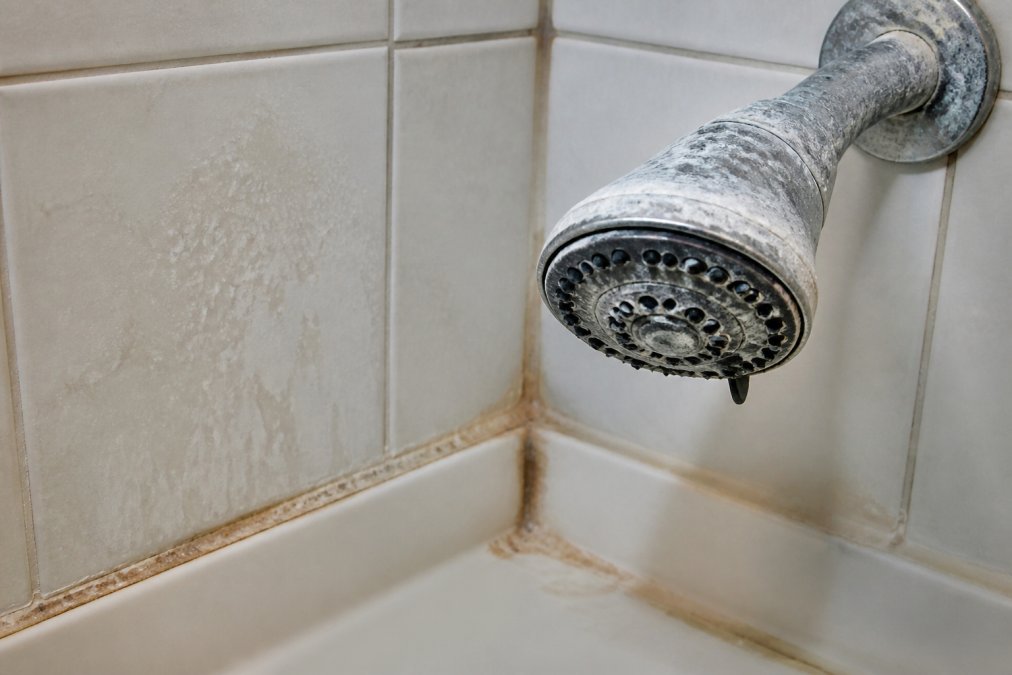
Hard water treatment for homes starts with recognizing the problem. If you notice white crusty buildup around faucets, glass shower doors that never look clean, or soap that refuses to lather properly, you likely have elevated levels of dissolved calcium and magnesium in your supply. These minerals are measured in grains per gallon, and levels above 7 grains per gallon are generally considered hard.
The consequences extend beyond cosmetic frustration. Scale buildup inside pipes restricts water flow and forces water heaters to work harder, which shortens appliance lifespans. Plumbing fixtures develop mineral deposits that are difficult to remove once they set. According to the U.S. Geological Survey's water hardness information, hardness is one of the most common water quality issues reported by homeowners across the country.
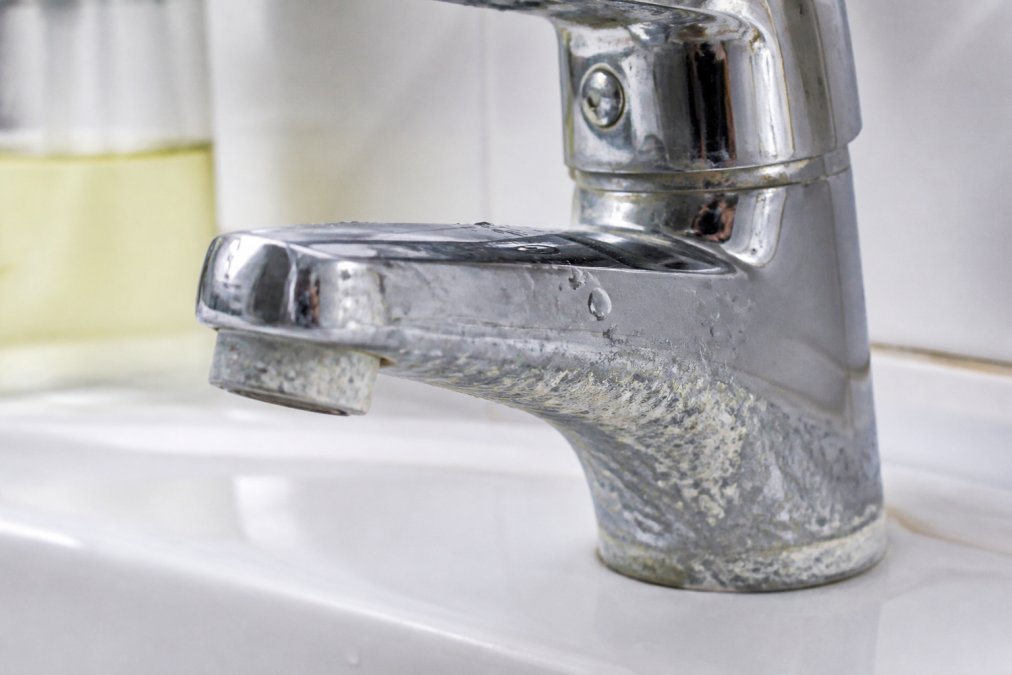
At England's Plumbing & Heating, we've serviced homes throughout Chester County since 1989, and hard water is one of the most frequent water quality complaints we address. The good news is that hard water treatment for homes is well understood, and the right system depends on your specific water chemistry and household size.
How to Test Water Hardness at Home: A Step-by-Step Guide
Testing your water is the essential first step before investing in any treatment system. A water hardness test prevents you from oversizing or undersizing your equipment.
- Purchase a test kit from a hardware store or online retailer. Look for strips that measure hardness in grains per gallon.
- Fill a clean glass with cold tap water from a faucet that hasn't been run recently.
- Dip the test strip according to package instructions, typically for a few seconds.
- Compare the color change to the included chart. Results are usually expressed in grains per gallon or parts per million.
- Test both hot and cold water if you have a water heater, since mineral concentration can differ.
- Repeat the test at different times over several days to confirm consistent results.
For a more precise analysis, consider sending a sample to a certified laboratory. Testing protocols from organizations like the Environmental Protection Agency's private well guidance recommend annual testing for private well owners, since well water quality can shift with seasonal changes and groundwater movement.
Hard Water Effects on Skin and Hair: What to Expect
Hard water effects on skin and hair are often mistaken for product problems. The minerals react with soap to form a film that doesn't rinse cleanly, leaving skin feeling tight and dry. Many people report persistent itchiness, flakiness, or exacerbation of eczema when showering in hard water.
Hair suffers visibly. Mineral deposits build up on the hair shaft, making it feel coarse, look dull, and resist styling. Shampoo cannot lather properly in mineral-rich water, leading people to use more product in a frustrating cycle.
These effects are not permanent. Once you install an effective hard water treatment for homes, most people notice softer skin and more manageable hair within a few weeks.
Main Hard Water Treatment Options Compared
When evaluating hard water treatment for homes, you have three primary approaches: salt-based ion exchange softeners, salt-free water conditioners, and point-of-use filtration systems. Each solves a different problem.
Salt-Based Ion Exchange Softeners
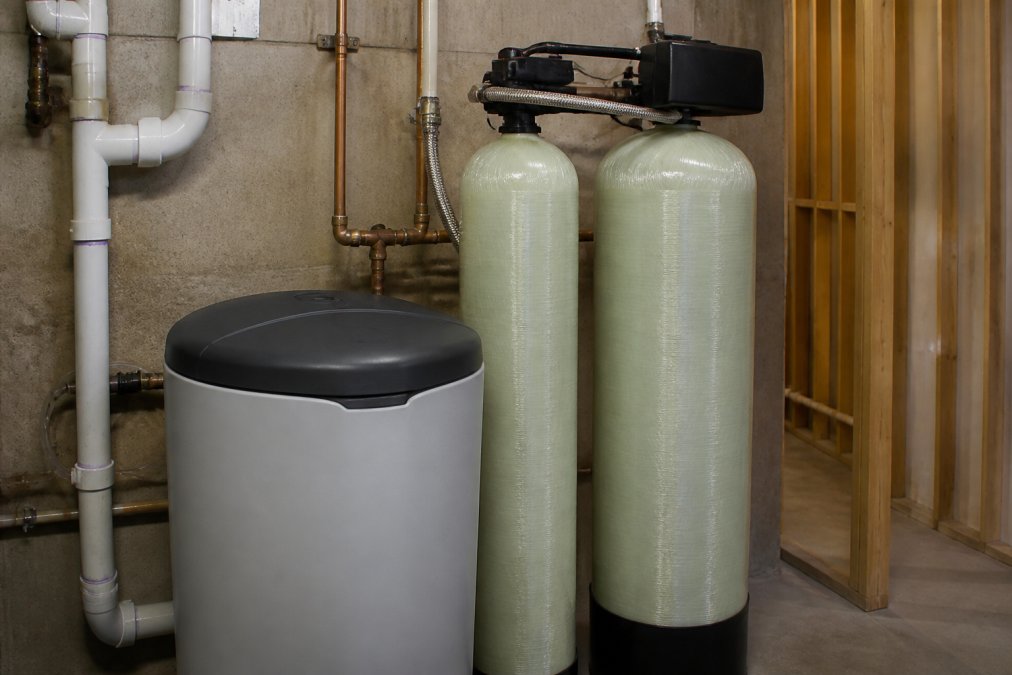
Salt-based softeners are the traditional solution and remain the most effective for true hardness removal. These systems use a resin bed that exchanges calcium and magnesium ions for sodium ions, regenerating periodically using a brine tank filled with salt.
This approach physically removes hardness minerals, protecting your entire plumbing system, water heater, and appliances. Softened water also reduces soap usage and eliminates scale buildup. Trade-offs include ongoing salt purchases, regular maintenance, and added sodium, which some households prefer to avoid for drinking.
Salt-Free Water Conditioners
Salt-free conditioners do not remove minerals. Instead, they alter the structure of calcium and magnesium so they don't adhere to surfaces, preventing scale formation without changing mineral content.
These systems require no electricity, no salt, and minimal maintenance. The limitation is that they don't actually soften water, so you won't get the slippery feel or reduced soap usage of true softening.
Reverse Osmosis and Point-of-Use Filters
Reverse osmosis systems force water through a semipermeable membrane that removes dissolved solids, including hardness minerals, heavy metals, and many contaminants. They are typically installed at a single point of use, such as under the kitchen sink.
For whole-home treatment, reverse osmosis is rarely practical due to water waste and flow rate limitations. However, it excels at producing high-quality drinking water.
| Treatment Option | Removes Minerals | Maintenance | Best For |
|---|---|---|---|
| Salt-Based Softener | Yes | Salt refills, periodic cleaning | Whole-home scale prevention |
| Salt-Free Conditioner | No | Minimal | Scale prevention without sodium |
| Reverse Osmosis | Yes | Filter replacements | Drinking water at one faucet |
Water Softener vs Salt-Free Conditioner: Which Is Right?
The water softener vs salt-free conditioner decision comes down to your priorities. If you want to eliminate existing scale buildup, protect appliances from future mineral deposits, and enjoy the practical benefits of softened water, a salt-based system is the proven choice.
If your primary concern is preventing new scale without adding sodium, or if you have a smaller household with moderate hardness, a salt-free conditioner offers a simpler, lower-maintenance path.
One factor many guides miss: salt-free conditioners cannot reverse existing scale. If your pipes and water heater already have significant mineral deposits, a conditioner will prevent further buildup but won't clean what's there. In that scenario, a salt-based softener combined with professional descaling is more effective.
Sizing, Installation, and Long-Term Costs of Water Treatment
Most buying guides stop at the sticker price. But the real cost of a water treatment system is measured over a 5-year horizon. Here's how to calculate the true total cost of ownership (TCO) before you commit.
Sizing by Grains Per Gallon (GPG)
System capacity is rated in grains of hardness removed between regenerations. To size correctly, you need your water's hardness in GPG and your household's daily water usage.
A common formula used by water quality professionals is:
Daily Softening Requirement = Hardness (GPG) × Daily Water Use (gallons)
For example, a family of four typically uses about 400 gallons per day. At 10 GPG, you need a system capable of removing 4,000 grains per day. A standard 32,000-grain softener would regenerate roughly every 8 days. At 25 GPG, the same softener would regenerate every 3-4 days, dramatically increasing salt consumption and wear on the valve.
Most residential softeners range from 24,000 to 64,000 grains. Undersized units regenerate too frequently, wasting salt and water.
The 5-Year Cost Breakdown
Here's what competitors rarely show you, the line-item costs that accumulate after installation:
Salt-Based Softeners
- Salt pellets: A typical household with moderately hard water (10-15 GPG) uses one 40-lb bag per month. At roughly $6-$8 per bag, that's $72-$96 per year, or $360-$480 over five years.
- Resin replacement: The resin bed degrades over time. Expect to replace it every 10-15 years. A professional resin replacement runs $300-$600 depending on tank size. Budget $150-$300 over a 5-year window.
- Valve maintenance: The control valve may need service every 3-5 years. A service call typically runs $150-$250.
- Electricity: Minimal, about $10-$15 per year for the control head.
5-year TCO estimate: $700-$1,100 plus installation.
Salt-Free Conditioners
- No salt, no electricity, no resin. The primary cost is the catalytic media inside the tank, which degrades over time.
- Media replacement: Most manufacturers recommend replacing the media every 5-6 years. A replacement cartridge or media refill runs $150-$400 depending on system size.
- No ongoing consumables.
5-year TCO estimate: $150-$400 plus installation.
Reverse Osmosis (Point-of-Use)
- Filter replacements: A typical 3-stage RO system needs new sediment and carbon filters every 6-12 months ($30-$60 per set) and a new membrane every 2-3 years ($50-$120).
- Annual cost: $60-$150 per year.
5-year TCO estimate: $300-$750 plus installation.
Installation Complexity: What Actually Happens
Point-of-use RO systems are genuinely DIY-friendly. Most ship with push-fit fittings and a dedicated faucet.
Whole-house systems are a different story. A salt-based softener requires a dedicated 120V electrical outlet, a drain connection for the regeneration cycle, a bypass valve, copper or PEX plumbing cuts, and a level surface capable of supporting 200-400 lbs when the brine tank is full.
Salt-free conditioners are simpler, no drain or electricity required, but still require cutting into your main water line.
Most municipalities require a permit for whole-house water treatment installation. The International Association of Plumbing and Mechanical Officials publishes model codes that many local jurisdictions adopt. A licensed plumber will pull the necessary permit and ensure your installation passes inspection.
The Hidden Cost of DIY Mistakes
Incorrect installation can create problems that cost far more than professional installation: cross-connection between soft water and irrigation lines can waste salt and damage solenoid valves; improper drain line installation can cause siphoning and backflow contamination.
If you have any doubt about your plumbing skills, professional installation is the safer investment. Most manufacturers require professional installation to honor their warranty, read the fine print before attempting a DIY install.
What to Ask an Installer
Before hiring anyone, request a written quote that includes equipment brand and model number, permit fees, labor for plumbing modifications, removal and disposal of your old system, and a 1-year labor warranty.
A reputable installer will walk you through the sizing calculation and explain why they recommend a specific capacity.
Choosing a Water Treatment System That Fits Your Home
Selecting the right system comes down to one document: your water test report. Most homeowners never learn to read it, which is why so many end up with the wrong equipment. Here's how to interpret your lab results and match them to the correct system.
Reading Your Water Test Report
A certified laboratory report lists hardness in either grains per gallon (GPG) or milligrams per liter (mg/L). To convert mg/L to GPG, divide by 17.1. For example, 120 mg/L ÷ 17.1 = 7.0 GPG.
Hardness classifications per the U.S. Geological Survey:
- Soft: 0-1 GPG
- Slightly hard: 1-3.5 GPG
- Moderately hard: 3.5-7 GPG
- Hard: 7-10.5 GPG
- Very hard: 10.5+ GPG
Your report will also list iron, manganese, and total dissolved solids (TDS). These matter more than most guides acknowledge: iron above 0.3 mg/L can foul resin beds in salt-based softeners, requiring a softener with iron-cleaning resin or a dedicated iron filter upstream; manganese above 0.05 mg/L causes black staining and interferes with softening resin; high TDS (above 500 mg/L) suggests dissolved solids beyond just hardness minerals, which a softener won't address.
Matching Your Report to a System
Use this decision framework based on your actual numbers: Scenario A (hardness under 7 GPG, no iron): a salt-free conditioner may be sufficient for scale prevention. Scenario B (hardness 7-15 GPG, iron under 0.3 mg/L): a standard salt-based softener is the proven choice, sized to regenerate every 7-10 days. Scenario C (hardness above 15 GPG or iron above 0.3 mg/L): you need a heavy-duty softener with a larger resin bed and possibly a separate iron filtration stage. Scenario D (hardness under 3.5 GPG but TDS above 500 mg/L): a whole-house carbon filter or point-of-use reverse osmosis system addresses the TDS issue better than a softener.
The Water Quality Association's Role
When comparing systems, look for certification from the Water Quality Association. WQA certification means the system has been independently tested and meets NSF/ANSI standards for contaminant reduction. A WQA Gold Seal label is a reliable indicator of quality, it's not just marketing.
Municipal vs. Private Well Considerations
Your water source changes the analysis:
Municipal water is already treated and tested by your utility. Your hardness level is relatively stable year-round. You can request your utility's annual water quality report (Consumer Confidence Report) to see historical hardness data.
Private well water is unregulated and can vary dramatically between seasons. The Environmental Protection Agency's private drinking water wells recommends testing for hardness, iron, manganese, and coliform bacteria at minimum. Well water often contains higher mineral levels than municipal supplies, and neighboring properties can have completely different water chemistry depending on aquifer depth and local geology.
A Decision Checklist Before You Buy
Before contacting any installer or placing an online order, complete these steps: test your water with a lab-certified kit that reports GPG, iron, and manganese; calculate your daily usage from your water bill; run the sizing formula to determine required grain capacity; measure your installation space including clearance for salt refills and service access; and check your warranty requirements to confirm whether professional installation is mandatory.
Once you have your test report in hand and your sizing calculation complete, you're ready to compare specific models with confidence.
Frequently Asked Questions
What is the most effective way to treat hard water in my house?
For whole-home treatment, a salt-based ion exchange softener is the most effective method. It removes calcium and magnesium through a resin bed, preventing scale buildup and providing softened water to every tap. If you prefer a salt-free option, a water conditioner can prevent scale but does not actually remove the minerals. Your choice depends on whether you need truly softened water or just scale prevention.
Do I need a water softener if I have hard water?
Not necessarily. It depends on your water hardness level and your priorities. Test your water first. If it measures over 7 grains per gallon, you are likely to see scale buildup on plumbing fixtures and reduced appliance efficiency. If hard water effects on skin and hair bother you, a softener provides the most noticeable change. If you only want to protect pipes from limescale, a salt-free conditioner may be sufficient.
How much does a whole-home water treatment system cost?
Pricing varies significantly based on system type, capacity, and installation complexity. Salt-based softeners typically cost more upfront than salt-free conditioners, but they also require ongoing salt purchases. Drainage requirements and bypass valve installation can affect labor costs. Contact England's Plumbing & Heating for a personalized quote based on your home's water quality and plumbing setup.
Will a water softener remove contaminants like chlorine or lead?
No. A standard water softener only removes hardness minerals like calcium and magnesium through ion exchange. It does not reduce chlorine, heavy metals, VOCs, or other contaminants. If you are concerned about water quality beyond hardness, you need a separate filtration system, such as an activated carbon filter for chlorine or a reverse osmosis unit under the sink for drinking water.
How often do I need to maintain a water softener?
Salt-based softeners require regular maintenance. You need to refill the brine tank with salt every few weeks, depending on your water usage and hardness level. The resin bed typically lasts 10 to 15 years. An annual check of the bypass valve and system settings helps ensure consistent performance. Salt-free conditioners generally require less upkeep since they have no brine tank.
Choosing the right water treatment system is a technical decision that benefits from professional guidance. England's Plumbing & Heating brings decades of experience with water conditioning systems, well pumps, and water heater installations to every home we serve. Book online to schedule a water quality consultation and get a system recommendation tailored to your home's specific needs.