 how-to
How to Fix Low Water Pressure: Step-by-Step
Table of Contents
- How to Test Water Pressure in Your House First
- Common Causes of Low Water Pressure
- Clean Faucet Aerators and Showerheads
- Check Your Main Shut-Off Valve, PRV, and Supply Line
- Signs of a Failing Well Pump to Watch For
- Well Pump Pressure Switch Adjustment Guide
- Water Softeners, Filtration Systems, and Municipal Supply Issues
- When to Fix Low Water Pressure Yourself vs. Call a Plumber
- Frequently Asked Questions
Last Updated: August 21, 2026
How to Test Water Pressure in Your House First
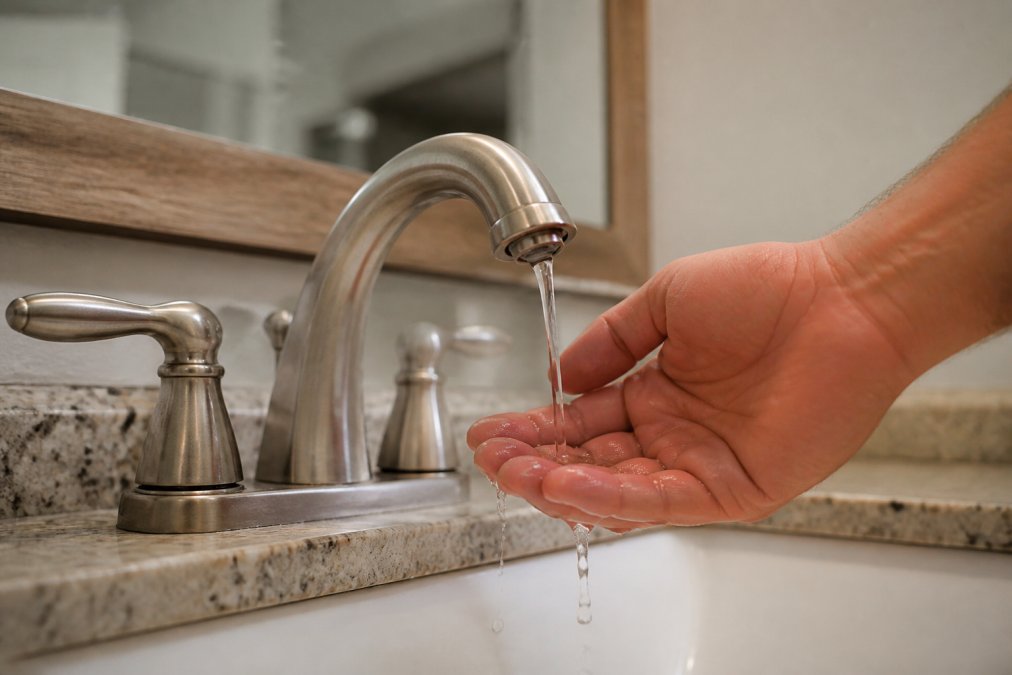
Knowing how to fix low water pressure starts with confirming you actually have a pressure problem. Testing is straightforward: pick up a water pressure gauge at any hardware store, thread it onto an outdoor hose bib or laundry room faucet, and turn the water on fully. The gauge reads in PSI and gives you a real number to work with.
What PSI Reading Is Normal?
Normal residential water pressure falls between 40 and 80 PSI, according to the Plumbing Manufacturers International guidelines on residential water pressure. Most plumbers aim for 50 to 60 PSI as the sweet spot. Below 40 PSI, you'll notice weak flow at showers and faucets. Above 80 PSI, you risk damaging appliances, supply lines, and fixtures over time. Write down your reading before proceeding.
Common Causes of Low Water Pressure
Low water pressure rarely has a single cause. The most common culprits are blockages in fixtures, problems with the main shut-off valve or pressure regulator valve, failing well pump equipment, pipe corrosion, and issues at the municipal supply line. The diagnostic approach matters: work from the simplest fixes outward toward the more complex.
Single Fixture vs. Whole-House Pressure Loss
This distinction is the most important diagnostic step you can take.
Single fixture low pressure points to a localized issue: a clogged faucet aerator, blocked showerhead, faulty cartridge, or partially closed fixture shutoff.
Whole-house low pressure suggests something upstream: the main shut-off valve, pressure regulator valve, a significant leak, sediment buildup in older galvanized pipes, or a problem at the water meter or municipal service line.
| Symptom | Likely Cause | First Step |
|---|---|---|
| One faucet runs weak | Clogged aerator or cartridge | Clean or replace aerator |
| One showerhead is weak | Mineral deposits in showerhead | Vinegar soak or replacement |
| All hot water is weak | Water heater shutoff partially closed | Check heater inlet valve |
| All fixtures are weak | PRV, main valve, or supply issue | Test PSI, check main valve |
| Pressure dropped suddenly | Leak, burst pipe, or municipal issue | Check meter, inspect pipes |
| Well home loses pressure | Pump failure or pressure tank issue | Check pressure switch |
Clean Faucet Aerators and Showerheads
Start here. It's the most common cause of single-fixture low water pressure and costs nothing to fix.
A faucet aerator is the small mesh screen screwed onto the tip of your faucet spout. Mineral deposits and sediment accumulate on that screen over time, restricting flow rate significantly. Hard water areas see this happen faster.
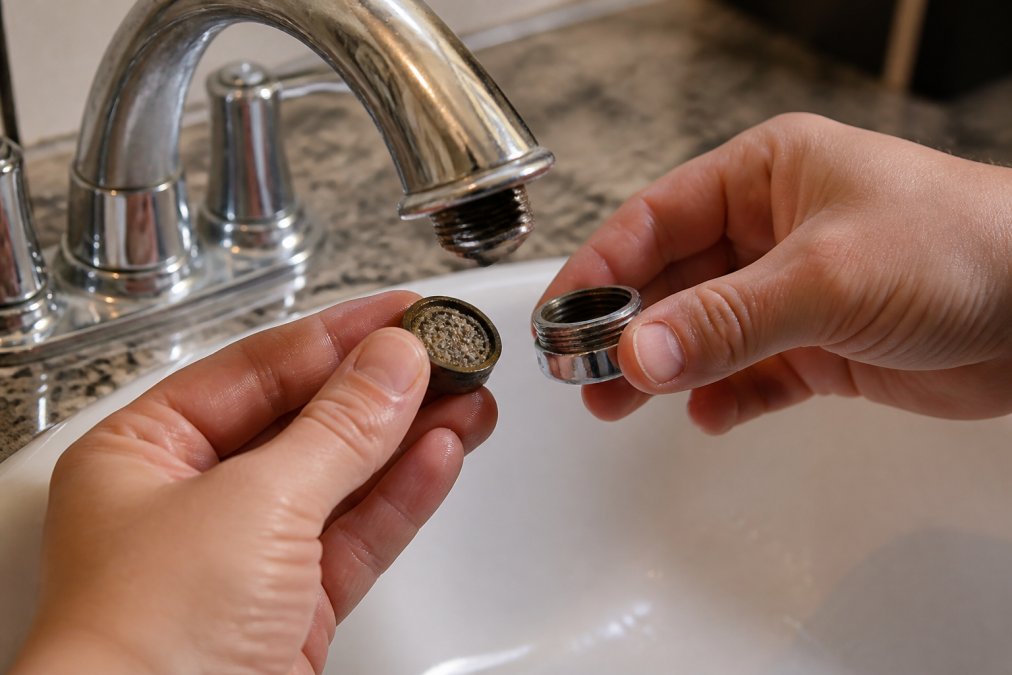
To clean an aerator:
- Wrap the aerator with a cloth to protect the finish, then unscrew it counterclockwise by hand or with pliers.
- Disassemble the aerator components and note the order of the parts.
- Soak all pieces in white vinegar for 30 minutes to dissolve mineral deposits.
- Scrub with a small brush, rinse thoroughly, and reassemble.
- Reattach to the faucet and test flow rate.
Showerheads follow the same logic. Fill a plastic bag with undiluted white vinegar, secure it around the showerhead with a rubber band so the head is fully submerged, and leave it overnight. If cleaning doesn't restore flow, replacement is inexpensive.
Check Your Main Shut-Off Valve, PRV, and Supply Line
A main shut-off valve that's only three-quarters open cuts flow rate across every fixture in the house. Locate your main water shut-off valve, typically near where the water supply line enters the home. If it's a gate valve (round handle), turn it fully counterclockwise until it stops. If it's a ball valve (lever handle), the lever should be parallel to the pipe. Even slight partial closure causes noticeable pressure loss. Check the water meter shutoff as well.
Adjusting the Pressure Regulator Valve
A pressure regulator valve (PRV) is a bell-shaped device installed on the main supply line, usually near the main shutoff. Its job is to reduce incoming municipal water pressure to a safe level for your home's plumbing system. PRVs have a typical lifespan of 10 to 15 years. When they fail, they either restrict pressure too much or stop regulating entirely.
To adjust a PRV:
- Locate the adjustment screw on top of the valve (usually covered by a locking nut).
- Loosen the locking nut with a wrench.
- Turn the adjustment screw clockwise to increase pressure, counterclockwise to decrease it.
- Make small adjustments (a quarter turn at a time) and recheck your pressure gauge.
- Target 50 to 60 PSI. Tighten the locking nut when done.
If adjusting the PRV doesn't change your gauge reading, or if the valve is visibly corroded, replacement is the right call. According to the EPA's WaterSense program guidance on residential plumbing, maintaining proper home water pressure protects both your fixtures and your water efficiency.
Identifying Leaks and Pipe Corrosion
A significant plumbing leak can drop whole-house pressure noticeably. To check for leaks, turn off every water-using appliance and fixture in the house, then watch your water meter for 15 minutes. If the dial moves, water is leaving the system somewhere.
Pipe corrosion is a slower culprit. Older homes with galvanized steel pipes accumulate rust and mineral deposits inside the pipe walls over decades, narrowing the effective pipe diameter and choking flow rate. If your home was built before 1970 and has never had its supply lines replaced, corroded pipes are a serious candidate.
Signs of a Failing Well Pump to Watch For
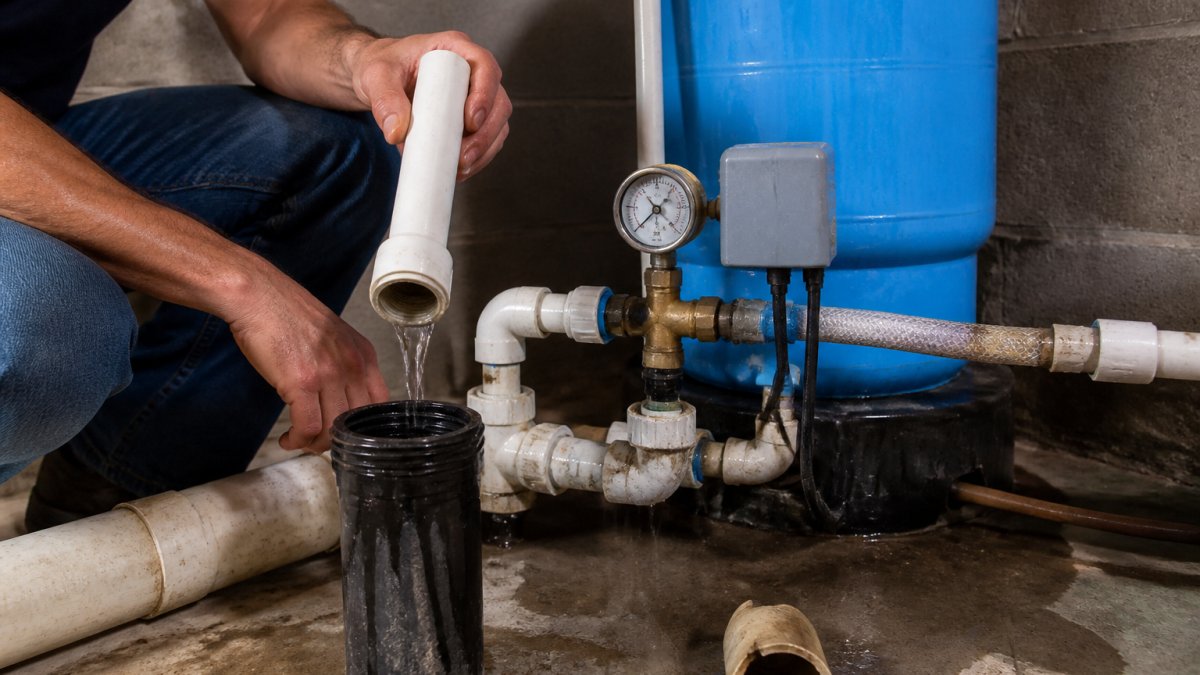
For homes on private well systems, low water pressure has a different diagnostic path. The well pump is responsible for pulling water from the aquifer and pressurizing the system. Watch for these signs of a failing well pump:
- Pressure that fluctuates wildly between strong and nearly nonexistent
- Air sputtering from faucets, indicating the pump is drawing air rather than water
- Pressure that drops quickly and recovers slowly after moderate water use
- Unusual clicking sounds from the pressure switch cycling rapidly (short-cycling)
- No water at all from any fixture
- Muddy or sediment-heavy water, suggesting the pump is pulling from the bottom of the well
Short-cycling, where the pump kicks on and off every few seconds, usually points to a waterlogged pressure tank or failed check valve rather than the pump motor itself.
Well Pump Pressure Switch Adjustment Guide
The well pump pressure switch adjustment is one of the most practical DIY repairs for homeowners on private well systems. The pressure switch controls when the pump turns on and off, set to a cut-in pressure (pump activates) and a cut-out pressure (pump stops). Common factory settings are 30/50 PSI or 40/60 PSI (cut-in/cut-out).
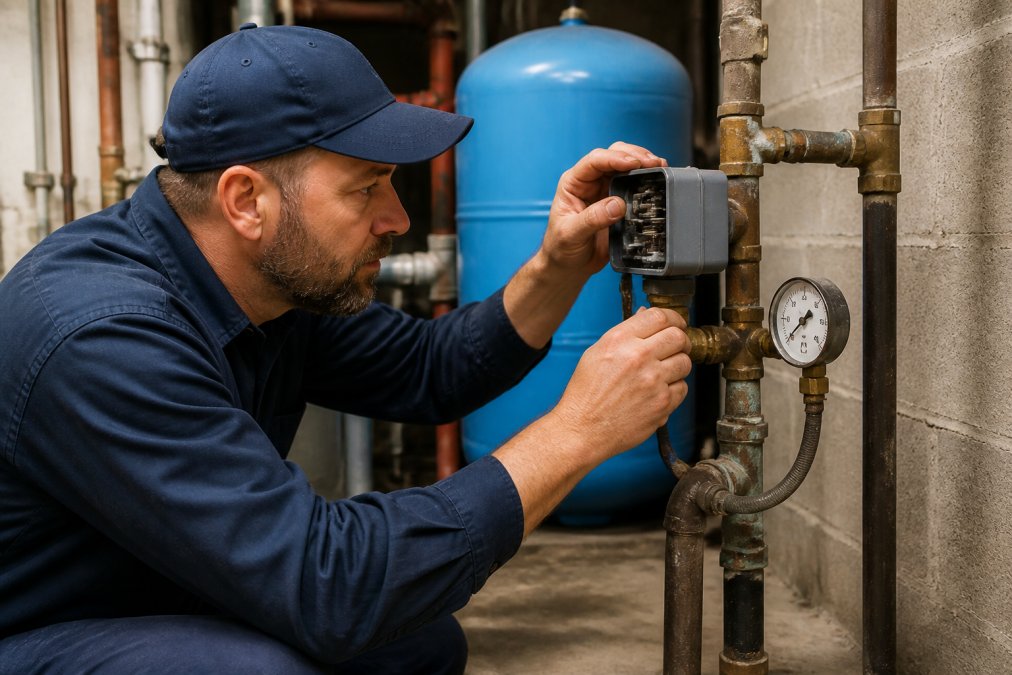
Before touching the pressure switch, turn off the circuit breaker for the well pump. This is not optional.
To adjust:
- Remove the cover from the pressure switch (usually a plastic cap held by a screw).
- You'll see two nuts on threaded posts inside. The larger nut adjusts both cut-in and cut-out pressure together. The smaller nut adjusts only the differential.
- Turn the large nut clockwise to raise both settings, counterclockwise to lower them.
- Restore power and check your pressure gauge to confirm the new settings.
The Water Systems Council's guidance on pressure tank and pump maintenance recommends checking pressure switch settings annually on private well systems.
Pressure Tank and Check Valve Checks
A waterlogged pressure tank is one of the most common causes of short-cycling. The pressure tank contains an air bladder that maintains system pressure between pump cycles. When the bladder fails, the tank fills entirely with water and the pump cycles constantly.
To check bladder pressure: turn off the pump breaker, open a faucet to release system pressure, then use a tire gauge on the Schrader valve at the top of the tank. The air pressure should be 2 PSI below your cut-in pressure. If it reads zero or fills immediately with water, the bladder is compromised and the tank needs replacement.
The check valve, located on the well pipe above the pump, prevents water from flowing back down the well between pump cycles. A failed check valve means the pump has to refill the entire pipe column every time it activates, causing slow pressure recovery and premature pump wear.
Water Softeners, Filtration Systems, and Municipal Supply Issues
Your water treatment equipment can cause low water pressure, and so can conditions outside your property.
Water softeners and filtration systems introduce additional resistance into the supply line. A clogged sediment pre-filter is one of the most overlooked causes of whole-house pressure loss. Most sediment filter cartridges need replacement every three to six months. If yours hasn't been changed recently, pull it and inspect it. A brown, compacted cartridge is restricting your flow. Water softeners can also cause pressure issues if the resin bed becomes fouled or if the unit is stuck in regeneration mode.
Municipal supply issues are outside your control but worth understanding. Water pressure from the city can drop during peak demand periods, after main breaks, or during infrastructure work. If your neighbors are experiencing the same pressure loss simultaneously, the problem is upstream of your property. Contact your local water utility to check for reported service issues.
When to Fix Low Water Pressure Yourself vs. Call a Plumber
Most aerator cleaning, valve checks, and pressure switch adjustments fall squarely in DIY territory. The tools are inexpensive, the risk is low, and the fixes are reversible.
Call a professional plumber when:
- Your PSI gauge shows pressure below 30 PSI and valve adjustments haven't helped
- You suspect pipe corrosion in an older home with galvanized steel pipes
- The PRV needs replacement, not just adjustment
- You have a well pump that won't run or short-cycles despite a healthy pressure tank
- You detect a leak inside a wall or slab using the meter test
- Pressure drops suddenly without explanation, which can indicate a serious supply line failure
For homeowners with private well systems, the complexity goes up. Well pump diagnostics require understanding the relationship between pump depth, pipe diameter, pressure tank sizing, and aquifer yield. According to the National Ground Water Association's homeowner well water guide, well systems should be professionally inspected every 10 years at minimum, with pressure and flow rate tests included. A plumber who knows private well systems is not interchangeable with a general service plumber.
Frequently Asked Questions
Is 40 PSI water pressure too low for a home?
40 PSI sits at the low end of the acceptable range. Most plumbing systems function best between 45 and 80 PSI, with 60 PSI being a common target. At 40 PSI you may notice weak showerhead flow and slow-filling appliances. If your pressure gauge consistently reads 40 PSI or below, check your pressure regulator valve first. On a well system, verify the pressure switch cut-in and cut-out settings before assuming a bigger problem.
What are the most common causes of sudden low water pressure?
Sudden low water pressure usually points to one of a few issues: a partially closed main shut-off valve, a clogged faucet aerator or showerhead blocked by mineral deposits, a failing pressure regulator valve, or an active leak somewhere in the supply line. On private well systems, a failing well pump or a waterlogged pressure tank are frequent culprits. If multiple fixtures lose pressure at once, check the main shut-off valve and water meter first before inspecting individual fixtures.
How do I know if my well pump is failing?
A failing well pump often shows several warning signs before it quits entirely. Watch for pressure that drops suddenly during normal use, air sputtering from faucets, a pressure gauge that cycles rapidly between high and low readings, or the pump running almost continuously without building adequate pressure. Discolored or sandy water can also indicate the pump is pulling sediment from the bottom of the well. If you notice any of these signs, have a plumber inspect the pump and pressure tank promptly.
Can I adjust my home's water pressure regulator myself?
Adjusting a pressure regulator valve is a manageable DIY task if you are comfortable working near your main water supply. Turn the adjustment screw clockwise to raise pressure and counterclockwise to lower it, checking a pressure gauge after each small turn. Keep the target between 50 and 70 PSI. However, if the valve is corroded, leaking, or the pressure does not respond to adjustment, replace it rather than forcing it. When in doubt, a licensed plumber can adjust or replace the valve quickly and safely.
Persistent low water pressure, especially in homes with private well systems, is rarely a single-component problem. England's Plumbing & Heating has been diagnosing and repairing residential plumbing systems across Chester County since 1989, including well pump repairs, PRV replacements, and water conditioning system maintenance. If you've worked through the steps above and pressure hasn't improved, book online to schedule a diagnostic visit with our team.