 how-to
What Causes a Well Pump to Lose Prime: Diagnosis & Repair
Table of Contents
- Understanding Well Pump Prime and Why It Matters
- Common Causes of Well Pump Prime Loss
- How to Prime a Well Pump: Step-by-Step
- Well Pump Loses Prime Overnight: Diagnosis and Solutions
- Well Pump Foot Valve Problems: Identification and Repair
- Well Pump Check Valve Failure: Signs and Replacement
- Preventative Maintenance to Avoid Prime Loss
- When to Call a Professional
- Frequently Asked Questions
Last Updated: October 6, 2026
Understanding Well Pump Prime and Why It Matters
A well pump loses prime when it loses the water seal needed to create suction and pull water from your well.
Think of priming like filling a straw with water before you can drink from it.
At England's Plumbing & Heating, we've diagnosed many prime-loss cases in Chester County.
This guide covers the most common causes and how to fix them yourself, or know when to call a professional.
Common Causes of Well Pump Prime Loss
Several issues can cause your pump to lose prime. Each one requires a different solution, so accurate diagnosis saves time and money.
Air Leaks in the Suction Line
Air leaks in the suction line are the most common reason a well pump loses prime.
Common leak locations include:
- Threaded fittings that have loosened over time
- Cracked or split pipe sections
- Worn gaskets or O-rings at connection points
- Holes from corrosion or physical damage
How to find an air leak: turn off the pump and listen at each fitting on the intake side. Hissing, dripping, or wet spots are the signs.
For loose fittings: turn off the pump, let pressure drop, and tighten the fitting. If that doesn't stop the leak, the gasket or O-ring needs replacement.
For cracked pipe, you'll need to replace the damaged section, a job that requires skill and the right tools.
Faulty Foot Valves and Check Valve Failure
Your foot valve sits at the bottom of the suction line, submerged in the well.
A check valve on the discharge side prevents backflow. When it fails, water drains backward and you lose prime overnight.
Signs of foot valve or check valve problems:
- Pump primes but loses prime within hours
- You must re-prime every morning or after the pump sits idle
- Water drains from the pressure tank when the pump isn't running
- Weak water pressure that gradually worsens
Testing a foot valve: if your pump loses prime overnight, the foot valve is the prime suspect. Debris may be stuck inside, or the flapper may be worn and not sealing.
Replacing a foot valve requires pulling the suction line from the well, a job best left to professionals with the right equipment.
Low Water Table and Drawdown Issues
Your well's water table is the level at which water naturally sits underground.
Drawdown is how far the water level drops while you're pumping.
Water tables also drop in summer and fall when rainfall is low, so a well that works fine in spring may struggle in late August.
Signs of water table problems:
- Pump loses prime during peak water-use hours (morning showers, laundry day)
- Prime holds overnight but fails mid-day
- Multiple faucets running at once causes prime loss
- Problem is worse in summer or after dry spells
If low water table is your issue, DIY options are limited. A well contractor can test your static water level (pump off) and dynamic water level (pumping).
Pressure Tank Air Precharge Problems
Your pressure tank stores water under pressure and maintains steady flow.
If the air precharge drops too low, the tank can't maintain pressure.
Signs of a bad air precharge:
- Pump cycles on and off frequently (short-cycling)
- Pressure gauge shows erratic readings
- Water sputters from faucets
- Pump loses prime after sitting unused
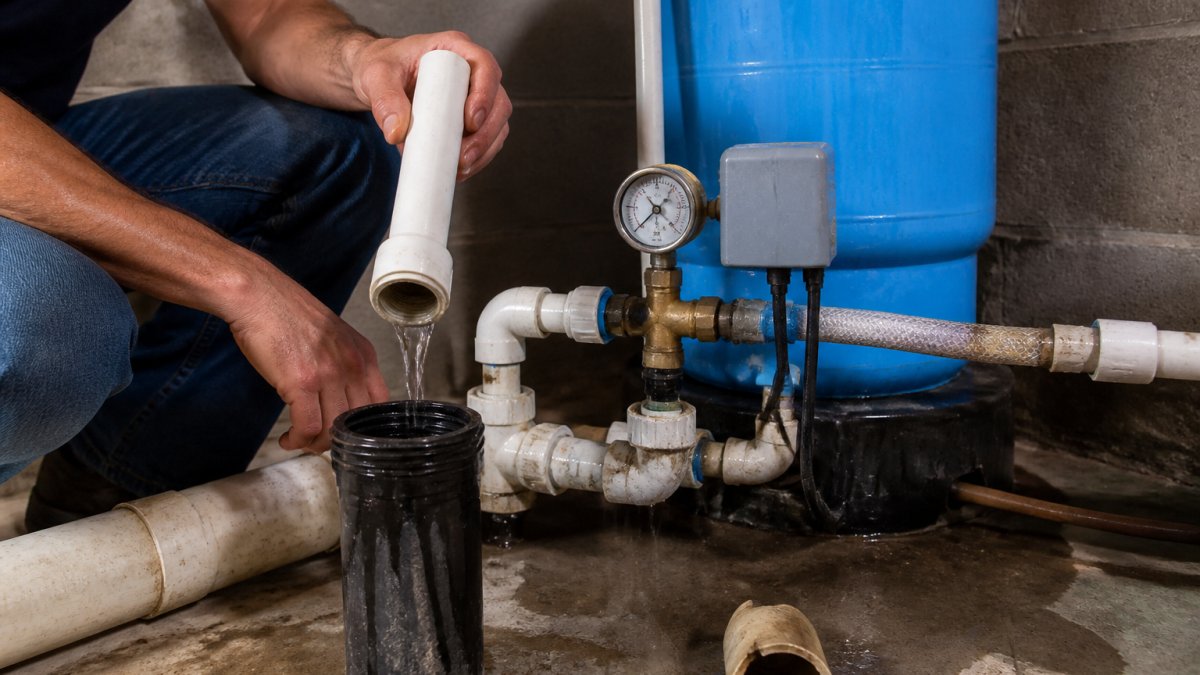
Checking the precharge: turn off the pump and use a tire pressure gauge on the air valve (usually on top of the tank).
Recharging the tank: if the precharge is low but the bladder is intact, add air with a compressor and the air valve, like filling a tire.
How to Prime a Well Pump: Step-by-Step
Knowing how to prime a well pump can get your water running again quickly. The process differs slightly for shallow well and jet pumps, but the principle is the same: fill the pump housing with water to restore the seal.
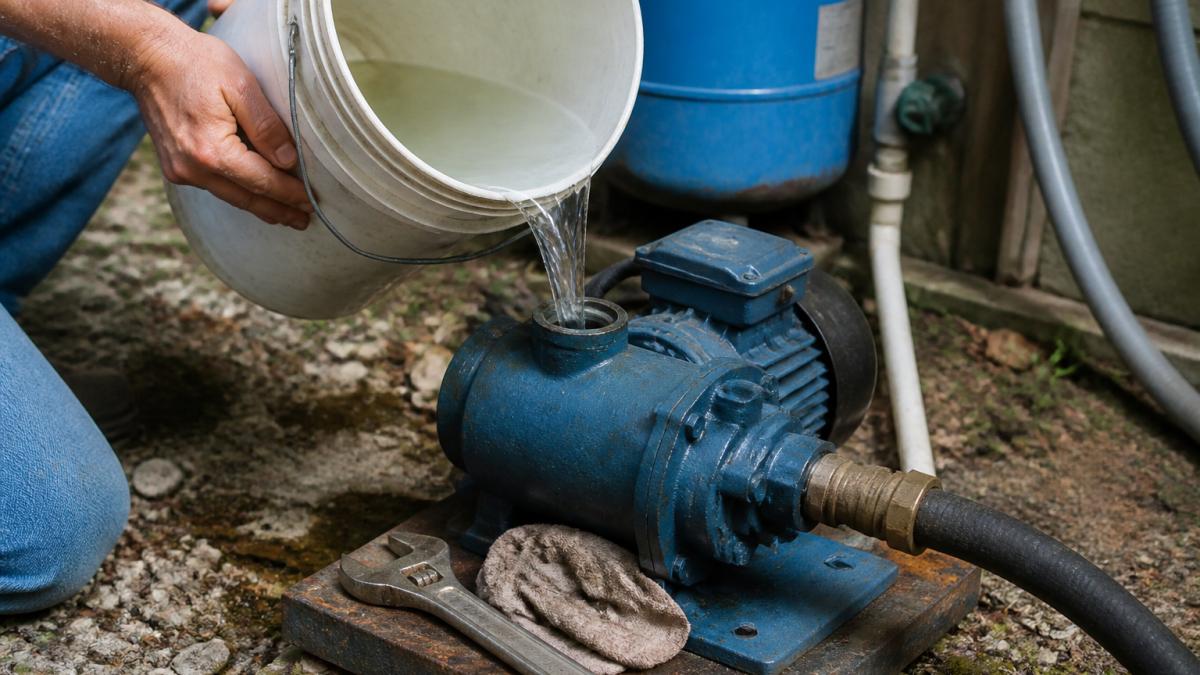
What You'll Need Before Starting
Gather these items before you start:
- Bucket of water (5-10 gallons)
- Adjustable wrench or pliers
- Flashlight (to see priming ports clearly)
- Clean cloth or rag
- Garden hose (optional, for rinsing)
Check your pump's manual or nameplate to locate the priming port. Most pumps have one or more on top of the housing, looking like small plugs or valves.
Priming Process for Shallow Well and Jet Pumps
Step 1: Turn off the pump. Flip the breaker switch to OFF.
Step 3: Remove the priming plug. Use your wrench to carefully unscrew the priming port.
Step 5: Replace the priming plug. Screw the plug back in firmly, but don't over-tighten, you could crack the fitting.
Step 6: Turn the pump on. Switch the breaker back to ON.
Step 7: Check for leaks. Watch the priming port area for water spraying or dripping.
If the pump runs but no water comes out, the problem isn't just lost prime.
Safety Considerations During Priming
Never bypass safety steps when working with your well pump. Electrical hazards and pressurized water are both present.
- Always turn off the pump at the breaker before opening any ports or fittings
- Wait 2-3 minutes after shutting down, residual pressure can spray hot water
- Don't stand directly in front of priming ports when opening them
- If you smell gas or see electrical sparks, stop immediately and call a professional
- Never prime a pump that's been running continuously, let it cool for 10 minutes first
Well Pump Loses Prime Overnight: Diagnosis and Solutions
If your pump primes during the day but loses prime by morning, water is draining from the system while the pump is off.
This almost always points to a failed check valve or foot valve.
Another possibility is a slow suction line leak that only shows after hours of sitting.
A third cause is a small suction line air leak that lets air in overnight. Listen for hissing at each fitting.
If these checks reveal nothing, the foot valve or check valve is almost certainly the culprit.
Well Pump Foot Valve Problems: Identification and Repair
The foot valve is critical to keeping your pump primed. It sits at the bottom of your suction line, submerged in the well water.
Signs of a failing foot valve:
- Pump loses prime overnight or after sitting idle
- You must re-prime multiple times per week
- Prime holds for only a few hours
- Water level in the pressure tank drops when the pump isn't running
Diagnosing a foot valve problem: turn off the pump and open a faucet to release pressure. If water drains quickly then stops, the foot valve is leaking; water should stay in the line.
Repairing a foot valve requires pulling the suction line from the well, a job for a professional because:
- The suction line may be 20-50 feet long and heavy
- Proper technique prevents air from entering during removal
- Mistakes can damage the pump or well casing
At England's Plumbing & Heating, we handle foot valve replacement. We pull the line, replace the valve, and re-prime the system, getting your water back safely and quickly.
Well Pump Check Valve Failure: Signs and Replacement
A check valve on the discharge side of your pump prevents backflow. If it fails, water flows backward when the pump shuts off and pressure drops.
Signs of check valve failure:
- Pressure tank loses pressure when the pump is off
- Pump must re-prime after sitting for several hours
- Water sputters or spurts from faucets when you first turn them on
- Weak pressure that gradually improves as the pump runs
The check valve is usually near the pump on the discharge line, a small brass or plastic fitting with an arrow showing flow direction.
Testing the check valve: turn off the pump and watch the pressure gauge.
Replacing a check valve is simpler than a foot valve because it's on the discharge side, not in the well. You still need to:
- Turn off the pump and release pressure
- Unscrew the old valve using two wrenches (one to hold the fitting, one to turn the valve)
- Wrap the new valve's threads with plumber's tape
- Screw in the new valve, tighten firmly, and check for leaks
If you're not comfortable with this repair, a professional can do it.
Preventative Maintenance to Avoid Prime Loss
Regular maintenance prevents most prime-loss problems. A few simple steps each year keep your pump running reliably.
Check suction line fittings twice a year. Spring and fall are ideal.
Test your pressure tank precharge annually. Use a tire pressure gauge on the air valve.
Monitor water pressure. A gradual decline often precedes prime loss. If flow weakens over weeks or months, investigate before you lose prime entirely.
Flush the system occasionally. Sediment and mineral buildup can damage valves and create leaks.
When to Call a Professional
Some well pump problems require professional tools and expertise. Knowing when to call saves time and prevents damage.
Call a professional if:
- You've primed the pump and it still won't deliver water
- Water is spraying from fittings or the pump housing
- The pump makes grinding, squealing, or cavitating sounds
- You smell burning or see electrical sparks
- The suction line needs replacement or repair
- You need to pull the suction line from the well
- The foot valve or check valve needs replacement
- You're unsure what's causing prime loss after checking the basics
England's Plumbing & Heating has served Chester County since 1989. We diagnose and repair well pump problems quickly, with transparent pricing and reliable service. Online booking and live chat let you schedule service on your terms.
If you're facing a well pump issue, reach out.
Frequently Asked Questions
Why does a well pump lose prime overnight?
A well pump loses prime overnight when air enters the suction line or the foot valve fails to hold water in the pipe. This is common in shallow well pumps because gravity naturally pulls water back down the intake side. Check for leaks at threaded fittings, inspect the foot valve for weeping, and verify the static water level hasn't dropped below the pump's intake depth.
How do you get the prime back in a well pump?
To re-prime your pump, locate the priming port on top of the pump housing. Remove the cap and pour clean water slowly into the opening until water flows out and the pump housing is completely full. Replace the cap, turn on the pump, and listen for cavitating sounds to stop. For submersible pumps, you may need to check the pressure tank precharge pressure or inspect the check valve on the discharge side.
Can a leaking foot valve cause a well pump to lose prime?
Yes, a leaking or faulty foot valve is one of the most common causes of prime loss. The foot valve sits at the bottom of the suction line and prevents water from draining back into the well. If it weeps or fails to seal properly, water drains from the intake side and air enters, breaking the vacuum seal. Signs include slow water return after shutdown and loss of pressure overnight.
What's the difference between a shallow well pump and a submersible pump regarding prime loss?
Shallow well pumps (jet and centrifugal) rely on atmospheric pressure to lift water and are more prone to prime loss because they operate above ground. Submersible pumps sit inside the well and push water up, making them less susceptible to air leaks in the suction line. However, submersible pumps can still lose prime if the check valve fails or the pressure tank precharge is incorrect.
A failing well pump affects your entire household. When you lose water pressure, you lose comfort and convenience. England's Plumbing & Heating specializes in well pump repair and replacement for homeowners throughout Chester County. Our experienced technicians diagnose prime loss quickly and fix it right the first time. Book online today or call for a same-day service estimate, we're ready to restore your water flow.