 comparison
Well Pump Repair vs Replacement: Cost Analysis
Table of Contents
- Well Pump Repair vs Replacement: Understanding Your Options
- Average Cost of Well Pump Repair
- Average Cost of Well Pump Replacement
- Signs of a Bad Well Pump
- The 50% Rule: When to Replace Instead of Repair
- Key Factors Influencing Repair and Replacement Costs
- Average Lifespan of a Well Pump
- How to Fix Low Water Pressure
- Frequently Asked Questions
Last Updated: September 26, 2026
Well Pump Repair vs Replacement: Understanding Your Options
When your well pump stops working reliably, you face a critical decision about well pump repair vs replacement, whether to repair the existing system or replace it entirely. The answer depends on several factors, from the pump's age and condition to the specific breakdown and your long-term water needs. This guide breaks down the cost analysis so you can make an informed choice without overpaying for unnecessary work or underinvesting in a failing system.
Choosing wrong, repairing a pump about to fail or replacing one needing only a minor fix, wastes money either way. Understanding the 50% rule and key cost drivers will help you decide what makes sense for your situation.
Average Cost of Well Pump Repair
Simple electrical repairs, replacing a pressure switch, capacitor, or control box, typically don't require pump extraction.
Complex repairs requiring pump extraction cost more as well depth increases. Shallow wells may take a few hours; deep wells can take a full day or more.
According to SC Well Service repair cost analysis, simple electrical repairs typically range from $100 to $500, while major repairs involving pump extraction and motor work can reach $500 to $1,500. The national average for well pump repair hovers around $975 when extraction is required.
Average Cost of Well Pump Replacement
A complete well pump replacement involves not just the pump itself, but also installation labor, electrical wiring, drop pipe, and potentially a new pressure tank or control box. According to DrillerDB well pump replacement cost resource, replacement costs typically range from $1,500 to $2,827 for standard residential systems.
Well depth significantly affects cost.
A comprehensive cost calculator from The Well Guide replacement cost tool, which accounts for labor, wiring, drop pipe, and pump type, suggests a national average range of $1,500 to $4,000 for a complete installed system. This variation reflects differences in well depth, pump type, local labor rates, and regional material costs.
Replacement includes inspection of the well casing, pressure tank, and control systems. Technicians may recommend upgrades like variable speed pumps for better efficiency.
Signs of a Bad Well Pump
Reduced water pressure often signals pump inefficiency from worn impellers, sediment, or electrical issues, though it may also indicate a pressure switch problem or clogged filter.
Sputtering or inconsistent flow suggests cavitation (pump can't draw enough water) or electrical issues causing erratic cycling.
Unusual noises, grinding, squealing, or rattling, suggest mechanical wear and imminent failure.
Constant running suggests the pump can't build enough pressure to trigger the pressure switch, overworking the motor.
Visible corrosion or leaks compromise mechanical integrity and electrical safety.
Tripped circuit breaker or frequent electrical resets mean the pump is drawing too much current, often due to motor wear or a stuck impeller.
The 50% Rule: When to Replace Instead of Repair
The 50% rule: if repair costs exceed 50% of replacement cost, replace instead. The 50% threshold favors investing in a new system with a full lifespan ahead.
However, the rule isn't absolute. If your pump is 15+ years old, replace it even if repair costs less than 50%, you're delaying the inevitable. If it's only 5 years old with a straightforward repair like a pressure switch replacement, repair makes sense even near the 50% threshold. Use the rule alongside pump age and repair complexity.
Key Factors Influencing Repair and Replacement Costs
Several variables determine the cost for your well pump situation. Understanding these factors helps you anticipate costs and plan your budget.

Well Depth and Accessibility
Well depth is the single largest cost driver for both repair and replacement. Shallow wells under 100 feet are relatively inexpensive to work on. Deep wells at 300+ feet multiply labor time and material costs substantially.
Extraction labor scales directly with depth. Pulling a pump from a 50-foot well might take 2-3 hours. Pulling one from a 400-foot well can take 8+ hours. That's not just time, it's specialized equipment, more drop pipe to handle, and greater complexity in managing the extraction safely.
Accessibility matters too. If your well head is in an easily accessible location with level ground and good working space, costs are lower. If it's in a cramped corner, under a deck, or in difficult terrain, labor time increases.
Pump Type: Submersible vs. Jet Pump
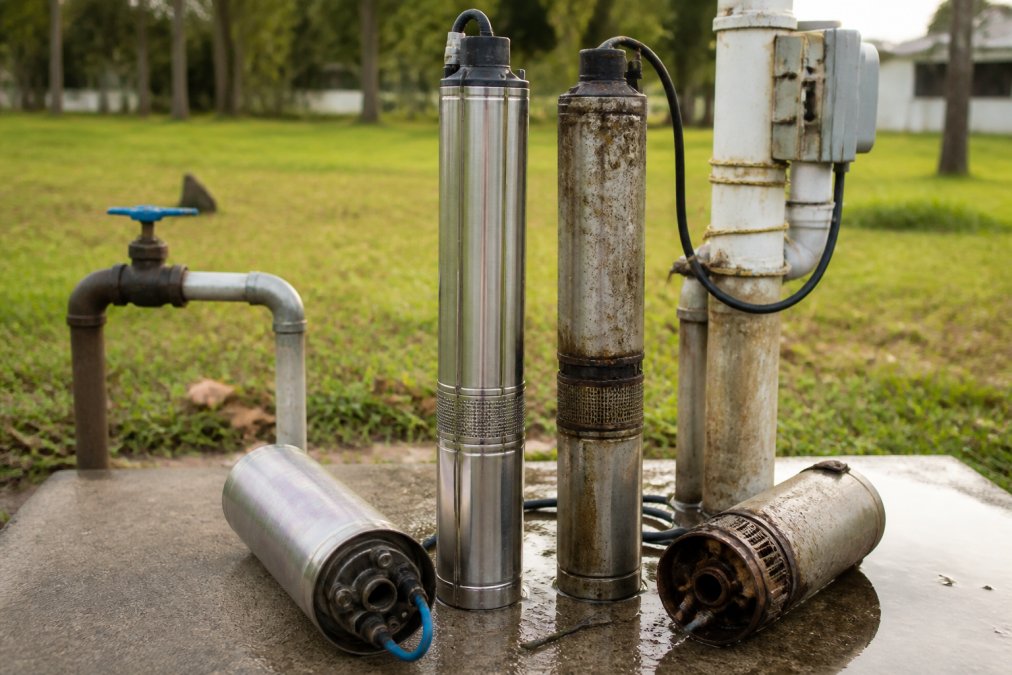
Submersible pumps sit inside the well and are pulled up for repair or replacement. Jet pumps sit above ground and draw water through a line. These two types have different failure patterns and repair costs.
Submersible pump repairs typically involve extraction, which is labor-intensive. Replacement is straightforward once the old pump is out. Jet pump repairs are often faster since the pump is already above ground, but replacement can be complex if the system piping needs modification.
Submersible pumps generally last longer, often 8-15 years, before major failure. Jet pumps typically have a shorter lifespan, 5-10 years, and may require more frequent repairs. If you have a jet pump approaching 10 years old, replacement is worth considering proactively.
Labor and Extraction Costs
Labor is typically 40-60% of your total repair or replacement bill. Extraction labor, the cost to safely pull the pump from the well, is the biggest labor component for repair work.
A service call for diagnostics might involve a technician arriving to assess the problem. If repair is needed and extraction is required, you're looking at several hours of specialized labor. If replacement is needed, labor includes extraction, installation of the new pump, electrical connection, pressure tank setup if needed, and system testing.
The deeper your well, the more extraction labor costs. Some contractors charge a flat rate for extraction; others charge by the hour.
Average Lifespan of a Well Pump
Knowing how long your pump should last helps you decide whether repair or replacement makes sense. A pump nearing the end of its expected life is a candidate for replacement even if repair is possible.
How to Fix Low Water Pressure
Low water pressure is the most common well pump complaint. Before assuming the pump is failing, check whether the issue is the pump itself or something else in your system.
| Scenario | Best Action | Why |
|---|---|---|
| Pump under 5 years, simple electrical repair | Repair | Low cost, long remaining lifespan |
| Pump 8-12 years, repair exceeds 50% of replacement | Replace | Approaching end of life; repair cost approaches replacement |
| Pump 15+ years, any major failure | Replace | System has lived its expected lifespan; new pump offers reliability |
| Shallow well (under 100 feet), major repair needed | Repair or Replace | Lower extraction costs make repair more viable |
| Deep well (300+ feet), major repair needed | Replace | High extraction labor makes replacement more cost-effective |
| Low water pressure, no obvious leak | Diagnostic first | Often a pressure switch or sediment issue, not pump failure |
Frequently Asked Questions
How do I know if my well pump needs to be replaced or repaired?
The 50% rule provides a clear benchmark: if repair costs exceed 50% of a new pump's price, replacement is typically more economical long-term. Consider also the pump's age, systems over 10-15 years old are more likely to fail again soon after repair. If you're experiencing frequent breakdowns, replacement often saves money despite higher upfront costs. A professional inspection can identify whether the issue is electrical (often repairable) or mechanical (may warrant replacement).
What is the average lifespan of a residential well pump?
Most well pumps last 8 to 15 years depending on water quality, usage patterns, and maintenance. Submersible pumps in clean water may reach 15 years, while those in sediment-heavy or corrosive conditions fail sooner. Jet pumps typically last 7 to 10 years. Regular maintenance, including sediment removal and pressure tank inspection, extends system lifespan. Once a pump approaches 12 years old, budget for replacement to avoid emergency failures and water service interruptions.
What are common signs that my well pump is failing?
Warning signs include reduced water pressure or flow, water spitting from faucets, frequent system cycling on and off, unusual grinding or squealing sounds, and loss of water altogether. Electrical issues like a tripped breaker or burnt-out control box also indicate pump stress. Cloudy or sediment-filled water suggests impeller damage. If you notice any combination of these signs, have a professional diagnose the problem before the pump fails completely and leaves you without water.
How can I fix low water pressure from my well pump?
Start by checking the pressure switch and pressure tank, a malfunctioning pressure switch often causes low pressure and is relatively inexpensive to replace. Verify the check valve isn't stuck, and inspect for sediment buildup in the system. If the well's groundwater level has dropped, the pump may struggle to reach it, requiring adjustment or a deeper installation. Electrical issues like low voltage to the pump motor also reduce output. Professional voltage and amperage testing can pinpoint electrical problems versus mechanical failures.
Does homeowners insurance cover well pump replacement?
Standard homeowners insurance typically does not cover well pump replacement, as it's considered routine home maintenance. However, some policies include coverage if the pump fails due to a covered peril like lightning strike or sudden mechanical breakdown. Check your policy's specific exclusions. Home warranty plans often cover well pump repair or replacement for a monthly fee, making them valuable for rural homeowners. Contact your insurance agent or warranty provider to confirm your coverage before emergency repairs are needed.