 how-to
Is Gas Line Hissing Dangerous? What to Do Now
Table of Contents
- Is Gas Line Hissing Dangerous?
- Signs of a Natural Gas Leak
- Distinguishing Appliance Noise from Pipe Leaks
- Immediate Steps to Take If You Hear Hissing
- Emergency Gas Leak Protocol and When to Evacuate
- Professional Gas Line Inspection and Leak Detection
- Post-Emergency Protocol: What Happens After
- Frequently Asked Questions
Last Updated: August 31, 2026
Is Gas Line Hissing Dangerous?
Yes, is gas line hissing dangerous, and you should treat it as an emergency. A hissing sound near your gas line, meter, or appliance connection signals a pressurized leak. Gas escaping from a damaged pipe or faulty connection creates that distinctive noise as it forces its way through a small opening.
At England's Plumbing & Heating, we've responded to gas emergencies across Chester County. A hissing gas line can escalate from a contained leak to an explosive hazard within minutes. Natural gas itself is colorless and odorless, but utility companies add mercaptan, a chemical that produces a rotten egg smell, specifically so you'll detect leaks before they become dangerous.
Pressurized gas escaping from a pipe accumulates in confined spaces and displaces oxygen, creating an explosive atmosphere. If an ignition source, a spark from an electrical switch, a pilot light, or static electricity, reaches that gas-air mixture, the result is catastrophic. This guide walks you through recognizing a gas leak, immediate steps to take, and when to call a professional.
Signs of a Natural Gas Leak
Recognizing a gas leak early is the difference between a controlled repair and a dangerous emergency.
The Mercaptan Smell (Rotten Egg Odor)
The rotten egg smell is the most recognizable indicator of a natural gas leak. If you detect this distinctive sulfur smell near your gas meter, furnace, water heater, or stove, a leak is almost certainly present.
Don't ignore a faint version of this smell. Mercaptan concentration changes based on gas flow rate and ventilation. A weak smell doesn't mean a weak leak; it may mean the gas is dispersing quickly. Once ventilation changes, the concentration can build rapidly.
The rotten egg odor should prompt immediate action, not investigation. Never try to locate the source yourself by sniffing around pipes or connections. Get out of the house first, then call your gas utility provider from outside.
Hissing and Other Audible Warnings
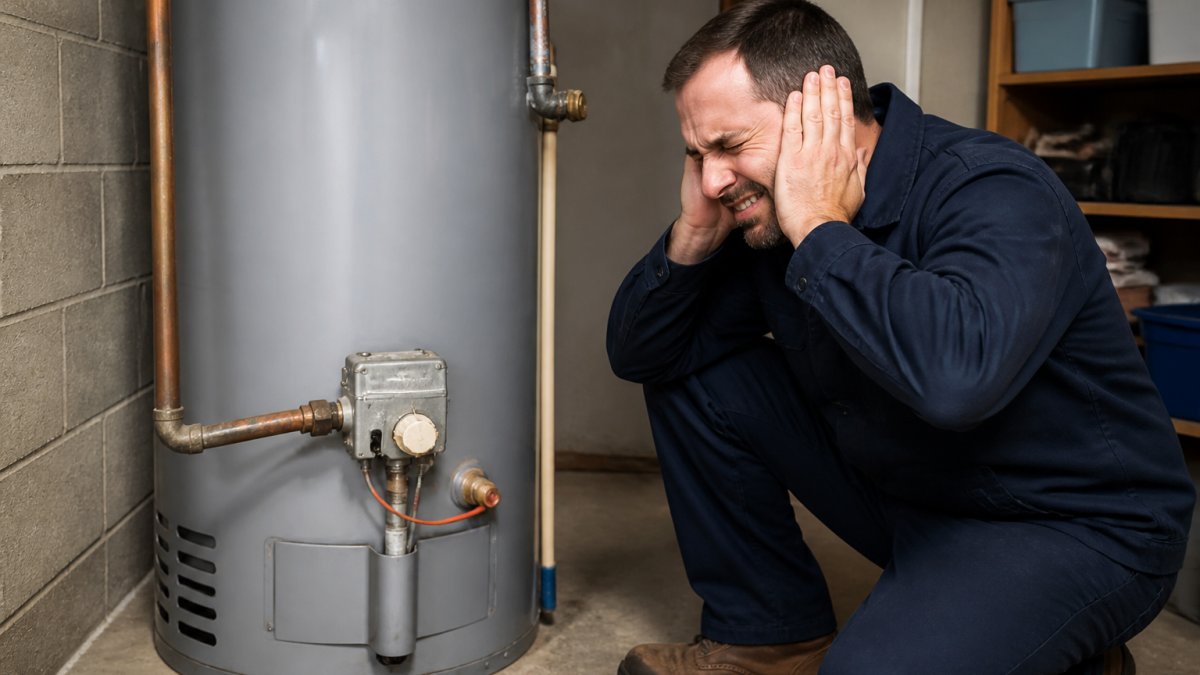
A hissing sound near gas lines, appliances, or the meter indicates pressurized gas escaping. The pitch and volume depend on the size of the opening and the pressure differential.
Some leaks produce other sounds: a whistling noise (smaller opening, higher pressure), a bubbling sound if gas is escaping near a water line, or a subtle rushing sound. Any unusual sound near gas infrastructure warrants professional inspection.
Normal appliance sounds, a clicking ignition, a low hum from a burner control, are consistent and predictable. Leak-related sounds are irregular, directional, and often accompanied by the mercaptan smell.
Visual Indicators Around Gas Lines
Several visual signs can confirm a suspected gas leak.
Look for dead patches in your yard or garden near the gas line route. Escaping gas can kill vegetation by displacing oxygen in soil.
Inspect visible gas pipes and connections for frost or condensation buildup during warm weather. When pressurized gas expands rapidly as it escapes, it cools dramatically, causing frost to form on pipe surfaces.
Check around gas meter connections for soap residue or bubbling. If you apply soapy water to suspected leak points and bubbles form, gas is escaping.
Corrosion or discoloration around pipe connections can indicate past or ongoing leaks. Corrosion accelerates when gas has been escaping and exposing metal to moisture and air.
Distinguishing Appliance Noise from Pipe Leaks
Not every sound near your furnace, water heater, or stove signals a dangerous leak.
A furnace produces multiple sounds during normal operation: the ignition click, the whoosh of gas igniting, the rumble of the burner flame, and the hum of the blower motor. These sounds follow a predictable sequence and stop when the heating cycle ends.
A gas leak produces continuous or irregular sounds. Hissing from a leak doesn't follow a cycle; it persists as long as gas is escaping. The sound is directional; you can narrow down its source by moving closer or farther from specific pipes or connections.
Water heaters generate similar normal sounds: ignition clicks, burner rumble, and occasional pops or cracks as metal expands from heat. A leak-related hissing near a water heater is distinctly different, a high-pitched, continuous sound that doesn't correlate with the heating cycle.
The mercaptan smell is the definitive distinguisher. If you hear an unusual sound AND smell rotten eggs, a leak is almost certain. When in doubt, call a professional.
Immediate Steps to Take If You Hear Hissing
Your response in the first few minutes after detecting a hissing sound can prevent escalation to a life-threatening situation.
Step 1: Evacuate Your Home
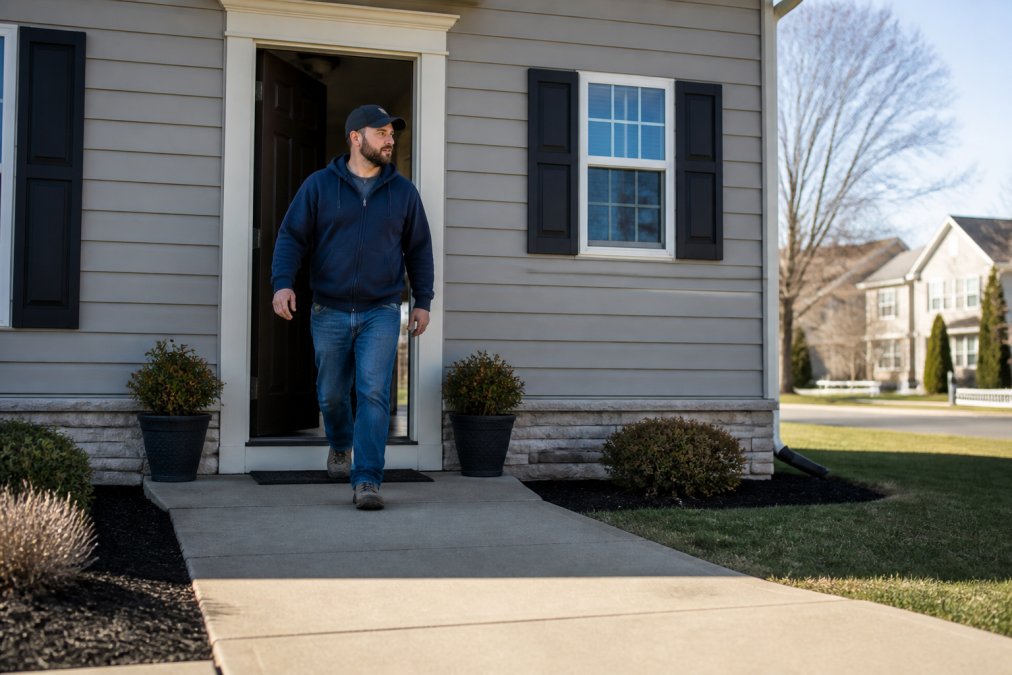
Do not investigate the source of the hissing. Do not attempt to locate or repair the leak yourself. Leave your home immediately through the nearest exit.
If you're in a multi-story building, use stairs, never elevators. Once outside, move at least 300 feet away from the building (the CDC). If others are present, alert them as you leave with a calm, clear voice: "Gas leak, everyone out now."
Do not re-enter the home for any reason, not for pets, not for medications, not for valuables. Emergency responders can handle animal rescue after the leak is controlled.
Step 2: Call Your Gas Utility Provider
From outside the home, call your gas utility provider's emergency line. This number should be on your gas bill or in your local phone directory. Do not use your cell phone inside the home or near the suspected leak area; the electrical spark can ignite gas in a confined space.
Provide the dispatcher with your address, a description of the warning signs, and your current location outside the home. The utility company will dispatch a technician.
Do not hang up until the dispatcher confirms they have your information and an estimated arrival time.
Step 3: Do Not Use Electrical Devices
Once outside, do not operate light switches, appliances, garage door openers, or any electrical device inside the home. An electrical spark can ignite accumulated gas.
Do not start your car in the garage or driveway if the garage is attached to the home. Do not use your cell phone inside or immediately adjacent to the home (nfpa.org).
Warn neighbors to avoid the area. If you live in an apartment or townhouse, alert residents in adjacent units to evacuate as well.
Wait outside until the utility company technician arrives, confirms the area is safe, and either repairs the leak or shuts off your gas supply.
Emergency Gas Leak Protocol and When to Evacuate
Evacuate immediately if you detect: a strong mercaptan smell, continuous hissing near gas infrastructure, frost or visible condensation on gas pipes during warm weather, or dead vegetation in a line corresponding to your gas line route.
Evacuate if you experience symptoms of gas exposure: dizziness, headache, nausea, difficulty breathing, or chest tightness.
Evacuate if you live in a multi-unit building and any neighbor reports a gas smell. Gas can travel through shared ventilation systems or foundation gaps.
Evacuate if you smell mercaptan but cannot locate the source after a quick visual inspection. The presence of the smell is sufficient reason to leave and call for professional help.
Professional inspection (without full evacuation) may be appropriate if you hear an unusual sound near an appliance but detect no mercaptan smell and the sound correlates with normal appliance operation. However, if the sound persists or the smell appears, evacuate immediately.
When in doubt, evacuate.
Professional Gas Line Inspection and Leak Detection
Once you've evacuated and called your gas utility provider, trained technicians take over.
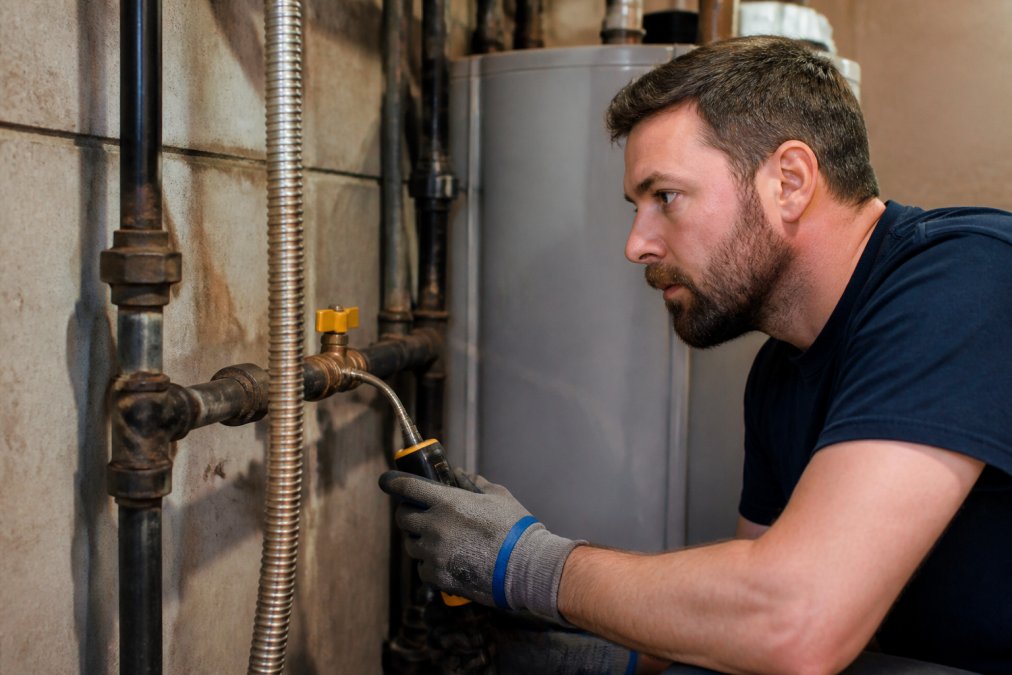
Professional leak detection begins with a handheld gas detector, a sensitive instrument that identifies mercaptan in the air and measures gas concentration. Technicians walk through the home and around exterior gas lines, watching the detector for spikes that indicate gas presence.
Once the general area is identified, technicians use a soapy water solution applied to suspected connection points, pipe joints, and fittings. Bubbles form where gas is escaping, revealing the exact leak source.
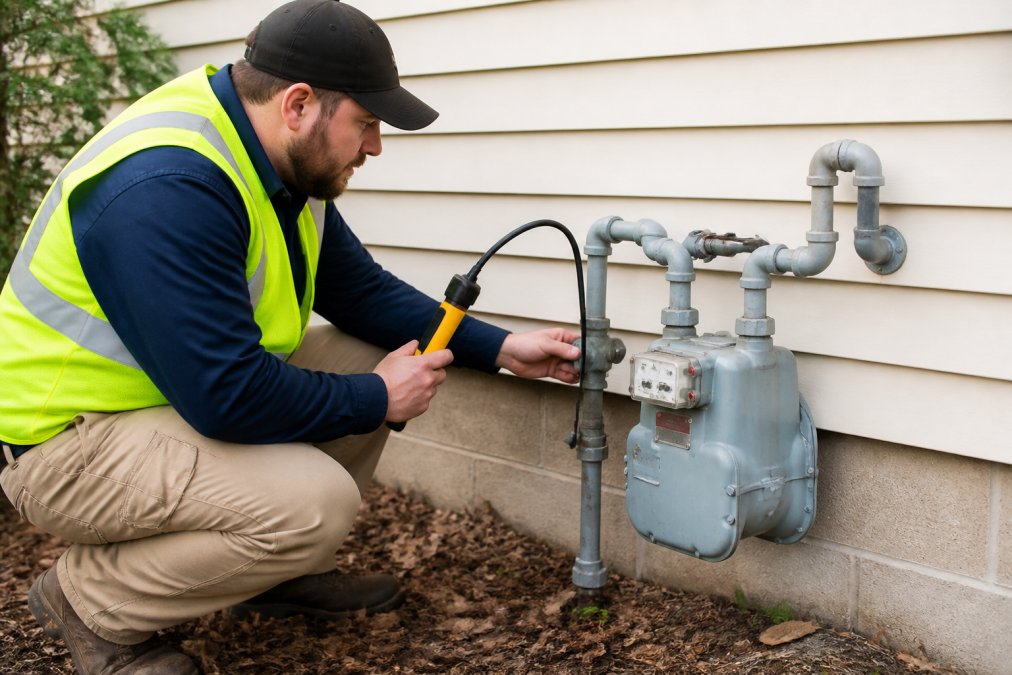
For leaks in buried gas lines or inside walls, technicians may use advanced equipment: ultrasonic detectors, thermal imaging cameras, or tracer gas methods.
The utility company's technician will determine whether the leak is in the utility's infrastructure or in your home's piping. If the leak is on the utility side, they repair it at no charge. If the leak is in your home's gas piping, they'll recommend you contact a licensed plumber to handle the repair.
For homeowners in Chester County, England's Plumbing & Heating provides gas line repairs, from simple connection tightening to full pipe replacement. Our technicians are certified in gas piping work and understand the specific codes and safety requirements that apply to residential gas systems.
Post-Emergency Protocol: What Happens After
After the utility company technician confirms your home is safe, several steps follow before you can resume normal operations.
If the utility company shut off your gas supply at the meter, your furnace, water heater, and gas stove will not function until gas is restored. Do not attempt to turn the gas back on yourself. Call your gas utility provider and request restoration.
If the leak was on the utility company's side, they repair it and restore your gas supply. You may notice a temporary mercaptan smell inside your home after restoration; this is normal and dissipates within hours.
If the leak was in your home's gas piping, you'll need a licensed plumber to repair it before gas can be safely restored.
Document the incident for your records. Note the date, time, warning signs observed, utility company technician name and ID, and any repairs completed.
Have your home's gas piping inspected annually by a professional plumber, especially if your home is older than 30 years. Regular inspection catches problems before they become dangerous leaks.
If you experience a second gas leak within a few years, the underlying cause may be systemic. A professional inspection can identify whether replacement or targeted repair is appropriate.
Gas line safety is non-negotiable. A hissing sound, rotten egg smell, or any other warning sign of a leak demands immediate action. Evacuate, call your utility provider, and wait for professional help. If your home's gas piping needs repair, England's Plumbing & Heating is ready to handle it safely and thoroughly. We've served Chester County since 1989 with certified technicians who understand gas piping codes and safety requirements. Book online or call to schedule an inspection after an emergency, or to arrange preventive maintenance on your gas lines.
Frequently Asked Questions
Q: What are the first signs of a gas leak?
A: The most recognizable sign is a rotten egg smell, mercaptan, added to natural gas for safety. You may also hear hissing near gas lines or appliances, notice dead vegetation in patches around your yard. Some people report physical symptoms like dizziness or headaches. If you notice any combination of these, leave your home immediately and call your utility provider from a safe location.
Q: How long does it take to get sick from natural gas exposure?
A: Exposure effects depend on concentration and duration. Low-level exposure may cause headaches, dizziness, or nausea within minutes. High concentrations can cause loss of consciousness or more severe health effects rapidly. Natural gas itself is not toxic, but it displaces oxygen in your lungs, creating an oxygen-deficient environment. Carbon monoxide from incomplete combustion is the real hazard. Any suspected exposure warrants immediate evacuation and fresh air.
Q: Should I turn off my gas if I hear a hissing sound?
A: Do not attempt to locate or shut off the gas yourself if you suspect a leak. Hissing indicates pressure release or escaping gas, which is hazardous. Instead, evacuate immediately without using electrical switches, lighters, or your phone indoors. Once outside and safe, call your utility provider's emergency line. They have trained professionals with proper equipment to safely isolate the gas supply and assess the situation.
Q: What should I do after a professional gas line inspection confirms a leak?
A: After your utility provider or a licensed professional confirms a leak, they will repair or replace the damaged section of gas piping. Do not re-enter your home until they give clearance. Once repairs are complete, request a pressure test and safety inspection to verify the system is sound. Keep documentation of the repair for your records. If you're uncomfortable with the system or have ongoing concerns, schedule a follow-up professional gas line inspection within a few weeks.