 how-to
Is My Water Heater Leaking? How to Diagnose and Fix It
Table of Contents
- Immediate Steps When You Discover Your Water Heater Is Leaking
- How to Identify Where Your Water Heater Is Leaking From
- Water Heater Pressure Relief Valve Leaking: Causes and Solutions
- Other Common Leak Sources: Drain Valve, Connections, and Corrosion
- Signs Your Water Heater Is Failing: When Repair Isn't Enough
- Repair vs. Replace: Cost of Water Heater Replacement and Lifespan
- Water Damage Mitigation and Insurance Considerations
- Preventing Future Water Heater Leaks: Maintenance Steps
- Frequently Asked Questions
Last Updated: August 26, 2026
Immediate Steps When You Discover Your Water Heater Is Leaking
When you spot water pooling around your water heater, the next 15 minutes matter more than rushing into action.
Turn off the water supply using the shutoff valve on the cold water inlet line at the top of the tank, turn it clockwise until it stops. If you can't locate it or it won't turn, shut off the main water supply at the meter.
Next, turn off the heat source. For gas water heaters, switch the thermostat dial to "Pilot" or turn off the gas supply valve. For electric water heaters, flip the circuit breaker to OFF.
Place towels or a bucket under the leak to contain water flow. Check whether the leak is active or slow, a steady stream requires immediate professional attention. Document the leak with photos showing the water source and damage. At England's Plumbing & Heating, we recommend calling a licensed plumber within the hour if water is actively flowing.
How to Identify Where Your Water Heater Is Leaking From
Pinpointing the leak source determines whether repair is possible or replacement is necessary.
Leaks from the top of the tank
Water dripping from the top usually points to the T&P (temperature and pressure) relief valve, the cold water inlet connection, or the hot water outlet connection.
The T&P relief valve is a safety mechanism designed to release pressure when temperature or pressure inside the tank exceeds safe levels. If water is trickling from this valve, it may be malfunctioning or internal pressure may be building abnormally due to thermal expansion or a faulty pressure regulator.
Leaks from the cold water inlet or hot water outlet usually indicate loose connections or corroded fittings. Tighten these connections with two wrenches, one holding the fitting stationary while the other turns the connection nut. Often, a quarter-turn is enough to stop the leak. If tightening doesn't work, the fitting needs replacement by a licensed plumber.
Leaks from the bottom of the tank
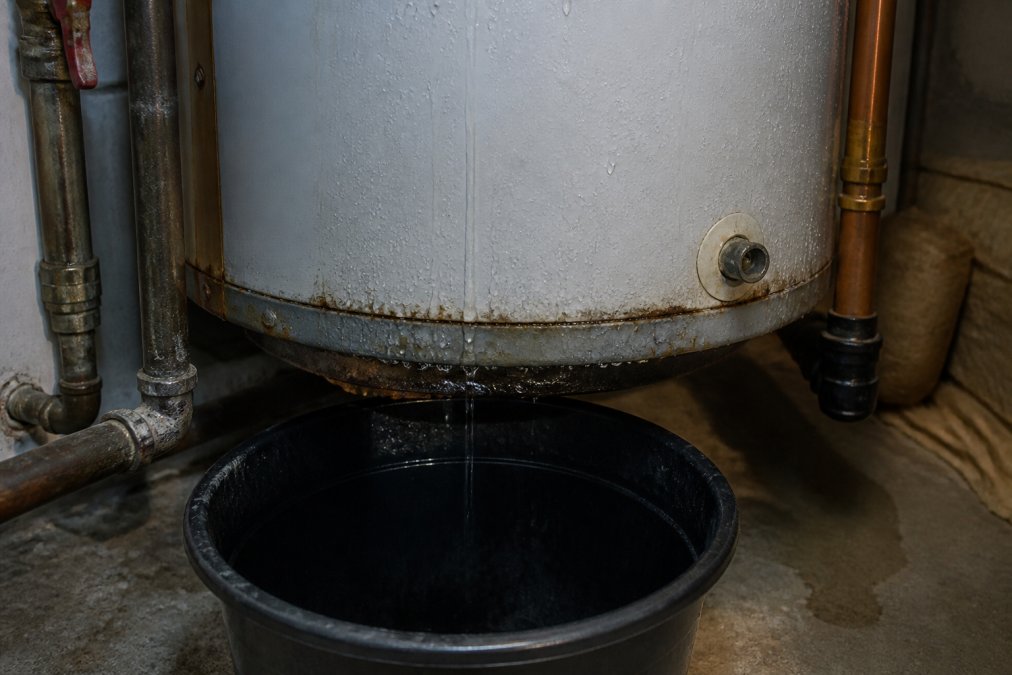
A leak from the bottom is the most serious scenario. The drain valve sits at the lowest point and is designed to allow you to flush sediment. If water is leaking from the drain valve itself, the valve seal has failed.
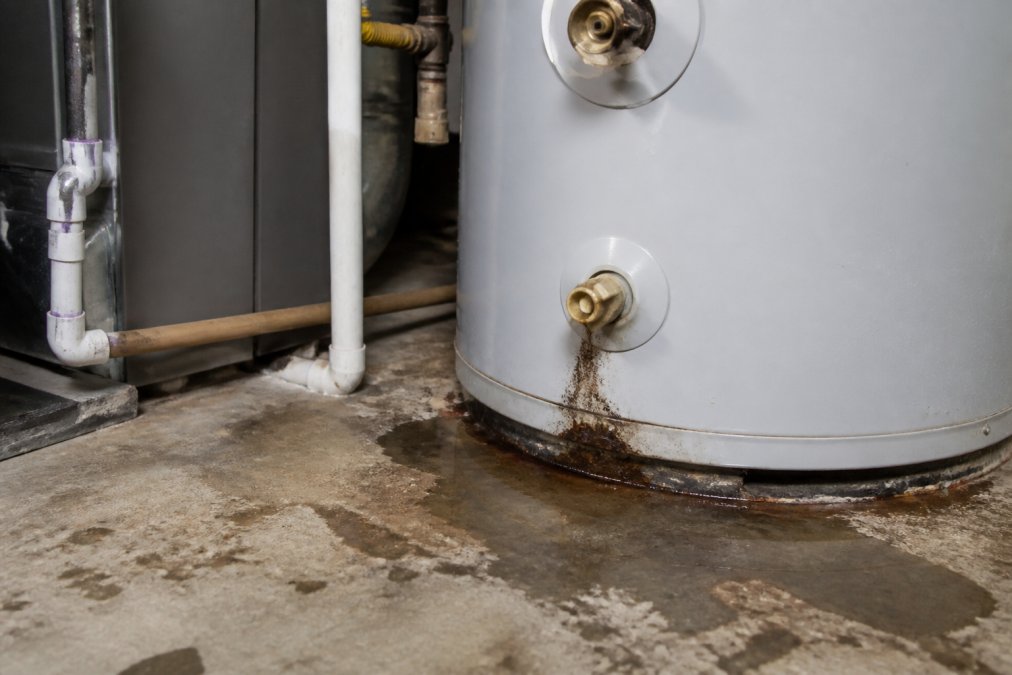
Try tightening the drain valve with a wrench. If it continues to leak, the valve needs replacement. However, if water is leaking from the tank wall itself near the bottom, internal corrosion has created a hole in the steel. This cannot be repaired, the tank must be replaced.
Internal corrosion and sediment buildup are the primary causes of bottom-of-tank leaks. Over time, the anode rod inside the tank (a sacrificial metal rod designed to corrode instead of the tank) depletes. Once it's gone, the tank steel itself begins to corrode. Sediment accumulation accelerates this process by insulating the tank bottom from the anode rod's protection.
Leaks from the sides or connections
Leaks appearing on the side of the tank or from fittings along the tank walls are usually from loose pipe connections or corroded fittings. Inspect all visible connections for corrosion (white, green, or blue discoloration) or active dripping. Tighten any loose connections with two wrenches. If a connection is corroded, it needs replacement.
If no connections are visibly leaking but water is seeping from the tank wall itself, internal corrosion is the likely cause and the tank requires replacement.
Water Heater Pressure Relief Valve Leaking: Causes and Solutions
The T&P relief valve is often misunderstood. It's not a sign of failure, it's a sign the valve is doing its job.
The T&P valve opens automatically when temperature inside the tank exceeds 210°F or pressure exceeds 150 PSI. A small amount of water dripping from the discharge pipe during or shortly after heating is normal.
Continuous or excessive dripping indicates a problem. Thermal expansion is the most common cause. When water heats, it expands. In a closed system, this expansion has nowhere to go, so pressure builds until the T&P valve opens. Installing an expansion tank on the cold water line upstream of the water heater absorbs this expansion and prevents unnecessary valve discharge.
A faulty T&P valve can also stick open or fail to seal properly. If the valve drips constantly even when the water heater isn't actively heating, the valve seal has likely failed and needs replacement.
High water pressure entering your home can also trigger excessive T&P valve discharge. If your incoming water pressure exceeds 80 PSI, a pressure-reducing valve installed at the main shutoff can lower it to a safe range (typically 50-70 PSI) (the EPA).
Other Common Leak Sources: Drain Valve, Connections, and Corrosion
Drain valve malfunctions
The drain valve at the bottom of the tank allows you to flush sediment buildup. Over time, sediment accumulates at the bottom, insulating the anode rod from the tank steel and accelerating corrosion.
If the drain valve leaks when closed, the seal inside has failed. Sometimes tightening with a wrench stops the leak. If tightening doesn't work, the valve cartridge needs replacement.
Loose pipe connections and fittings
Pipe connections at the top of the tank experience thermal stress as water heats and cools. Over time, vibration and temperature cycling can loosen the connection nuts.
Use two wrenches to tighten: one holding the fitting body stationary while the other turns the connection nut. A quarter to half-turn is usually enough. Do not over-tighten, as this can crack the fitting.
If the connection leaks again after tightening, the fitting seal has deteriorated and needs replacement.
Internal tank corrosion and sediment buildup
The most common cause of water heater leaks is internal corrosion. The anode rod inside the tank is designed to corrode instead of the tank steel. Once depleted (typically after 5-10 years), the tank steel itself begins to corrode (peer-reviewed research).
Sediment accelerates this process by insulating the tank from the anode rod's protection. You can slow corrosion by flushing sediment from the tank annually. Attach a garden hose to the drain valve and open it to allow sediment-laden water to flow out. However, once significant corrosion has developed, visible as rust stains on the tank exterior or active leaking from the tank wall, the tank must be replaced.
Signs Your Water Heater Is Failing: When Repair Isn't Enough
Rust-colored water from your hot water taps indicates internal corrosion. While flushing the tank may temporarily improve water clarity, the underlying corrosion continues to spread.
Rumbling or popping sounds during heating mean sediment buildup is significant. As the heating element warms sediment at the bottom, trapped water beneath boils and creates these sounds, accelerating corrosion.
Frequent T&P valve discharge when the water heater isn't actively heating suggests the tank has lost pressure containment. Visible rust or corrosion on the tank exterior, especially around seams or the bottom, indicates the corrosion has progressed significantly.
Age is also a factor. Most water heater tanks last 8-12 years depending on water quality, maintenance, and usage patterns (energy.gov). If your water heater is approaching or past 10 years and shows any of these signs, replacement is likely more cost-effective than repair.
Repair vs. Replace: Cost of Water Heater Replacement and Lifespan
The decision to repair or replace depends on the age of the unit, the nature of the leak, repair cost, and remaining expected service life.
For leaks from connections, valves, or the drain valve, repair is usually worthwhile if the water heater is less than 8 years old. At England's Plumbing & Heating, we recommend getting a professional diagnosis before committing to repair, as what appears to be a simple fix sometimes masks deeper corrosion.
For leaks from the tank wall itself, replacement is the only option. The tank cannot be patched or sealed.
The typical lifespan of a tank-style water heater is 8-12 years, varying based on water quality, anode rod maintenance, annual flushing, temperature settings, and usage patterns. When budgeting for replacement, consider whether upgrading to a tankless water heater or heat pump water heater makes sense. These alternatives offer higher energy efficiency and longer lifespans, though they have higher upfront costs.
Water Damage Mitigation and Insurance Considerations
A water heater leak that goes unnoticed for hours or days can cause significant damage to flooring, subflooring, drywall, and personal property.
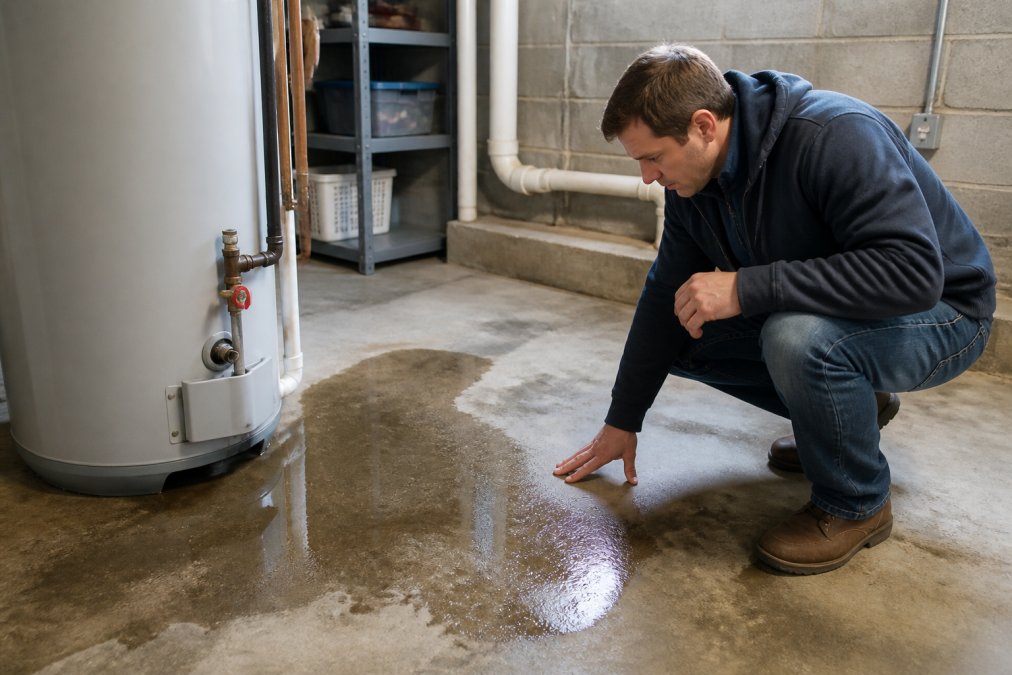
Stop the leak source by turning off the water supply to the tank and the heat source. Use towels, mops, or a wet vacuum to remove standing water. Open windows and doors to increase air circulation and begin drying the area.
Document all damage with photos and video before beginning cleanup. Contact your homeowner's insurance company promptly. Most homeowner's policies cover sudden, accidental water damage. However, damage from neglect or lack of maintenance is typically not covered. Your insurance company may require you to hire a professional water damage restoration company to dry and dehumidify the affected area, preventing secondary damage like mold.
Preventing Future Water Heater Leaks: Maintenance Steps
Regular maintenance is the most effective way to prevent leaks and extend your water heater's lifespan.
Flush your water heater once per year. Turn off the gas or electricity, turn off the cold water inlet valve, attach a garden hose to the drain valve, and open it to allow sediment-laden water to flow out.
Inspect the anode rod every 3-5 years. If it's significantly corroded or depleted, replace it. A new anode rod can extend the tank's life by several years.
Check the T&P valve annually by lifting the lever slightly to ensure it opens and water flows from the discharge pipe. If it doesn't open, the valve needs replacement.
Inspect all visible connections and the tank exterior monthly for signs of corrosion, rust, or moisture. Maintain proper water pressure, if your home's incoming water pressure exceeds 80 PSI, install a pressure-reducing valve at the main shutoff.
Set your water heater thermostat to 120°F. Higher temperatures increase energy consumption and accelerate corrosion. If you live in an area with hard water, consider installing a whole-home water softener, which significantly reduces sediment buildup and corrosion inside the tank.
When maintenance becomes overwhelming or you're unsure whether your water heater needs professional attention, reaching out to a licensed plumber is the right move. At England's Plumbing & Heating, our team has been serving Chester County since 1989 and can diagnose water heater problems quickly, recommend repair or replacement options, and handle installation if replacement is needed.
A leaking water heater demands immediate attention, but it doesn't automatically mean replacement. By understanding where the leak originates and what it signals about your tank's condition, you can make an informed decision about repair versus replacement. For professional diagnosis and expert service, England's Plumbing & Heating offers experienced water heater repair and installation throughout Chester County. Book online or call to schedule an appointment today.
=== FAQ ANSWERS (audit these too, same rules) ===
[1] Q: Is it okay for a water heater to leak a little? A: No. Even small leaks signal a problem that will worsen. A minor leak from the drain valve or T&P valve may be fixable, but continuous dripping indicates internal pressure issues or corrosion. Any leak should be diagnosed promptly, small leaks can cause water damage and lead to tank failure if left unaddressed.
[2] Q: What causes a water heater to leak from the bottom? A: Leaks from the bottom usually mean internal tank corrosion, sediment buildup, or a failing drain valve. The bottom is where sediment accumulates, which corrodes the tank interior. If your water heater is leaking from the bottom and you see rust-colored water or debris, the tank integrity is compromised. This typically requires replacement rather than repair.
[3] Q: Should I turn off the water supply if my water heater is leaking? A: Yes. Turn off the shutoff valve on the cold water supply line to the heater immediately. Then shut off the gas supply (for gas heaters) or the circuit breaker (for electric heaters). Stopping water flow prevents additional damage and gives you time to assess the leak and call a professional. Never ignore an active leak.
[4] Q: How long will a water heater last once it starts leaking? A: A leaking water heater can fail completely within days to weeks, depending on the leak source. If it's a loose fitting, you may have time to repair it. If the tank itself is leaking, expect failure within a few weeks as corrosion spreads. The longer a leak persists, the greater the risk of catastrophic tank failure and water damage to your home.
Frequently Asked Questions
Is it okay for a water heater to leak a little?
No. Even small leaks signal a problem that will worsen. A minor leak from the drain valve or T&P valve may be fixable, but continuous dripping indicates internal pressure issues or corrosion. Any leak should be diagnosed promptly, small leaks can cause water damage and lead to tank failure if left unaddressed.
What causes a water heater to leak from the bottom?
Leaks from the bottom usually mean internal tank corrosion, sediment buildup, or a failing drain valve. The bottom is where sediment accumulates, which corrodes the tank interior. If your water heater is leaking from the bottom and you see rust-colored water or debris, the tank integrity is compromised. This typically requires replacement rather than repair.
Should I turn off the water supply if my water heater is leaking?
Yes. Turn off the shutoff valve on the cold water supply line to the heater immediately. Then shut off the gas supply (for gas heaters) or the circuit breaker (for electric heaters). Stopping water flow prevents additional damage and gives you time to assess the leak and call a professional. Never ignore an active leak.
How long will a water heater last once it starts leaking?
A leaking water heater can fail completely within days to weeks, depending on the leak source. If it's a loose fitting, you may have time to repair it. If the tank itself is leaking, expect failure within a few weeks as corrosion spreads. The longer a leak persists, the greater the risk of catastrophic tank failure and water damage to your home.