 ultimate-guide
Water Heater Lifespan: What to Expect and When to Replace
Last Updated: November 4, 2026
Quick Summary
The average residential water heater lifespan is 8 to 12 years for conventional storage tank units, while tankless units often run longer when properly maintained. Hard water, a neglected anode rod, and skipped flushing shorten that range, and well water commonly pushes a unit toward the lower end.
- Storage tank water heaters typically last between 8 and 12 years.
- Flush a storage tank every six to twelve months, closer to six in hard water areas.
- Inspect the anode rod every two to three years and replace it when over half the core wire is exposed.
- Replace a unit over 10 years old that needs a major repair.
- A warranty does not equal lifespan, so check its terms before relying on it.
Table of Contents
- How Long a Residential Water Heater Lasts
- How Long Does a Hot Water Heater Last on Well Water?
- Factors That Shorten or Extend Water Heater Life
- Signs of Water Heater Failure to Watch For
- Water Heater Maintenance Tips That Extend Service Life
- Repair or Replace: Deciding When an Aging Unit Has Reached Its Limit
- Budgeting for a Water Heater Replacement Before It Fails
- Frequently Asked Questions
Most homeowners never think about their water heater lifespan until the unit stops producing hot water on a cold morning. Yet the average lifespan of residential water heaters is shorter than many people expect, and the timeline depends heavily on the type of unit, the water supply, and how well it is maintained. This guide walks through what to expect, what shortens a unit's life, and how to decide when replacement makes more sense than another repair.
How Long a Residential Water Heater Lasts
A residential water heater is a major household appliance, and its service life is shorter than most people assume. Conventional storage tank units typically last between 8 and 12 years, while tankless units often run longer when they are properly maintained. The exact figure varies with water quality, the quality of the original installation, and how often the unit is serviced.
Tank Units Versus Tankless Units
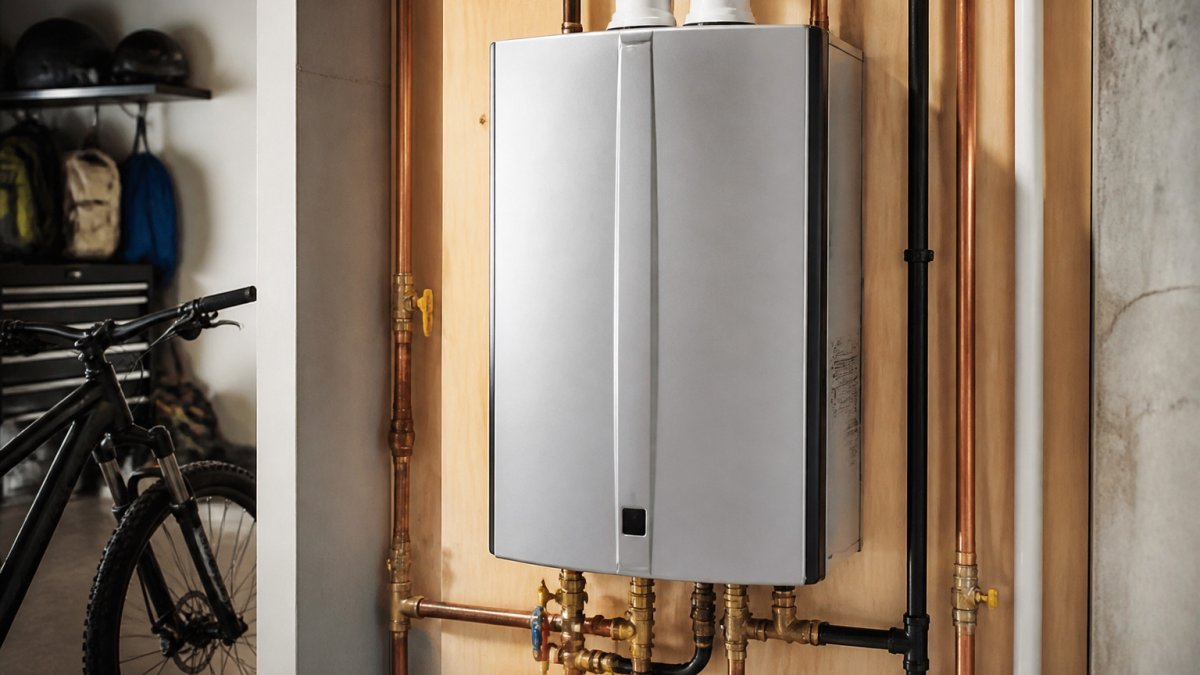
Storage tank water heaters store and reheat a fixed volume of water continuously, which means the tank and heating elements work constantly. Over time, sediment settles at the bottom of the tank and the anode rod corrodes, and both accelerate wear. Tankless units heat water only when a tap opens, so they avoid standby heat loss and sediment buildup in a reservoir. They do require attention to mineral scale in the heat exchanger.
How Long Does a Hot Water Heater Last on Well Water?
Homes on private well systems often see shorter water heater life than homes on municipal supply. Well water commonly carries higher mineral content, including calcium and magnesium, which form hard water scale that coats heating surfaces. Scale reduces heat transfer, forces the burner or element to run longer, and raises the risk of overheating. Sediment from the well can also settle in the tank faster than in a city-supplied unit. If your home is on a well, expect the lower end of typical lifespan ranges unless you install water treatment and flush the tank on a regular schedule.
Factors That Shorten or Extend Water Heater Life
Several variables determine how long a unit actually lasts:
- Water hardness: High mineral content accelerates scale accumulation and reduces efficiency.
- Anode rod condition: A depleted anode rod leaves the tank exposed to corrosion.
- Operating pressure: Excessive pressure stresses fittings and the tank itself.
- Thermostat setting: Running the tank much hotter than needed speeds mineral buildup and corrosion.
- Installation quality: Improper venting, poor connections, or a missing pressure relief valve shorten life considerably.
- Maintenance history: Units that are flushed and inspected regularly typically outlast neglected ones by several years.
A common mistake is assuming the warranty period reflects the water heater lifespan. Warranties often cover only a few years of parts, while the appliance itself may need replacing well before the warranty expires or after it has lapsed. Warranty coverage and actual service life are two different measures.
Signs of Water Heater Failure to Watch For
Water heaters rarely fail without warning. Watch for these symptoms:
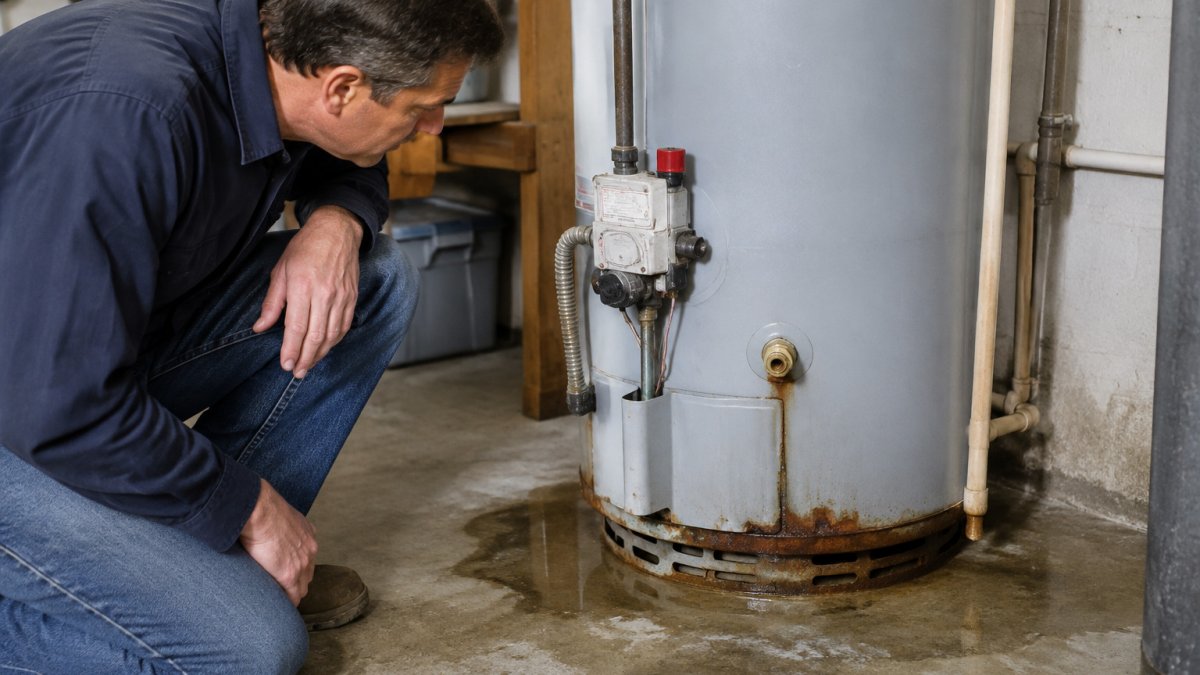
- Rusty or discolored water from hot taps
- Popping or rumbling noises from the tank, which usually indicate sediment overheating at the bottom
- Water pooling around the base of the unit
- Hot water running out sooner than it used to
- Water that takes noticeably longer to heat
- Visible corrosion on fittings, the flue, or the tank jacket
Any leak at the tank itself generally signals that the tank has failed and replacement is the only real fix. A leak at a fitting may be repairable, but the cause should be identified before the unit is returned to service.
Water Heater Maintenance Tips That Extend Service Life
Routine care is the single most effective way to get the full lifespan from a unit, but the value of each task depends on what it actually prevents. Sediment is the dominant failure driver in storage tanks: minerals settle out of heated water, bake onto the tank floor and the lower heating element, and insulate the water from the heat source.
A workable schedule for a storage tank unit:
- Flush the tank every six to twelve months. Attach a hose to the drain valve, run it to a floor drain or outside, and drain until the water runs clear. In hard water areas, flush closer to every six months.
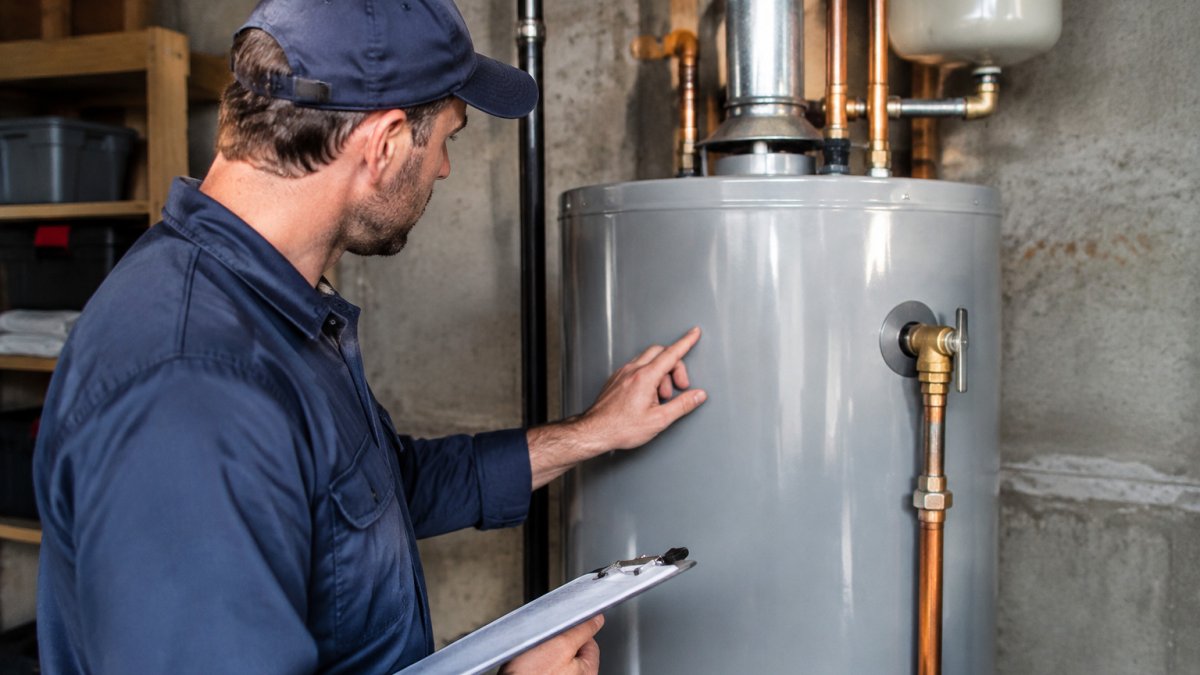
- Inspect the anode rod every two to three years. On most tanks the rod is under the top cover plate; pull it and replace it when more than half the core wire is exposed. In aggressive water, rods can be consumed in two to three years.
- Test the temperature and pressure relief valve annually. Lift the lever and confirm water flows and stops when released. A valve that sticks open or weeps needs replacement, not adjustment.
- Set the thermostat to 120°F (Home Safety Tips For Older Consumers). Lower storage temperature slows mineral precipitation and scale formation, and it reduces scalding risk. The trade-off is slightly less hot-water capacity, which matters in larger households.
- Check fittings and the base during every inspection. A slow weep at a dielectric union or a damp ring at the tank base is an early warning that is cheap to address and expensive to ignore.
Tankless units need a different routine. The heat exchanger is the failure point, and mineral scale in the exchanger reduces flow and overheats the unit. Descaling intervals are set by the manufacturer; check the owner's manual for the exact schedule for your model. Inline scale filters and pre-filtration extend the interval and are worth the cost in areas with high mineral content. Hard water homes also benefit from a water softener or scale-reduction system, which slows mineral buildup in both tank and tankless units.
Watch out: skipping anode service because the tank "looks fine" is the most common maintenance mistake. The rod is designed to be consumed invisibly, and by the time rust appears in the hot water, the tank lining is already compromised.
Maintenance also has a financial payoff beyond lifespan. A scaled tank or heat exchanger loses efficiency year over year, so the unit quietly costs more to run even while it still produces hot water. That degradation is the argument for proactive replacement covered in the next section.
Repair or Replace: Deciding When an Aging Unit Has Reached Its Limit
A useful rule of thumb is to compare the cost of repair against the remaining life of the unit. If the tank is more than 10 years old and needs a major repair, replacement is usually the better investment. Repairs that address a failing component on a relatively new unit can make sense, but if the tank itself is leaking or heavily corroded, no repair will restore it.
A more concrete framework uses three inputs: the unit's age relative to its expected service life, the cost of the repair as a share of replacement cost, and whether the repair addresses a component or the tank itself. Component failures, a heating element, a thermostat, a thermocouple, a gas control valve, a T&P valve, are repairable and do not signal end of life. Tank failures, a leak at the tank seam, corrosion through the jacket, a cracked inner liner, are terminal, because the tank is the pressure vessel and cannot be reliably repaired.
Age and repair cost together point to a clear decision:
- Under 6 years old, any component repair: repair. The unit has most of its life ahead of it.
- 6 to 10 years old, minor repair: repair if the cost is well under half of replacement.
- 6 to 10 years old, major repair (gas valve, heat exchanger, tank fitting): weigh against remaining life; replacement is often the better long-term value.
- Over 10 years old, any major repair: replace. The remaining life is short and a second failure is likely.
- Any age, leaking tank or corroded jacket: replace. No repair restores a failed pressure vessel.
Two factors deserve weight. First, warranty is not lifespan. A 10-year warranty typically covers a replacement tank or parts, not labor, and it does not mean the unit will last 10 years, many fail earlier, and many outlive the warranty with no coverage left. Read the warranty terms before using them as a replacement trigger. Second, efficiency degrades with age.
Consider replacement when the unit is near the end of its expected service life, when repairs are recurring, when efficiency has dropped noticeably, or when the unit is undersized for the household. Replacing an aging unit proactively is generally less disruptive and less expensive than an emergency failure that leaves the household without hot water and forces a rush installation.
Watch out: a slow leak at the tank base is not a repair candidate. It will damage flooring and subfloor long before the tank fails outright, and the cost of that water damage usually exceeds the cost of replacement.
The table below sums up the repair-or-replace decision by unit age and type of repair.
| Situation | Recommendation | Reason |
|---|---|---|
| Under 6 years old, any component repair | Repair | Unit has most of its life ahead |
| 6 to 10 years old, minor repair | Repair if well under half of replacement cost | Cost stays low relative to value |
| 6 to 10 years old, major repair | Weigh against remaining life | Replacement is often better long-term |
| Over 10 years old, any major repair | Replace | Short remaining life, second failure likely |
| Any age, leaking tank or corroded jacket | Replace | No repair restores a failed pressure vessel |
Budgeting for a Water Heater Replacement Before It Fails
Pricing for a replacement depends on the unit type, capacity, fuel source, venting requirements, and installation complexity. For current pricing, contact England's Plumbing & Heating for a quote tailored to your home. Planning ahead gives you time to compare options rather than paying a rush rate after a failure.
Watch out: homes with an aging unit and a known leak should not wait. A slow leak can damage flooring and subfloor long before the tank fails outright.
Frequently Asked Questions
What is the average cost to replace a water heater?
Replacement cost depends on the unit type, capacity, fuel source, and the complexity of the installation, including any venting, gas line, or code upgrades. England's Plumbing & Heating does not publish flat rates in this article, so pricing varies by project. For a current estimate tailored to your home, contact England's Plumbing & Heating directly or book online through the website to request a quote.
My water heater is 20 years old. Should I replace it?
A tank unit at 20 years is well past the typical service life, so the decision usually turns on its condition rather than its age alone. Check for active leaks, rust at the base, rumbling from sediment, and inconsistent hot water. If it shows several of these symptoms, replacement is generally the safer choice. A licensed plumber can inspect the tank and anode rod to help you decide.
Does well water affect the lifespan of a water heater?
Yes. Well water often carries minerals such as calcium and magnesium, and it can contain sediment or dissolved gases that accelerate scale buildup and corrosion inside the tank. Water quality testing and, where needed, water conditioning help protect the heater. Regular flushing and anode rod checks matter even more on well systems than on municipal supply.
What are the first signs of a water heater going bad?
Early warning signs include rusty or discolored hot water, popping or rumbling noises from sediment buildup, water pooling around the base, and hot water running out sooner than usual. Any of these justifies a professional inspection, because small leaks and sediment problems can progress quickly.
Water heaters do not last forever, but with good water treatment, regular flushing, and timely replacement, most homes can get the full benefit from their unit. England's Plumbing & Heating serves homeowners across Chester County with water heater maintenance, repair, and installation, so you can plan your next step with a clear picture of your options.