 ultimate-guide
How to Handle Frozen Pipe Repair Costs
Last Updated: November 3, 2026
Quick Summary
The cost of professional frozen pipe repair depends on where the ice sits, how much pipe is affected, and how hard it is to reach. A simple thaw on an exposed line is a modest service call, while a burst section behind drywall is a restoration project. Contact England's Plumbing & Heating for a quote specific to your situation.
- Copper splits at the seam under ice expansion, while PEX stretches and often survives a freeze.
- Larger main water lines and heating loops take longer to warm safely and cost more in labor.
- Pipes inside walls, under slabs, or behind cabinetry require opening the structure first.
- Ask whether any service call fee is waived if you approve the repair.
- Never use a propane torch or open flame on a frozen line.
Table of Contents
- What Drives the Cost of Professional Frozen Pipe Repair
- Signs of Frozen Pipes and Immediate Steps to Take
- How to Thaw Frozen Pipes Safely
- Emergency Plumber Hourly Rates vs. Standard Service
- Burst Pipe Repair Cost and What Changes the Bill
- Insurance Coverage and Post-Repair Restoration Costs
- Preventing the Next Frozen Line: Insulation, Heat Tape, and Winterization
- Booking a Frozen Pipe Inspection with England's Plumbing & Heating
- Frequently Asked Questions
What Drives the Cost of Professional Frozen Pipe Repair
The cost of professional frozen pipe repair depends on where the ice sits, how much pipe is affected, and how hard it is to reach. A simple thaw on an exposed line is a modest service call; a burst section behind drywall is a restoration project. Current pricing depends on those conditions, so contact England's Plumbing & Heating for a quote specific to your situation.
Frozen pipe repair pricing isn't a single number you can look up. It's built from pipe material, pipe diameter, access difficulty, labor time, and the service call fee that gets a licensed contractor to your door. Understanding each piece lets you sanity-check a quote before you agree to it, and it tells you which questions to ask when the plumber arrives.
Pipe Material and Diameter
The material matters more than most homeowners expect. Copper and PEX are the two most common supply lines in modern homes, and each fails differently under ice expansion. Copper splits at the seam; PEX stretches and often survives a freeze without rupturing. That difference changes whether you're paying for a thaw or a cut-and-replace.
Pipe diameter drives labor too. A half-inch supply line to a sink is quick to isolate and thaw. A larger main water line or a heating loop takes longer to warm safely and costs more in labor hours. Older galvanized steel adds another wrinkle: it's harder to cut, harder to fit, and sometimes already corroded where the ice formed.
Access, Labor, and Service Call Fees
Access is where estimates swing the most. Exposed pipes in a basement or crawlspace are the easy case: a technician can reach them, apply heat, and verify flow in one visit. Pipes buried inside a wall, under a slab, or behind finished cabinetry require opening the structure first, and that's where labor costs climb.
Ask upfront whether any service call fee is waived if you approve the repair, and whether the quote covers diagnosis only or the full thaw and repair. A common mistake is assuming the first number you hear is the total. It rarely is.
The bill for a frozen pipe job is built from a handful of cost drivers rather than one flat rate.
| Cost factor | What it covers | Note |
|---|---|---|
| Pipe material | Copper splits at the seam; PEX often survives a freeze | Changes whether you pay for a thaw or a cut-and-replace |
| Pipe diameter | Half-inch supply line vs. larger main or heating loop | Larger lines take longer to warm safely and cost more in labor |
| Access | Exposed basement or crawlspace pipes vs. inside walls or slabs | Opening the structure is where labor costs climb |
| Labor time | Time to isolate, thaw, and verify flow | Driven by diameter and access |
| Service call fee | Gets a licensed contractor to your door | Ask whether it is waived if you approve the repair |
Signs of Frozen Pipes and Immediate Steps to Take
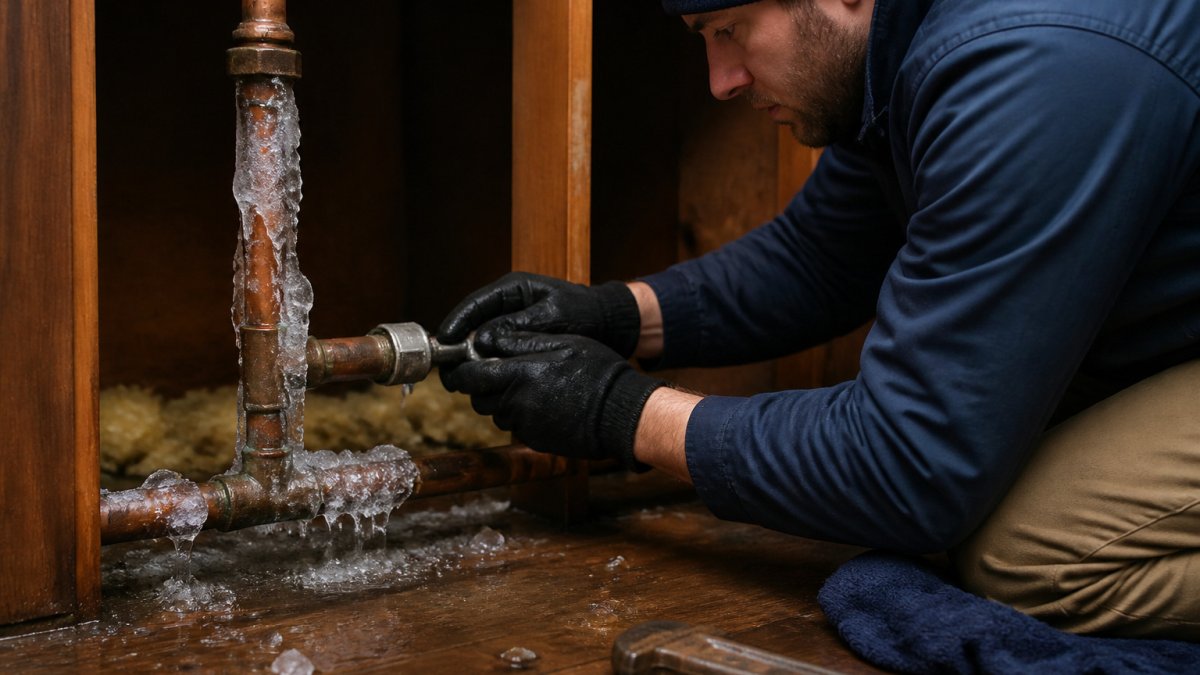
Frozen pipes announce themselves in a few recognizable ways: no water or a weak trickle at the tap, frost on an exposed pipe, a bulge in the line, or a knocking and gurgling sound when you open a faucet. Any of these means water pressure has nowhere to go, and the clock is running.
A frozen pipe is a section of water line where standing water has turned to ice, blocking flow and pressurizing the line behind it. The pressure, not the ice itself, is what causes a pipe rupture.
If you suspect a freeze, act in this order:
- Shut off the main water line at the shut-off valve to stop new water entering the blocked section.
- Open the nearest faucet so melting water has somewhere to escape.
- Check for visible frost or bulging along exposed runs in the basement, garage, or under sinks.
- Call a licensed contractor if you can't find the frozen section or see any bulge.
If you're unsure whether your situation qualifies as urgent, our guide on what counts as a plumbing emergency walks through the warning signs before you call anyone.
How to Thaw Frozen Pipes Safely
Thawing a frozen line safely means warming it gradually from the faucet end toward the blockage, never with an open flame. A handheld hair dryer, a heat lamp, or wrapped towels soaked in hot water all work on exposed pipe. Work slowly and keep the nearest faucet open so you can hear water start to flow.
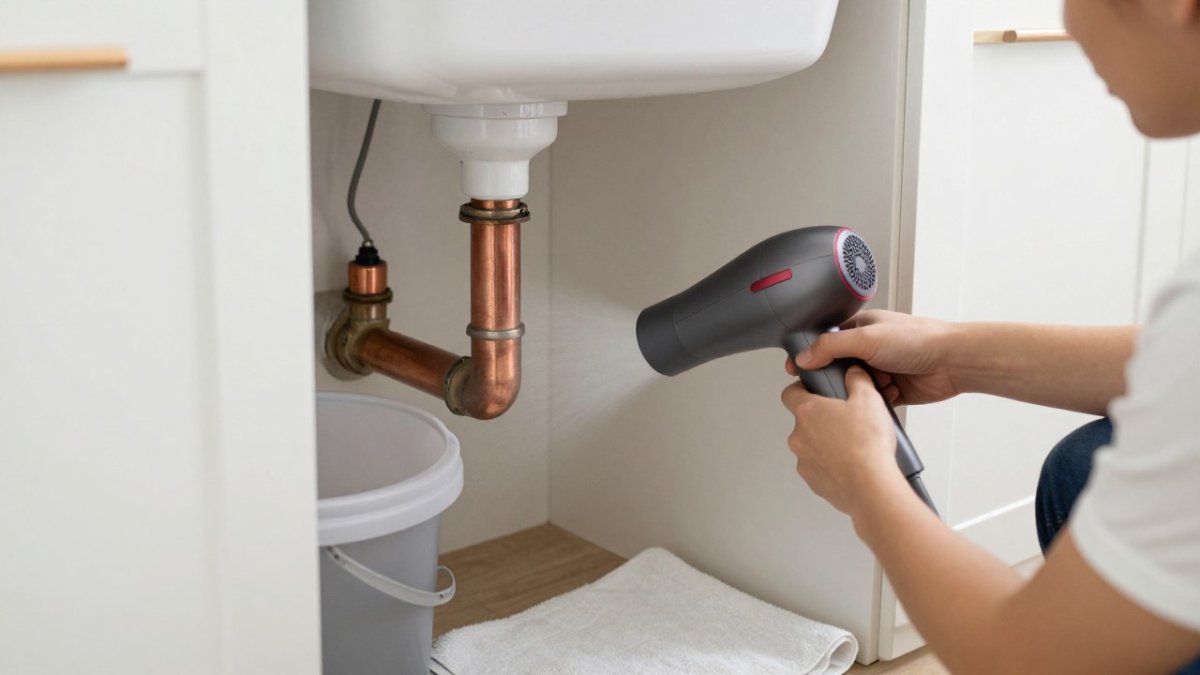
Watch out: never use a propane torch, charcoal, or any open flame on a frozen line. It's a fire risk, and it can crack copper or melt PEX in seconds. The same goes for pouring boiling water directly onto a pipe.
For a step-by-step walkthrough of the full process, including how to handle a frozen line you can't reach, see our guide on how to thaw frozen pipes safely.
Emergency Plumber Hourly Rates vs. Standard Service
Emergency calls generally carry a premium over standard service because they require immediate, after-hours dispatch. Ask any contractor you're considering to explain how its after-hours pricing is structured before you approve the work.
Invoices for emergency work can include a dispatch fee, an hourly labor rate, and sometimes a minimum service charge. Ask for each of these to be listed separately so you can see how they apply to your job.
An emergency call is the right move when you see water, hear running inside a wall, or the main water line is blocked and the house is losing heat. A frozen but intact line can often wait for a standard appointment.
Ask any contractor to explain its after-hours billing before you approve an emergency dispatch, including whether fees are itemized and how the rate changes if the repair continues into business hours.
Whether an emergency call is worth the cost depends on whether the pipe has already burst. For a closer look at that trade-off, see is emergency plumbing service worth the cost. A frozen-but-intact line can often wait for a standard appointment; a line that's leaking or feeding a heating system cannot.
Burst Pipe Repair Cost and What Changes the Bill
Burst pipe repair is a different job from a simple thaw. Once a frozen line ruptures, the work can include stopping the water, cutting out and replacing the damaged section, and drying out everything it soaked. Plumbing repair and restoration are often itemized separately, so ask for that breakdown.
Plumbing repair for a burst section can include shutting off the water and confirming the extent of the damage, cutting out and replacing the pipe, and opening the wall, ceiling, or floor to reach it. Ask your contractor how each of these is priced.
Restoration after a burst pipe can include water extraction and drying, moisture checks before walls are closed, insulation replacement, and drywall, paint, or flooring repair. Discuss with your contractor which of these your situation requires.
Factors that can affect the scope of a burst pipe repair include where the break is, the pipe material, the length of damaged pipe, and whether water spread before the main was shut off.
Watch out: a quote that covers only the plumbing repair may not include restoration work. Ask the contractor to separate the plumbing line items from the restoration line items so you can see what insurance might cover and what you'll pay out of pocket. Catching a frozen line before it ruptures is generally the less disruptive outcome.
Insurance Coverage and Post-Repair Restoration Costs
Homeowners insurance may cover sudden water damage from a burst pipe, but coverage varies by policy and may exclude the pipe repair itself or damage from neglect. Review your policy and deductible with your insurer before filing a claim, and ask your contractor to separate the plumbing repair from restoration so you can see what the policy might cover.
Preventing the Next Frozen Line: Insulation, Heat Tape, and Winterization
Prevention is often easier than repair. Pipe insulation on exposed runs in the basement, crawlspace, and garage helps keep the cold out. Heat tape, properly installed with a thermostat, can warm the pipe itself in the spots most likely to freeze.
Winterization closes the gaps:
- Seal drafts around pipes where they pass through exterior walls.
- Disconnect garden hoses and shut off outdoor spigots before the first hard freeze.
- Keep cabinet doors open under sinks on exterior walls during cold snaps.
- Let a slow drip run on the coldest nights to keep water moving.
- Schedule a plumbing inspection in fall to catch vulnerable runs before winter.
A thaw cycle is the repeated freeze-and-melt pattern that stresses pipe joints over a season. Homes that freeze every year without insulation are the ones that eventually rupture. Preventative maintenance breaks that cycle.
Booking a Frozen Pipe Inspection with England's Plumbing & Heating
A frozen pipe inspection can help you tell whether you're facing a thaw or a repair. England's Plumbing & Heating has served homeowners in West Grove and Chester County since 1989.
Before you book, it helps to know what to ask. Our guide on questions to ask before hiring a plumber covers what to confirm before booking. Then review our full range of services to see what England's Plumbing & Heating offers.
Booking online is available, so you can schedule your visit from the England's Plumbing & Heating website.
Frequently Asked Questions
How much do plumbers charge to fix frozen pipes?
There is no single rate. What you pay for frozen pipe repair depends on how many linear feet are affected, whether the pipe is accessible or behind drywall, the pipe material, and whether the call is standard or after-hours. A simple thaw on an exposed line costs far less than cutting open a wall or replacing a split section. Service call fees and labor rates vary by contractor, so ask for an itemized quote before work begins rather than a single lump sum.
Will frozen pipes unfreeze on their own if I wait?
Sometimes a frozen line thaws as outdoor temperatures rise, but waiting carries real risk. Water expands as it freezes, which builds pressure between the ice block and a closed faucet. That pressure can split the pipe, and the leak only shows up once the ice melts. If you have no water at one fixture and temperatures are below freezing, open the nearest faucet and start thawing with a hair dryer or warm towels instead of hoping it resolves itself.
Does homeowners insurance cover frozen pipe damage?
Homeowners policies may cover sudden water damage from a burst pipe, but coverage varies, and the pipe repair itself is often excluded. Review your policy with your insurer. Check your deductible before filing, since a small repair may cost less than the deductible. Document the damage with photos and call your insurer before cleanup begins.
What is the difference in cost between thawing a pipe and repairing a burst pipe?
Thawing generally involves less work than repairing a burst pipe, which can include cutting out the split section, fitting new pipe, and opening and patching walls. If a leak ran for hours, restoration work may also be needed. Calling early when you notice low water pressure or a frozen line can help limit that scope.
A frozen pipe is a problem you can solve in an afternoon or one you inherit for weeks. The difference is how fast you act and who you call. England's Plumbing & Heating offers licensed professionals, service across Chester County since 1989, and online booking you can rely on. Book your inspection and get your water flowing again.