 ultimate-guide
Emergency Sewer Line Repair in Chester County: What to Do Now
Last Updated: November 5, 2026
Quick Summary
Emergency sewer line repair in Chester County usually starts with warning signs like slow drains throughout the house, gurgling toilets or tubs, and sewage odors. If you notice two or more together, call a licensed plumber. A sewer camera inspection then locates the damage before you choose between localized repair and replacement.
- Slow drains in several fixtures at once suggest a blockage in the main sewer line.
- Stop using water immediately during a sewer backup and avoid flushing toilets or running machines.
- Use a sewer camera inspection to find the exact problem location before repairs begin.
- Root intrusion is a common cause of main line failure in older neighborhoods.
- Ask for an itemized written estimate that separates inspection, pipe work, permits, and restoration.
Table of Contents
- Signs of a Broken Sewer Line You Should Never Ignore
- What to Do in the First Hour of a Sewer Backup
- Diagnosing the Problem: Camera Inspections and Root Intrusion
- Traditional vs. Trenchless Sewer Repair: Choosing the Right Method
- What Trenchless Sewer Repair Costs and What Drives the Price
- Does Homeowners Insurance Cover Sewer Backup in Chester County?
- Booking Emergency Sewer Line Repair With England's Plumbing & Heating
- Frequently Asked Questions
Signs of a Broken Sewer Line You Should Never Ignore
Emergency sewer line repair in Chester County usually starts with a warning sign you can spot at home. Catching these symptoms early often means a smaller repair. The most common red flags are slow drains throughout the house, not just one fixture, gurgling sounds from toilets or tubs, and sewage smells inside or around the property.
A single slow sink is usually a clog in one fixture. When several drains slow at once, the blockage is likely in the main sewer line that carries everything out to the street or septic system. Gurgling is a related warning: air is being pushed back through the pipes because water can't flow freely.
Other signs deserve attention right away:
- Sewage odor in basements, bathrooms, or yards, especially near cleanouts
- Standing water or backups in the lowest drains, such as a basement floor drain or shower
- Lush, unusually green grass or soggy spots over the line's path
- Repeated clogs that return within days of clearing
- Cracked foundation or wet patches on basement walls near plumbing
Each of these can have other causes, so treat them as clues rather than a final diagnosis. If two or more appear together, call a licensed plumber rather than waiting to see if the problem resolves on its own. Left alone, a damaged main line can release raw sewage into your home. If you are unsure whether your symptoms count as an emergency, What Is Considered a Plumbing Emergency: A Homeowner's Guide defines what qualifies.
What to Do in the First Hour of a Sewer Backup
When sewage backs up, the first hour matters for both safety and damage control. Stop using water immediately. Avoid flushing toilets, running dishwashers, or doing laundry, since each adds more water to a blocked system.
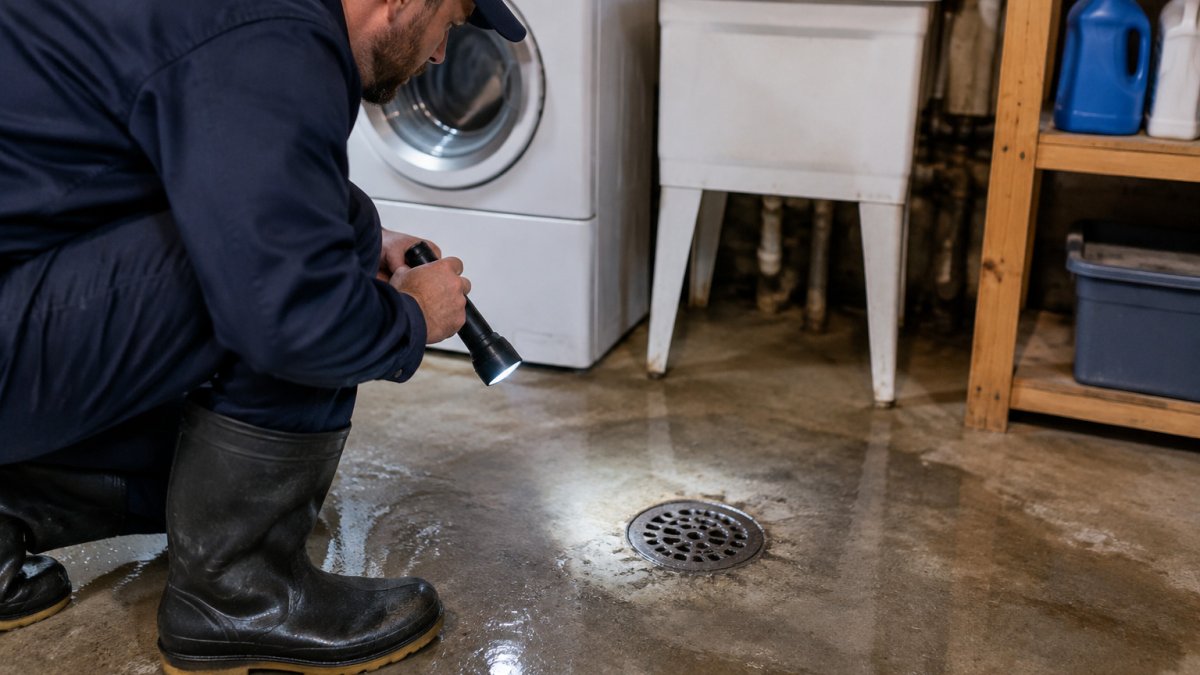
Keep people and pets away from the affected area. Sewage can carry bacteria and viruses, so wear waterproof gloves and avoid direct contact with standing water. If electrical outlets or appliances are in contact with water, shut off power at the breaker before touching anything.
Once the immediate risk is handled, document the damage with photos and video. This record helps with insurance claims later. Move valuables and furniture off wet floors, and ventilate the space with open windows and fans if weather allows.
Call a licensed plumber for emergency sewer line repair as soon as the backup is confirmed. To understand whether emergency service is worth the cost before you book, see Is Emergency Plumbing Service Worth the Cost?. Trying to clear a main line with a store-bought drain snake can push the blockage deeper or damage the pipe further. To judge whether a snake is enough for your situation, see How to Tell if a Drain Snake Is Enough.
Diagnosing the Problem: Camera Inspections and Root Intrusion
Guessing where a sewer line has failed wastes time and money. A sewer camera inspection feeds a small waterproof camera through the line, showing the pipe's interior condition, the exact location of the problem, and how deep it sits underground. For practical clearing steps once the blockage is located, read How to Clear a Main Sewer Line Clog.
Root intrusion is one of the most common causes of main line failure in older neighborhoods. Tree roots grow toward moisture and slip through joints or cracks, then expand into dense mats that catch paper and debris. Over time, a small root entry becomes a full blockage. Other frequent causes include pipe bellies where sediment collects, collapsed sections from age or ground movement, and grease buildup.
The camera findings determine the repair path. A line blocked only by roots may be cleared with hydro-jetting, but a cracked or collapsed pipe usually needs replacement.
Traditional vs. Trenchless Sewer Repair: Choosing the Right Method
There are two main ways to fix a damaged sewer line, and the right choice depends on the pipe's condition, depth, location, and how much of the run is affected. The more useful question for a homeowner is not which method sounds better but whether a localized repair will hold or whether replacement is the practical long-term call.
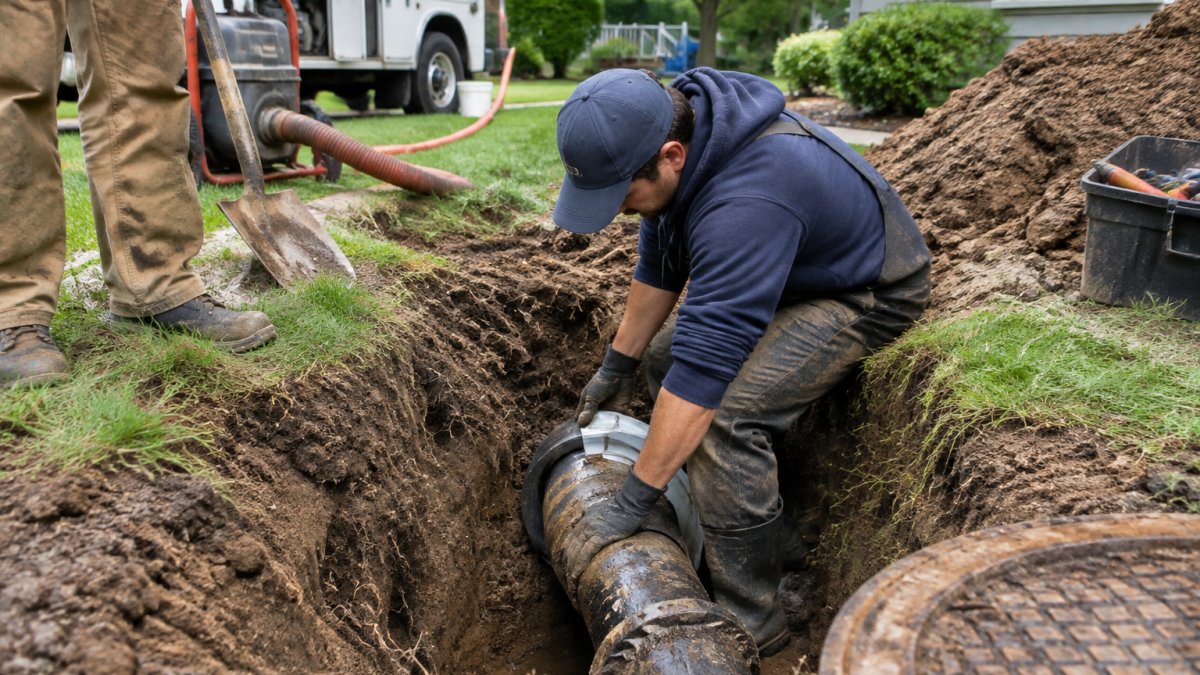
Traditional open-cut repair means digging a trench to expose the pipe, removing the damaged section, and installing new piping. It is often the right choice when the pipe is severely collapsed, badly offset, or too shallow for trenchless equipment. The trade-off is surface disruption: landscaping, driveways, and sometimes foundations are affected, and restoration becomes part of the job.
Trenchless repair avoids most of that digging. Pipe lining inserts a resin-saturated liner into the existing pipe and cures it in place to form a new interior surface. Pipe bursting pulls a new pipe through the old one while breaking the old pipe apart. Both methods usually require only small access pits at each end, which is why they suit lines running beneath hard surfaces or mature trees.
A practical repair-versus-replacement guide looks like this:
- Localized repair is often sufficient when the damage is confined to one section, a single joint, or a root intrusion that can be cleared and the pipe is otherwise structurally sound
- Replacement is usually more practical when the pipe is collapsed, has multiple failures along its length, is badly offset or bellied, or is an older material that is deteriorating throughout
- Trenchless lining fits lines that are structurally sound enough to guide a liner and where surface disruption should be minimized
- Open-cut fits severe collapses, large-diameter lines, and situations where the pipe cannot support a liner
The sewer camera inspection is what makes this decision, because it shows the pipe's interior condition, the exact location of the problem, and how deep it sits underground. Ask for the video so you can see the damage yourself before approving work, and ask your plumber to explain why one method fits your line and not the other.
Watch out: clearing roots with hydro-jetting without addressing the cracked joint or failed seam that let them in usually means the blockage returns. Ask whether the repair addresses the entry point, not just the current clog.
The right repair method depends on the pipe's condition, depth, and how much of the run is affected.
| Factor | Points toward localized repair | Points toward replacement |
|---|---|---|
| Damage extent | One section, single joint, or root intrusion | Collapsed, or multiple failures along the length |
| Pipe shape | Structurally sound | Badly offset or bellied |
| Pipe age and material | Otherwise sound pipe | Older material deteriorating throughout |
| Surface disruption | Trenchless lining minimizes it | Open-cut digging required |
| Method fit | Cured-in-place lining or pipe bursting | Severe collapse or large-diameter line |
What Trenchless Sewer Repair Costs and What Drives the Price
Most homeowners want a number before they approve work, and the honest answer is that sewer line repair pricing varies widely by job. A reputable contractor can explain the cost structure up front so you can compare bids fairly and spot an estimate that is too good to be true.
Rather than rely on a single figure, ask for an itemized written estimate that separates the camera inspection, the pipe work, permits, and any restoration. That breakdown is what lets you compare two contractors on equal terms.
The main cost drivers are:
- Length of the affected run, measured from the house to the municipal connection or septic tank; longer runs mean more material and labor
- Pipe diameter and material, since larger-diameter pipe and certain materials cost more to line or replace
- Depth and access, because deeper lines require more excavation, shoring, and safety measures, and lines under concrete, asphalt, or mature landscaping add restoration cost
- Extent of damage, where a single cracked joint or root intrusion costs far less than a multi-section collapse or a line with a severe belly
- Repair method, since cured-in-place lining, pipe bursting, and open-cut replacement each carry different equipment and labor profiles
- Permits and inspection fees, which vary by municipality and are often overlooked in verbal quotes
- Restoration, including replacing sidewalk, driveway, sod, or landscaping after excavation
Many homeowners find that trenchless methods reduce restoration costs even when the upfront pipe work is comparable, because the surface disruption is smaller. That trade-off is worth pricing both ways when your line runs beneath a finished surface.
Watch out: a quote that is dramatically lower than the others often excludes permits, restoration, or post-repair camera verification. Ask each contractor exactly what is and is not included before you sign.
Get a written estimate that itemizes the work, and confirm whether permits and restoration are included. For current pricing and an estimate for your property, contact England's Plumbing & Heating directly.
Does Homeowners Insurance Cover Sewer Backup in Chester County?
Standard homeowners insurance policies often exclude sewer backups, which surprises many people. Coverage for sewer backup is usually added through a separate endorsement or rider, and the terms vary by insurer and policy. Some policies cover water damage from a backup but not the cost of repairing the sewer line itself. Others exclude damage caused by tree roots or long-term deterioration.
Check your policy language before you need a claim, and ask your agent specifically about sewer backup and sewer line repair coverage. Keep your inspection video, repair invoices, and photos of the damage, since insurers will ask for documentation. Regulations and policy requirements can change, so confirm current terms with your insurer and, where relevant, your state's insurance department.
Booking Emergency Sewer Line Repair With England's Plumbing & Heating
When sewage is backing up, fast response limits the damage. You can book online or call England's Plumbing & Heating to schedule service.
Keeping the number of a licensed plumber on hand before an emergency makes the next backup far easier to handle.
Frequently Asked Questions
How do I know if I have a sewer line emergency?
A sewer line emergency usually shows up as multiple drains backing up at once, sewage odors inside the home, or water rising in a basement floor drain or toilet when another fixture runs. Gurgling sounds, soggy spots in the yard over the sewer path, and lush patches of grass are warning signs too. If raw sewage is coming into the house, stop using water fixtures, keep people and pets away from the affected area, and call a licensed plumber for emergency service right away. Waiting can turn a repair into water damage and a health hazard.
Does homeowners insurance cover sewer line repair?
Most standard homeowners policies do not cover the cost of repairing the sewer line itself, because that pipe is usually treated as part of the property's maintenance. Many policies do cover resulting water damage to the home under a sewer or drain backup endorsement, which is often an optional add-on. Check your declarations page or call your insurer and ask specifically about sewer and drain backup coverage, the sublimit, and any deductible. Keep photos and the plumber's invoice for any claim.
What is the difference between traditional and trenchless sewer repair?
Traditional, or open-cut, repair digs a trench to expose the damaged pipe and replace it, which is effective but disturbs landscaping, driveways, and sometimes foundations. Trenchless repair uses a small access point and techniques such as pipe lining or pipe bursting to repair or replace the line with minimal digging. Trenchless methods often suit older lines under lawns or paved areas, while open-cut may be better when the pipe is badly collapsed or the route is complicated. A camera inspection helps determine which method fits.
How long does an emergency sewer line repair take?
Many emergency sewer line repairs are completed in a single day once the plumber has located the problem, though a full open-cut replacement of a long line can take several days. Trenchless lining often finishes faster than excavation and typically requires a curing period before the line can be used normally again. Timelines depend on the pipe's length, depth, material, and how many blockages or breaks are involved. Your plumber should explain the expected timeline and what will happen during the service call before work begins.