 comparison
Is Emergency Plumbing Service Worth the Cost?
Table of Contents
- What Constitutes a Plumbing Emergency
- Average After-Hours Plumbing Rates and Surcharges
- The Real Cost of Delaying Emergency Plumbing Service
- How to Shut Off Main Water Valve Before Help Arrives
- Vetting a Plumber to Avoid Scams and Inflated Charges
- Is Emergency Plumbing Service Worth It: A Decision Matrix
- Insurance Coverage for Emergency Plumbing Repairs
- Conclusion
- Frequently Asked Questions
Last Updated: September 24, 2026
What Constitutes a Plumbing Emergency
A plumbing emergency is any situation where water damage, health hazards, or system failure creates immediate risk to your home or family, requiring professional response outside normal business hours at premium pricing.
Common emergencies include burst pipes flooding your basement, sewage backups, water heater failure in winter, or overflowing toilets. A frozen pipe at 11 PM qualifies; a slow drain that's bothered you for weeks doesn't.
The critical factor is damage potential. If water is actively pooling in your foundation or sewage is backing into your home, call immediately. Otherwise, if you can safely wait until Monday morning, it's not an emergency.
Average After-Hours Plumbing Rates and Surcharges
Emergency plumbing service rates vary by timing and complexity. Standard business hours run 8 AM-5 PM weekdays; anything outside triggers premium pricing.
Most plumbers charge a service call fee to arrive and diagnose. After-hours calls typically add a surcharge: time-and-a-half for evenings, double time for late-night or holiday calls.
According to Angi's emergency plumbing cost data, emergency plumbing service costs typically range from $100 to $500+ for a service call, depending on your region and the complexity of the repair. Thumbtack's aggregated pricing shows that homeowners should expect to pay between $215 and $655 for emergency plumbing service in most areas, though this varies based on the specific issue and your location.
The surcharge reflects after-hours labor costs, overtime pay, and reduced backup support. Understanding this doesn't reduce the bill, but it explains the premium.
The Real Cost of Delaying Emergency Plumbing Service
Hesitation to call for emergency plumbing service often stems from sticker shock, but the cost of waiting can far exceed the premium.
A burst pipe can saturate insulation, drywall, and flooring within hours. A $500 emergency plumber call could prevent a $5,000+ remediation project if you wait until morning.
Sewage backup is critical: the longer it sits, the more surfaces contaminate and the more extensive cleanup becomes. Delayed response is both expensive and dangerous.
A water heater failure is uncomfortable but not catastrophic. A burst frozen pipe is catastrophic. The decision to call for emergency plumbing service comes down to damage potential, not comfort.
How to Shut Off Main Water Valve Before Help Arrives
Shutting off your main water valve is the most effective way to minimize water damage while waiting for emergency plumbing service. This action alone can save thousands.
Locate your main water shut-off valve before an emergency. It's typically in your basement, crawl space, or utility area where the water line enters. In warmer climates, it may be outside in a ground-level box.
Turn it clockwise to shut off water supply to your entire home. This stops new water from flowing but won't immediately stop water already in the pipes.
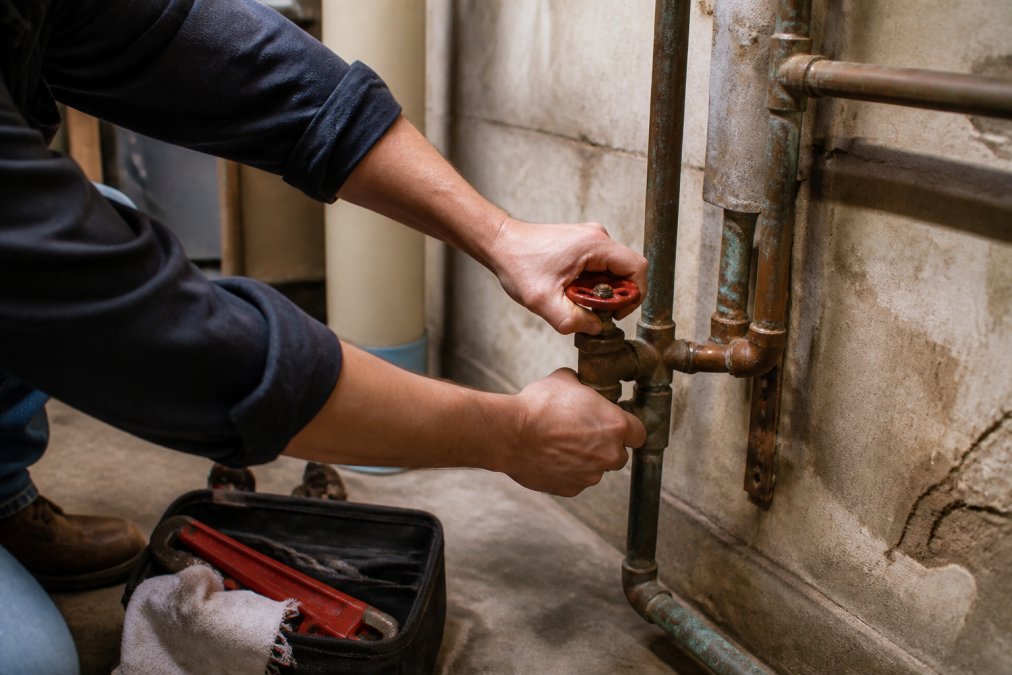
After shutting off the main valve, open the lowest faucet (usually a basement sink or outdoor spigot) to drain remaining water and reduce pressure.
Call your plumber immediately. Say: "I've shut off the main water valve and need emergency plumbing service for [specific problem]." This helps them prioritize your call.
Vetting a Plumber to Avoid Scams and Inflated Charges
Emergency situations create vulnerability. Protect yourself by knowing what to look for in legitimate plumbers.
A legitimate plumber provides a clear estimate before starting work, itemizing the service call fee, hourly labor rate, and parts cost. Vague pricing or refusal to estimate is a red flag.
Verify licensing and insurance. Ask to see credentials. Licensed plumbers carry workers' compensation and liability coverage. Unlicensed operators offer no recourse if something goes wrong.
Check online reviews on platforms like Google Business and Yelp, but read critically. A single bad review doesn't disqualify a plumber; patterns of complaints about billing or quality do. Look for consistent feedback about responsiveness, transparent pricing, and quality workmanship.
Get multiple quotes when possible.
Is Emergency Plumbing Service Worth It: A Decision Matrix
The decision to call for emergency plumbing service depends on three factors: damage potential, safety risk, and financial impact. This framework helps you assess objectively.
Immediate Emergency (Call Now):
Probable Emergency (Call Within 1-2 Hours):
Non-Emergency (Wait for Business Hours):
| Situation | Damage Risk if Delayed 8 Hours | Safety Risk | Financial Impact | Recommendation |
|---|---|---|---|---|
| Burst pipe actively flooding | Severe ($5,000-$25,000 in mitigation) | Yes (mold, structural compromise) | Emergency fee justified | Call immediately |
| Sewage backup into home | Severe (health hazard, contamination) | Yes (pathogenic exposure) | Emergency fee justified | Call immediately |
| Water heater complete failure | Moderate (no hot water, but contained) | No | $300-$600 emergency vs. $150-$250 business hours | Wait for business hours |
| Frozen pipe (not burst, temps rising) | Moderate-High (depends on thaw rate) | No | $400-$700 emergency vs. $200-$350 business hours | Call within 2 hours if temps staying below 32°F; wait if warming trend |
| Slow leak from under sink | Low (contained, visible) | No | $350-$500 emergency vs. $150-$250 business hours | Wait for business hours |
| Overflowing toilet (water contained in bathroom) | Low-Moderate (depends on duration) | Possible (sewage exposure) | $400-$600 emergency vs. $180-$300 business hours | Can you turn off water to toilet? If yes, wait. If no, call within 1 hour |
| Slow drain or minor faucet drip | Low (no active water damage) | No | $300-$500 emergency vs. $120-$200 business hours | Wait for business hours |
The Real Question: Can You Safely Manage It?
Insurance Coverage for Emergency Plumbing Repairs
Most homeowners insurance policies cover sudden, accidental plumbing failures, but details matter enormously. Understanding your coverage before an emergency can save you thousands.
What Homeowners Insurance Typically Covers
Common Coverage Exclusions
-
Sewage backup: Not covered under standard policies. Purchase a separate rider ($75-$200/year). Without it, a $10,000 cleanup is your responsibility.
-
Gradual leaks: Slow leaks are excluded; only sudden ruptures are covered.
-
Flood: External flooding is not covered. You need separate flood insurance through NFIP or a private insurer. Flood insurance has a 30-day waiting period.
-
Lack of maintenance: Damage from failure to maintain your system (e.g., didn't winterize pipes) may be denied.
How Deductibles Affect Your Out-of-Pocket Cost
Steps to Take Before and After Emergency Plumbing Service
-
Before calling: Call your insurance company's claims line and ask whether it's likely covered. Document the time you discovered the problem and take photos.
-
During the call: Ask the plumber for an itemized invoice showing service call fee, hourly labor rate, parts, and total cost. Request they note the cause of failure on the invoice.
-
After resolution: Keep all receipts, invoices, and photos. Write a detailed timeline of events.
-
File promptly: Contact your insurance company within 24-48 hours. Provide your claim number, invoice, photos, and timeline.
-
Follow up: Insurance companies have 30 days to acknowledge and 45 days to decide. If denied, ask for a written explanation and appeal if needed.
When Insurance Won't Help
Preventative Maintenance and Insurance Discounts
Conclusion
Is emergency plumbing service worth the extra cost? It depends entirely on your situation. When water is actively damaging your home or sewage poses health risks, the premium is justified. When the issue is uncomfortable but not dangerous, waiting for business hours makes financial sense.
Frequently Asked Questions
How much extra do plumbers charge for emergency plumbing service?
Emergency plumbing service typically costs $100 to $500+ per hour, depending on your location and the severity of the issue. Standard hourly rates during business hours are generally lower. After-hours surcharges, weekend rates, and holiday premiums can double or triple the base labor cost. Many emergency plumbing services also charge a trip fee or diagnostic fee just to dispatch a technician, regardless of whether they fix the issue on the first visit.
What are the signs of a plumbing emergency that require immediate service?
True plumbing emergencies include burst pipes, sewage backups, overflowing toilets that won't stop, water heater failures causing no hot water, major leaks causing water damage, and gas line issues (hissing sounds near appliances). These situations require immediate response to prevent property damage and safety hazards. Routine issues like slow drains or minor leaks can typically wait for standard business hours.
How do I know if an emergency plumber is charging a fair price?
Request a written estimate before work begins and ask for a breakdown of labor, materials, and service fees. Compare quotes from at least two licensed professionals using platforms like Angi or Thumbtack to understand average rates in your area. Verify the plumber is licensed and insured, and check online reviews for customer complaints about pricing. Be wary of contractors who pressure you into unnecessary additional work or refuse to provide upfront pricing.
Can homeowners insurance cover emergency plumbing repairs?
Standard homeowners insurance typically covers sudden, accidental plumbing failures like burst pipes or water heater ruptures, but not gradual leaks or lack of maintenance. Coverage varies by policy and insurer. Contact your insurance agent before paying to understand your deductible and what's covered. Document the damage with photos and get written estimates. Preventative maintenance records can help support your claim by showing you took reasonable steps to avoid emergencies.