 ultimate-guide
Water Softener Installation: Benefits Guide
Table of Contents
- What Is a Water Softener and How It Works
- How Hard Water Affects Your Home and Plumbing
- Hard Water Effects on Skin and Hair Health
- Signs You Need a Water Softener
- Key Benefits of Water Softener Installation
- Water Softener Installation Cost and Long-Term Savings
- Pros and Cons of Water Softeners
- Salt-Based vs. Salt-Free Systems and Environmental Impact
- Frequently Asked Questions
Last Updated: August 28, 2026
What Is a Water Softener and How It Works
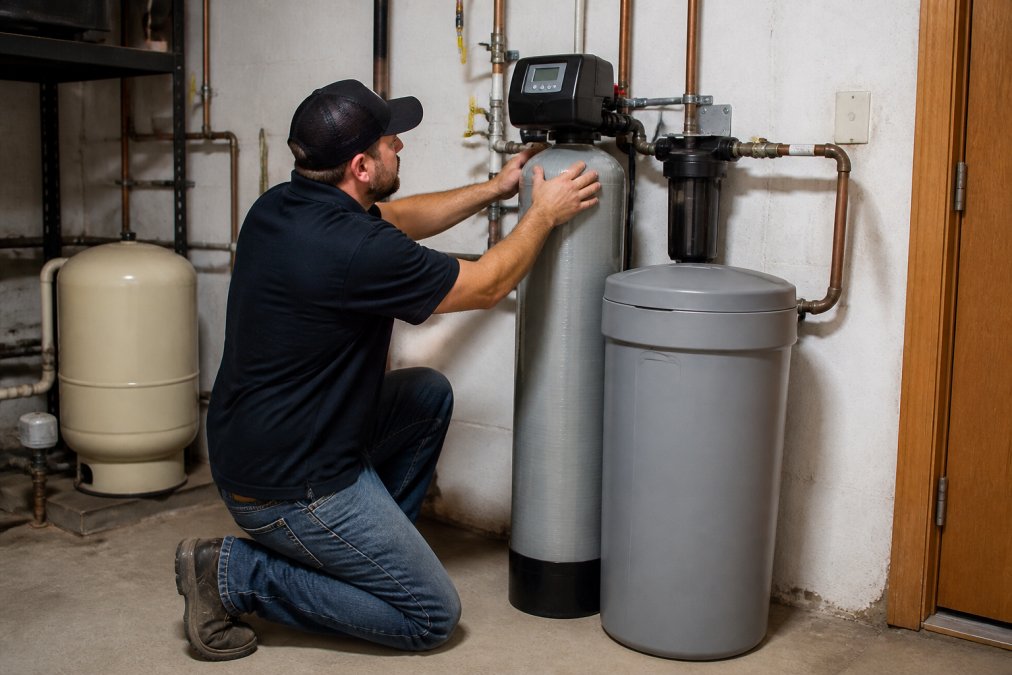
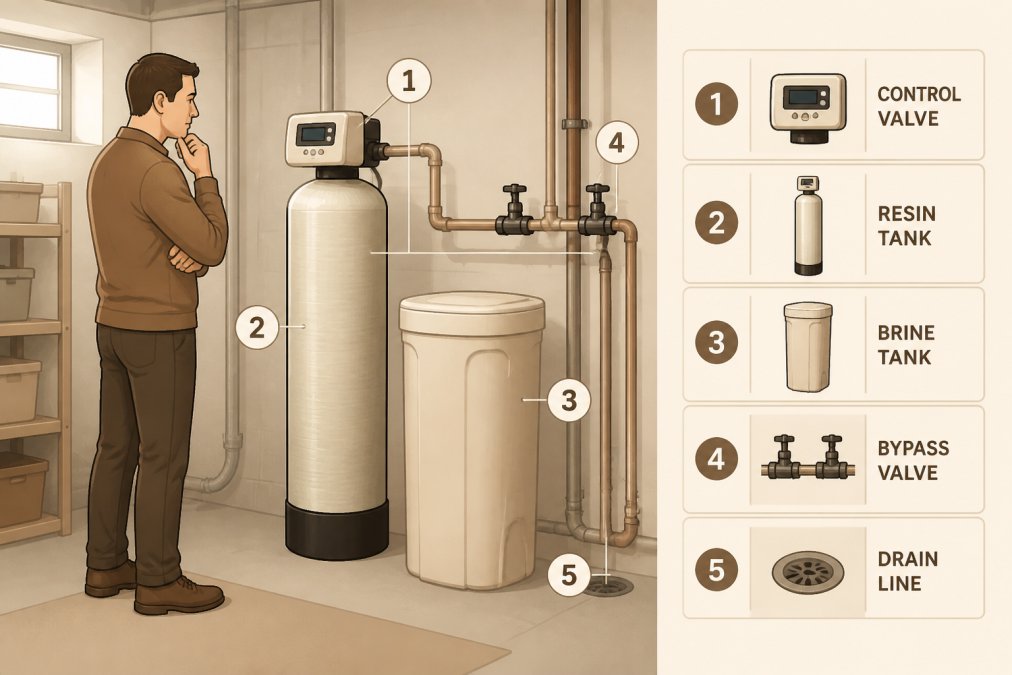
A water softener is a system that removes calcium and magnesium ions from hard water through a process called ion exchange. The system works by passing water through resin beads that attract and trap these mineral ions, replacing them with sodium or potassium ions. This chemical exchange transforms hard water into soft water that behaves differently throughout your home's plumbing and appliances.
The core component is the resin tank, where the ion exchange happens. When the resin beads become saturated with calcium and magnesium, the system triggers regeneration. During this cycle, a brine tank releases a salt solution that flushes the trapped minerals down the drain and restores the resin's capacity. This regeneration process typically occurs automatically based on water usage or a preset schedule.
Understanding how this process works helps explain why water softener installation delivers such measurable benefits. Hard water leaves mineral deposits everywhere water flows (usgs.gov). Soft water doesn't. That fundamental difference ripples through your entire home's water systems, affecting everything from your plumbing fixtures to your skin.
How Hard Water Affects Your Home and Plumbing
Hard water creates scale buildup inside pipes, fixtures, and appliances. The calcium and magnesium deposits accumulate over time, restricting water flow and corroding plumbing materials. This isn't a cosmetic issue, it's a structural problem that degrades your home's water infrastructure.
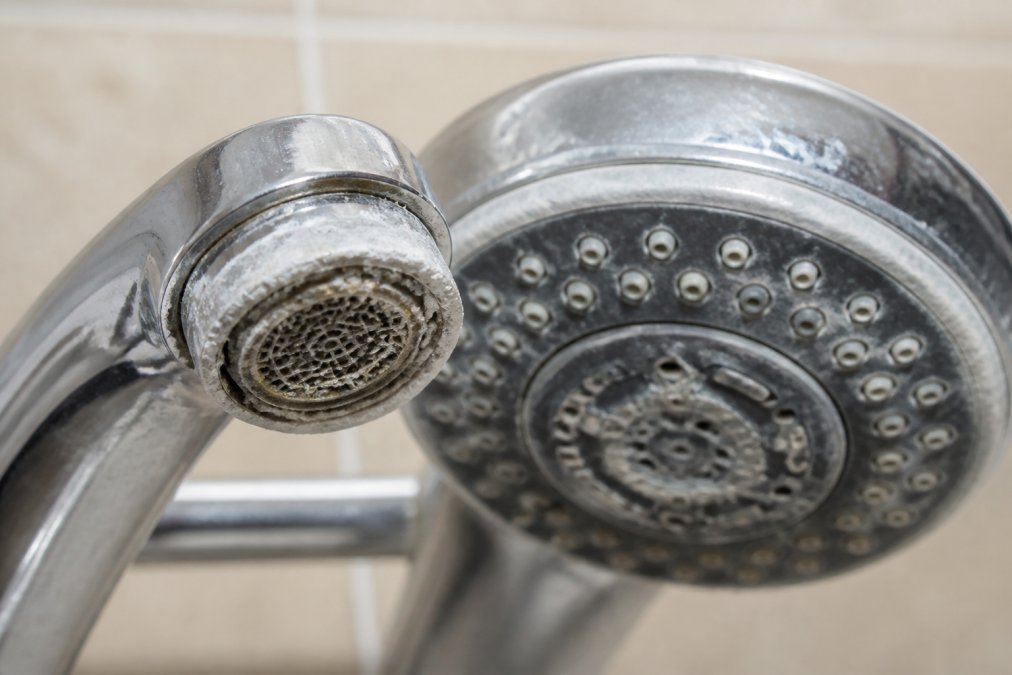
The damage progresses silently. Pipes gradually narrow as scale accumulates on interior walls. Water heaters work harder to push water through mineral-clogged lines. Fixtures develop weak water pressure as deposits block aerators. Over months and years, this mineral buildup forces your plumbing system to work inefficiently, driving up energy costs and accelerating wear on components.
Hard water also corrodes certain plumbing materials. Copper pipes can develop pinhole leaks where acidic hard water eats through the metal. Galvanized steel pipes deteriorate faster. Even modern PVC can experience reduced flow rates from internal mineral deposits. The cumulative effect is a plumbing system that ages prematurely and requires more frequent repairs.
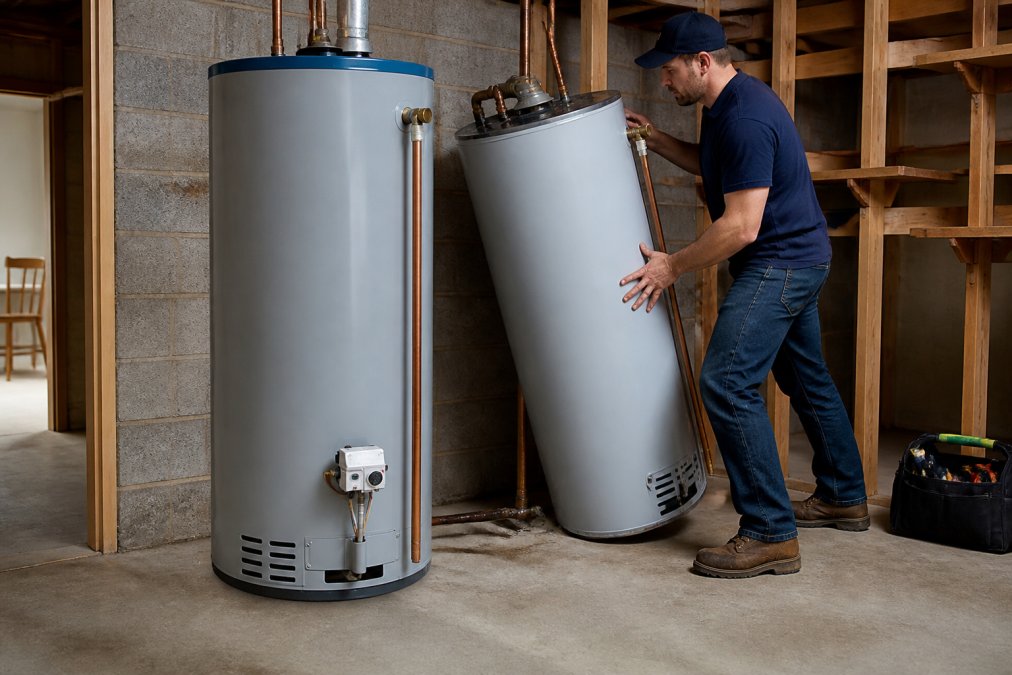
Scale buildup inside water heaters is particularly costly (energy.gov). Sediment from hard water settles at the bottom of the tank, forcing the heating element to work through an insulating layer of minerals. This reduces efficiency and increases energy consumption. Many water heaters fail years earlier than their rated lifespan when hard water is the culprit.
Hard Water Effects on Skin and Hair Health
Hard water affects your body the same way it affects your pipes, minerals accumulate and create problems. When you shower or bathe in hard water, soap doesn't lather effectively because the minerals interfere with the chemical reaction. Instead of rinsing away, soap residue stays on your skin and hair.
This residue creates several issues. Your skin feels dry and tight after showering because the soap film blocks moisture. Itching and irritation develop as the residue accumulates. For people with sensitive skin or conditions like eczema, hard water can trigger or worsen symptoms. The mineral deposits trap bacteria and dead skin cells, creating an environment where skin problems persist.
Hair experiences similar problems. Hard water makes hair feel limp, dull, and difficult to manage. The mineral coating prevents conditioner from penetrating the hair shaft. Tangles worsen. Color-treated hair fades faster because the mineral layer blocks moisture retention. Many people with hard water struggle to achieve the results they expect from quality shampoos and conditioners, the problem isn't the products, it's the water.
The solution is straightforward. Soft water allows soap to work as intended. Your skin rinses clean without residue. Hair feels softer, looks shinier, and responds better to styling. These improvements appear within days of switching to soft water, making the benefits immediately noticeable.
Signs You Need a Water Softener
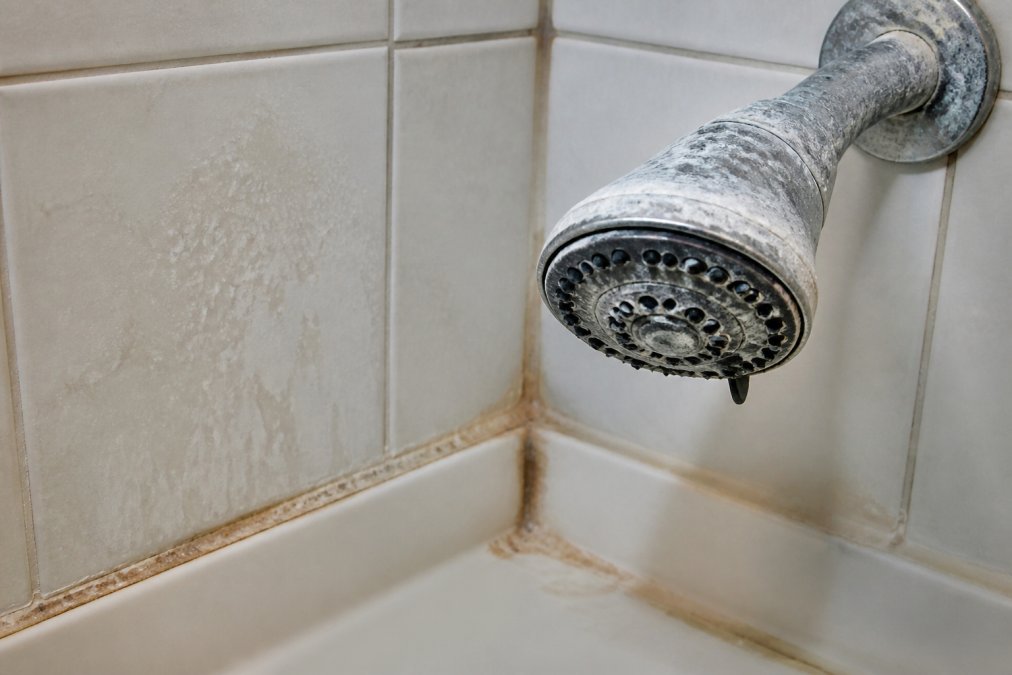
Several warning signs indicate your home has hard water that needs treatment. The most obvious is visible scale buildup on faucets, showerheads, and fixtures. White or tan crusty deposits that don't wipe away easily are mineral deposits from hard water. If you see this on visible fixtures, your plumbing interior has accumulated far more.
Reduced water pressure is another key indicator. If your shower flow has declined over time, or if fixtures that worked well five years ago now produce weak streams, hard water scale inside pipes is the likely cause. The water still flows, but it has to push through mineral restrictions.
Soap and detergent performance tells you something is wrong. If you need extra shampoo to get a good lather, or if laundry detergent doesn't produce suds like it should, hard water is interfering with the chemistry. Clothes come out dingy despite using the recommended detergent amount. Dishes have spots and film after the dishwasher cycle.
Skin and hair problems that don't improve with better products often trace back to hard water. Dry skin that persists despite moisturizing, or hair that won't respond to conditioning treatments, suggests mineral interference rather than a product deficiency.
Your water heater's age and performance matter too. If your water heater is failing before its rated lifespan, or if your energy bills have climbed without explanation, hard water sediment buildup could be the culprit. A water heater that's only eight or ten years old but showing signs of decline often has a hard water problem.
Key Benefits of Water Softener Installation
Water softener installation delivers measurable improvements across multiple areas of your home. Understanding these benefits helps you evaluate whether the system makes sense for your situation.
Extended Appliance Lifespan
Soft water eliminates the mineral deposits that degrade appliances. Water heaters, dishwashers, washing machines, and coffee makers all last significantly longer when they don't have to process hard water. The heating elements inside these appliances work more efficiently without scale coating them. Pumps and valves move water more freely. The result is equipment that performs better and requires replacement less frequently.
A water heater operating on soft water maintains consistent efficiency throughout its lifespan. Without mineral buildup, it heats water reliably without the energy waste that comes from scale insulation. Dishwashers clean more effectively and don't require descaling cycles. Washing machines use less detergent and produce better results. These efficiency gains compound over years, delivering real savings in both appliance replacement costs and energy consumption.
Improved Detergent Efficiency and Laundry Results
Soft water allows detergent to work as formulated. In hard water, minerals bind with detergent molecules, reducing their cleaning power. You end up using more product to achieve the same results. With soft water, standard detergent amounts produce better lathering and superior cleaning.
Laundry comes out cleaner and brighter. Whites stay white instead of developing a dingy gray cast. Colors remain vibrant because soft water doesn't deposit mineral film on fabric. Clothes feel softer because they rinse completely without detergent residue. You can reduce detergent usage since soft water maximizes cleaning power, lowering your laundry costs.
Dishwashing improves dramatically. Dishes rinse spotless without the hard water film that requires extra rinsing cycles. Glassware stays clear and transparent instead of developing a cloudy mineral coating. You can use less dishwasher detergent while achieving better results. The reduction in product usage adds up to meaningful savings over time.
Enhanced Water Pressure and Flow
Scale buildup inside pipes gradually restricts water flow. Installing a water softener stops this problem at the source. Existing mineral deposits don't disappear immediately, but as you use soft water, the system gradually clears deposits from pipes and fixtures. Water pressure improves noticeably within weeks.
Showers feel more powerful. Faucets deliver stronger flow. The improvement in water pressure makes everyday tasks more satisfying and reduces the time needed for bathing and cleaning. For homes with multiple bathrooms or fixtures running simultaneously, the pressure improvement is particularly noticeable.
Water Softener Installation Cost and Long-Term Savings
Water softener installation requires an upfront investment. The system cost, installation labor, and ongoing maintenance represent a financial commitment. However, the long-term savings from extended appliance lifespan, reduced energy consumption, and lower detergent usage often offset this investment over time.
Maintenance involves periodic salt replenishment for salt-based systems and occasional filter changes. The brine tank requires refilling based on water usage patterns. Professional maintenance is optional for many systems, though some homeowners prefer annual service checks to ensure optimal performance.
Long-term cost analysis should account for several factors. Water heater replacement costs are substantial. If soft water extends your water heater's lifespan by five or more years, that savings alone justifies the water softener investment for many homeowners. Add in reduced detergent spending, lower energy bills, and fewer plumbing repairs, and the financial case becomes compelling.
At England's Plumbing & Heating, we help homeowners evaluate whether water softener installation makes financial sense for their situation.
Pros and Cons of Water Softeners
Water softeners deliver significant benefits, but they're not ideal for every situation. Understanding both advantages and limitations helps you make an informed decision.
Pros:
- Eliminates scale buildup in pipes and appliances
- Extends appliance lifespan significantly
- Improves water pressure and flow rates
- Reduces detergent and soap usage
- Enhances skin and hair health
- Lowers energy consumption for water heating
- Improves dishwashing and laundry results
- Reduces plumbing maintenance needs
Cons:
- Requires upfront system cost and professional installation
- Salt-based systems need regular brine tank refilling
- Regeneration cycle uses water and salt
- Softened water may feel slippery to some users
- Requires space for tank placement
- Ongoing maintenance and occasional repairs needed
- Salt disposal can be a concern in some areas
- Initial water quality testing may be necessary
The trade-offs typically favor installation for homeowners with hard water. The appliance protection and efficiency gains outweigh the maintenance requirements for most families. However, homeowners with very soft water or specific health concerns about sodium intake should evaluate their situation carefully.
| Consideration | Salt-Based Systems | Salt-Free Systems |
|---|---|---|
| Hard water removal | Complete ion exchange | Scale inhibition only |
| Maintenance | Regular salt refilling | Minimal maintenance |
| Installation cost | Moderate | Often higher |
| Space required | Tank and brine tank | Compact cartridge |
| Wastewater | Regeneration cycle discharge | Minimal |
| Sodium in water | Slight increase | None |
Salt-Based vs. Salt-Free Systems and Environmental Impact
Two main approaches to water softening exist, each with different environmental considerations. Understanding the differences helps you choose the system that aligns with your values and needs.
Salt-based systems use ion exchange to remove calcium and magnesium completely. The resin beads trap mineral ions and replace them with sodium. When the resin saturates, the regeneration cycle uses a brine solution to flush minerals down the drain. This process is highly effective at removing hardness but generates wastewater during regeneration.
The environmental impact of salt-based systems includes brine discharge into municipal water systems or septic systems. The salt and minerals flushed during regeneration can affect local water quality. However, modern systems are more efficient than older models, reducing regeneration frequency and wastewater volume. Some communities have regulations about salt discharge, so checking local guidelines is important.
Salt-free systems use a different approach called scale inhibition or crystallization. Rather than removing minerals, these systems transform calcium and magnesium into crystals that don't stick to pipes or appliances. The minerals remain in the water but can't cause scale buildup.
Salt-free systems produce no wastewater during operation, making them more environmentally friendly in terms of discharge. They require no salt replenishment. However, they're less effective at completely softening water compared to ion exchange systems. They prevent scale but don't eliminate all hardness-related issues like soap scum or reduced detergent efficiency.
The environmental choice depends on your priorities. If water conservation and zero brine discharge matter most, salt-free systems align better with those values. If you want complete hard water removal and don't mind occasional regeneration wastewater, salt-based systems deliver superior results.
Many homeowners in the Chester County area choose salt-based systems for their effectiveness, accepting the minimal environmental impact of periodic regeneration cycles. Others prefer salt-free systems for their simplicity and zero-waste operation. The right choice depends on your water hardness level, environmental concerns, and performance expectations.
England's Plumbing & Heating can test your water and recommend the system type that best matches your home's needs and your priorities. Our team has installed both systems for families throughout the region and understands the practical trade-offs each approach involves.
Hard water creates problems that compound over time, affecting everything from your appliances to your skin. Water softener installation stops these problems at the source. Whether you choose a salt-based system for complete hardness removal or a salt-free system for environmental simplicity, the investment in soft water delivers measurable improvements in your home's comfort and efficiency. England's Plumbing & Heating has been helping Chester County families solve water quality issues since 1989. Contact our team for a water quality assessment to discover which system works best for your home, or book online to schedule your consultation today.
Frequently Asked Questions
Q: Is installing a water softener actually worth it?
A: Water softener installation is worth the investment if you have hard water. Benefits include extended appliance lifespan, reduced soap scum, improved skin and hair health, and lower detergent costs. The savings on appliance repairs and replacement, combined with reduced energy consumption from water heater efficiency improvements, can often offset installation costs over time. Your specific return depends on your water hardness levels and local water quality.
Q: What are the main hard water effects on skin and hair?
A: Hard water leaves mineral deposits on your skin and hair, preventing moisture from being absorbed properly. This causes dry skin, itching, irritation, and a tight feeling after showering. Hair becomes dull, tangled, and difficult to manage due to mineral buildup that soap scum creates. A water softener removes calcium and magnesium ions, allowing shampoo and conditioner to work effectively and reducing skin irritation and inflammation.
Q: What are the signs you need a water softener?
A: Common signs you need a water softener include white scale buildup on faucets and showerheads, dull or sticky laundry after washing, soap scum on bathroom fixtures, dry itchy skin or hair, reduced water pressure from mineral deposits in pipes, and spots on dishes after dishwashing. A water quality test confirms hardness levels and guides system selection.
Q: How much does water softener installation cost?
A: Water softener installation costs depend on system type, grain capacity, water hardness levels, and your home's plumbing layout. Pricing varies significantly based on whether you choose salt-based or salt-free systems and installation complexity. Contact England's Plumbing & Heating for a professional water quality assessment and personalized quote. Our team evaluates your specific needs and provides transparent pricing for both the system and professional installation.
Q: How does a water softener affect appliance lifespan?
A: Hard water causes mineral deposits to accumulate inside water heaters, washing machines, dishwashers, and other appliances, reducing efficiency and shortening lifespan. A water softener removes calcium and magnesium ions through ion exchange, preventing scale buildup and corrosion. This protection directly reduces replacement costs and energy consumption over the life of your appliances.
Q: What's the difference between salt-based and salt-free water softeners?
A: Salt-based systems use ion exchange with resin beads to remove hard minerals, requiring periodic brine tank regeneration and salt refills. They're highly effective but add small amounts of sodium to water. Salt-free systems use scale inhibition technology to prevent mineral deposits without removing hardness, requiring no maintenance but being less effective for very hard water. Salt-based systems are generally better for severe hard water; salt-free suits those concerned about sodium intake or environmental impact of brine discharge.
Q: Will a water softener reduce my water pressure?
A: A properly installed water softener should not reduce water pressure. However, mineral deposits from hard water in your pipes and fixtures do reduce pressure over time. A water softener prevents future buildup and can improve flow rate as existing deposits dissolve. If pressure drops immediately after installation, a professional should check the system configuration. Regular maintenance, including resin bed cleaning and brine tank upkeep, keeps your system operating at full capacity.