 how-to
7 Signs a Well Pump Is Undersized, Not Just Failing
Last Updated: October 31, 2026
Quick Summary
The signs a well pump is undersized include low water pressure at every fixture, sputtering faucets with air in the lines, rapid cycling, and pressure that collapses when multiple fixtures run at once. If you recognize three or more of the seven signs, sizing is the likely culprit rather than pump failure.
- An undersized pump performs fine at low demand and falls apart the moment you add fixtures.
- A properly sized pump holds steady pressure through normal household use, while an undersized one has no reserve.
- Watch the pressure gauge: a fast drop with weak recovery suggests pump capacity, not a tank issue.
- A well's recovery rate caps the entire system, so a bigger pump on a weak well cycles harder and fails sooner.
- A healthy system recovers pressure in a minute or two; recovery taking an hour or more points to a well yield limit.
Table of Contents
- What an Undersized Well Pump Actually Means
- The 7 Signs a Well Pump Is Undersized
- Well Pump vs. Pressure Tank Problems: Telling Them Apart
- Well Pump Flow Rate: Reading GPM and Total Dynamic Head
- Step-by-Step Diagnostic Tests You Can Run Safely
- When to Repair, Resize, or Replace Your Well Pump
- Book a Well Pump Inspection With England's Plumbing & Heating
- Frequently Asked Questions
What an Undersized Well Pump Actually Means
An undersized well pump is a pump whose flow capacity cannot meet your household's peak water demand, even though the well itself may be perfectly healthy.
That distinction matters because the two problems get confused all the time. A failing pump usually gets worse over weeks. According to Water Systems Council guidance on private wells, matching pump capacity to household demand is one of the most common oversights in private well systems.
Below, we'll walk through the seven signs a well pump is undersized, then show you how to test for it and how to tell it apart from a pressure tank problem.
The 7 Signs a Well Pump Is Undersized
Here are the seven signs a well pump is undersized, ranked roughly by how often we see them. If you recognize three or more, sizing is the likely culprit.
Low Water Pressure From Well Systems
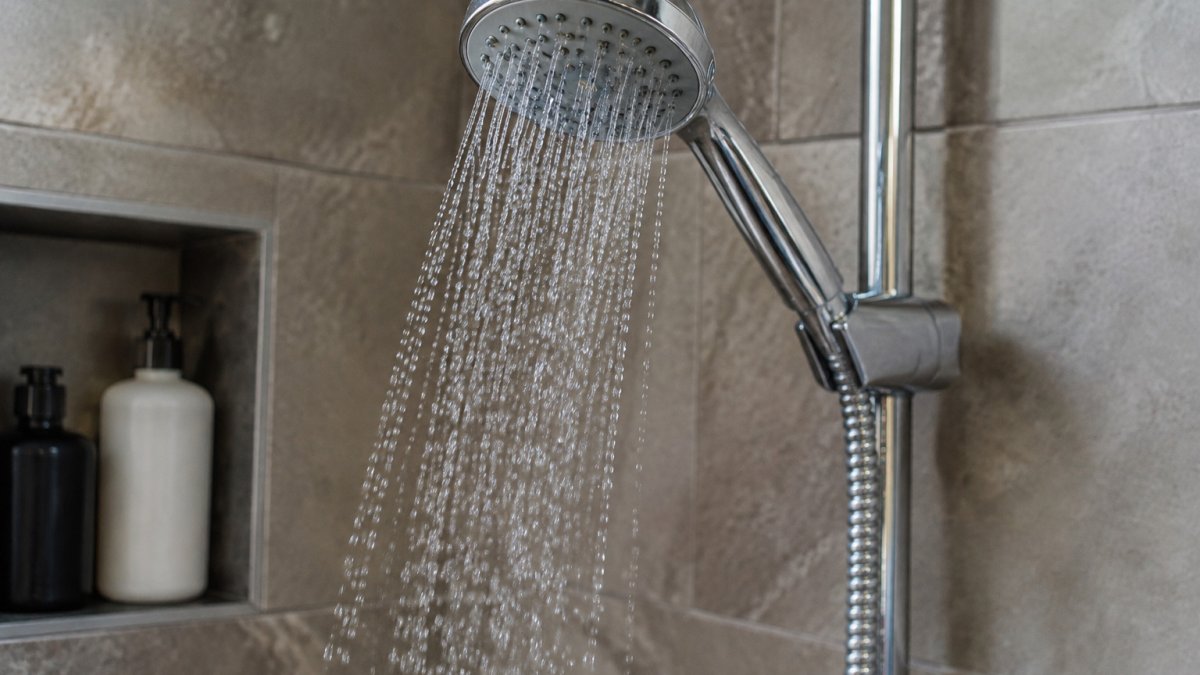
Weak pressure at every fixture, all the time, is the classic first clue. If your shower feels thin even when nothing else is running, the pump may simply not build enough pressure for the home.
Watch for this pattern: pressure is acceptable in the morning and poor in the evening when everyone is home. That's a demand problem, not a pump failure.
Sputtering Faucets and Air in the Lines
Sputtering faucets usually point to air entering the system, often from a pump that's drawing faster than the well can recover.
This is a key difference between undersized and failing. A worn pump loses pressure gradually. An oversized draw on a limited well pulls air in bursts.
Rapid Cycling and Short Runtime
Short cycling means the pump cuts on and off in quick bursts instead of running steadily. An undersized pump reaches its cut-out pressure fast and then drops below cut-in almost immediately when a tap opens.
You'll hear it before you see it: a rhythmic click-hum-click from the utility corner. Rapid cycling wears out pressure switches and motors faster than almost anything else.
Water Drops When Multiple Fixtures Run
This is the clearest test of all. Start the shower. Then run the kitchen sink. Then flush a toilet. If pressure collapses when two or three fixtures run at once, that's simultaneous demand the pump can't meet.
A properly sized pump holds steady pressure through normal household use. An undersized one has no reserve.
No Water or Intermittent Supply
Intermittent water, where supply cuts out and returns, can mean the pump is outrunning the well's recovery rate. The well yield, not the pump, sets the ceiling here.
If you lose water after heavy use and it comes back after an hour of rest, the system is telling you demand exceeds supply.
Overheating, Tripped Breakers, and High Electricity Use
A pump that runs too long or cycles too often can overheat and trip its breaker. You may also notice the electric bill climbing without any change in habits.
Thermal overload protection shuts the motor down when it gets too hot. Repeated trips are a warning, not a nuisance.
Pressure That Never Recovers After Heavy Use
After laundry day or a long shower, does pressure stay low for an hour or more? A healthy system recovers in minutes. A pump that can't keep up, or a well that needs time to recharge, leaves you waiting.
Here are the seven signs we see most often, with what each one points to.
| Sign | What you notice | What it suggests |
|---|---|---|
| Low water pressure | Weak pressure at every fixture, all the time | Pump may not build enough pressure |
| Sputtering faucets | Air in the lines, bursts at the tap | Pump drawing faster than well recovers |
| Rapid cycling | Click-hum-click, short runtime bursts | Pump hits cut-out fast, drops below cut-in |
| Drops with multiple fixtures | Pressure collapses when two or three run | Simultaneous demand the pump can't meet |
| No or intermittent water | Supply cuts out and returns after rest | Pump outrunning the well's recovery rate |
| Overheating and breaker trips | Thermal overload trips, higher electric bill | Pump runs too long or cycles too often |
| Slow recovery after heavy use | Pressure stays low an hour or more | Pump can't keep up or well needs recharge |
Well Pump vs. Pressure Tank Problems: Telling Them Apart
Pressure tank trouble mimics an undersized pump almost perfectly, and mixing them up leads to expensive wrong guesses.
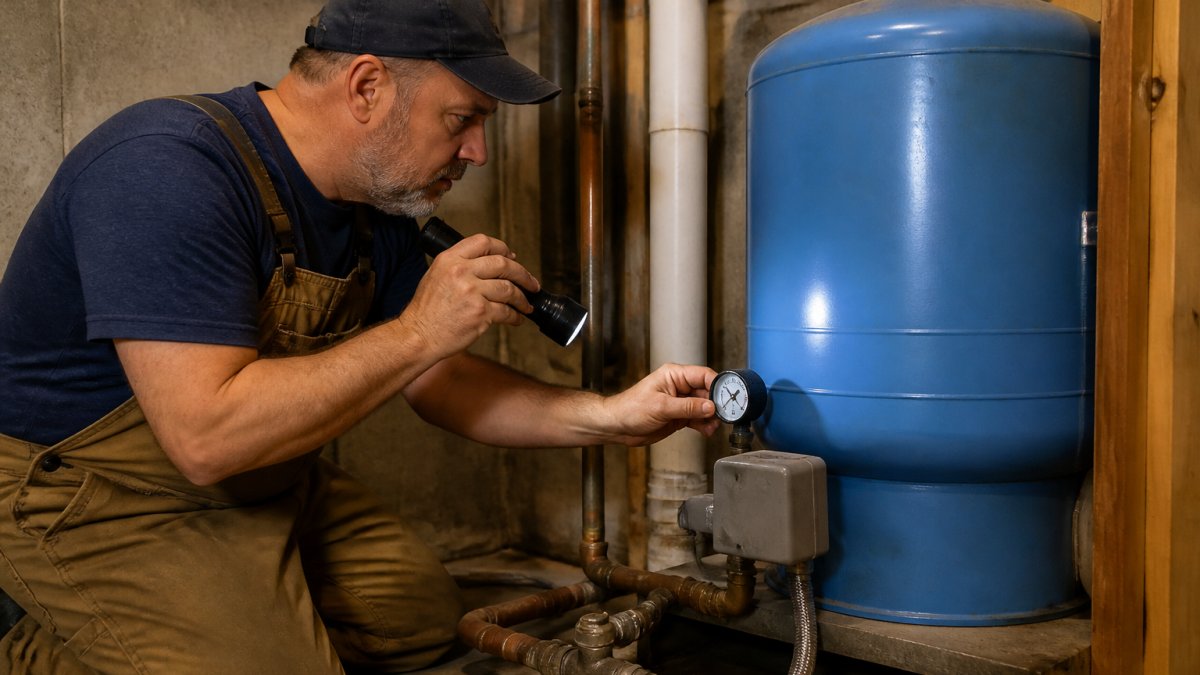
Here's how to separate them:
- Pressure gauge test: Watch the gauge while a tap runs. Steady drop with slow recovery suggests a tank issue. Fast drop with weak recovery suggests pump capacity.
- Tank tap test: Knock on the tank. A hollow sound up top is normal. A thud or water sound high up means a failed bladder.
- Runtime pattern: Short, frequent cycles with normal pressure between them point to the tank. Long runtimes with weak pressure point to the pump.
For a deeper walkthrough, our guide on signs of a failing well pressure tank covers diagnosis step by step.
(https://blog.englandsphc.com/what-size-well-pump-do-i-need-for-my-house).Step 1: Calculate peak household demand in GPM
Count the fixtures that can realistically run at the same time and assign each a flow rate. Planning figures for flow rate vary by fixture and manufacturer, so confirm actual demand with a professional sizing review.
The peak number, not the average, is what the pump must meet.
Step 2: Check the well's sustainable yield
The pump can never deliver more than the well produces. A well's recovery rate is measured in GPM during a pump test, and it caps the entire system. If the well recovers at 5 GPM, a 15 GPM pump will draw the water level down to the pump intake, suck air, and cycle, the classic undersized-pump symptom that is actually a well-yield limit.
Step 3: Calculate total dynamic head (TDH)
TDH is the total lift the pump must overcome, expressed in feet of head:
- Vertical lift: the distance from the pumping water level to the pressure tank or highest fixture
- Friction loss: pressure lost as water moves through pipe, fittings, and valves, higher for long runs and small-diameter pipe
- Pressure requirement: the pressure the system must maintain at the tank, converted to feet of head (1 PSI ≈ 2.31 feet of head)
A pump rated for strong GPM at shallow depth can fall far short at your actual well depth. Deep wells and long pipe runs raise TDH, and the pump's real output drops as head rises, which is why a spec sheet alone doesn't tell you if a pump is right for your well.
Step 4: Match the pump curve to the duty point
Every pump has a published performance curve showing GPM at various heads. The correct pump delivers your peak demand GPM at your calculated TDH, with a margin for the pressure switch's cut-out setting. When we size a system, we check three numbers together: well depth, static water level, and the pump's published flow at that head.
Well Pump Flow Rate: Reading GPM and Total Dynamic Head
Flow rate is measured in gallons per minute, or GPM, and it tells you how much water the pump moves.
A pump can be rated for strong GPM at shallow depth and fall short at your actual well depth. That's why a spec sheet alone doesn't tell you if a pump is right for your well.
When we size a system, we check three numbers together: well depth, static water level, and the pump's published flow at that head. Miss any one and the pump looks fine on paper but underperforms in the basement.
Step-by-Step Diagnostic Tests You Can Run Safely
These tests are safe for most homeowners and take about 20 minutes. For a detailed walkthrough, follow our step-by-step guide to checking well pump pressure. Skip anything involving electrical panels, pressure-switch adjustment, or pulling the pump, those require a licensed well professional.
Test 1: Record the baseline
Open one cold tap fully and note the pressure gauge reading at the tank. A healthy system holds steady pressure at a single fixture. If pressure is already weak with one tap open, capacity or well yield is the suspect before you test anything else.
Test 2: Run the multi-fixture demand test
With that tap open, start a second and third fixture, shower plus kitchen sink plus toilet refill is a good combination. Watch how far pressure falls and whether it recovers while all three run.
- Pressure holds steady: pump capacity is adequate for that demand level.
- Pressure drops sharply and stays low: pump cannot meet simultaneous demand, sizing or well-yield problem.
- Pressure swings wildly but averages out: pressure-tank or switch problem.
Test 3: Time the recovery
Close all fixtures and time how long pressure takes to return to the cut-out setting. A healthy system recovers in a minute or two. Recovery that takes an hour or more points to a well that needs time to recharge, a yield limit, not a pump-capacity limit.
Test 4: Listen for cycling
Stand near the tank for two minutes and count pump starts with no fixtures running. A pump that cycles with no demand has a tank, switch, or check-valve problem. A pump that cycles only when fixtures run is hitting its capacity ceiling.
Test 5: Check the tank
Knock on the tank. A hollow sound up top is normal. A thud or water sound high up means a failed bladder or low pre-charge, a tank problem that mimics an undersized pump.
Test 6: Rule out the other causes
Before concluding the pump is undersized, eliminate the look-alikes:
- Clogged filter or sediment screen: flow drops at all fixtures, but pressure at the tank stays normal.
- Leak in the line or foot valve: pump runs constantly and never reaches cut-out.
- Pressure-tank fault: short cycling with normal pressure between cycles.
When to Repair, Resize, or Replace Your Well Pump
Repair makes sense when a single part failed: a pressure switch, a check valve, or a tank bladder. Resize when the pump works but can't meet demand.
The decision usually comes down to three questions:
- Does the pump hold steady pressure at low demand? If yes, it's probably healthy.
- Does it fail only when demand rises? That points to sizing.
- Has it gotten worse over months? That points to wear.
A repair-or-replace cost comparison helps here.
Watch out: replacing a pump without checking the well's recovery rate first is the most common expensive mistake.
Book a Well Pump Inspection With England's Plumbing & Heating
Diagnosing an undersized pump takes the right gauges, a flow test, and someone who knows private well systems. England's Plumbing & Heating has served Chester County since 1989, with well pump repair and replacement among our residential services.
To learn more about well pump service, contact England's Plumbing & Heating directly.
You can review our services on our website.
Frequently Asked Questions
How can I tell if my well pump is undersized or failing?
Look at the pattern. An undersized well pump struggles most when demand is high: pressure sags when two fixtures run, then recovers once you close one. A failing pump loses performance across the board, including on a single faucet, and often shows sputtering, rapid cycling, or tripped breakers. Check the pressure gauge while running fixtures one at a time. If the pump holds steady pressure on one tap but collapses on two, sizing or well yield is the likely culprit rather than motor failure.
Can an undersized well pump cause low water pressure throughout the house?
Yes. Low water pressure from a well is one of the clearest signs of an undersized well pump. If the pump's flow rate in gallons per minute sits below what your fixtures demand at peak, pressure drops everywhere at once. Before blaming the pump, rule out a waterlogged pressure tank and a mis-set pressure switch, since both mimic the same symptom. A technician can measure flow at the tank and compare it to your fixture count to confirm.
How do I know what size well pump my home needs?
Start with demand, not the old pump's label. Count fixtures and estimate peak simultaneous flow, then add the lift from the water level in the well to the highest fixture in the house. That total, called total dynamic head, plus the required flow rate, sets the pump size. Well depth, static water level, and recovery rate all constrain what the well can actually deliver. A professional sizing calculation prevents buying a pump the well cannot support.
Should I replace an undersized well pump with a larger one?
Only after confirming the well can supply the extra flow. A larger pump in a low-yield well will cycle hard, run dry, and wear out early. Check recovery rate and well yield first, then match pump capacity to both household demand and what the aquifer sustains. If the well is the limit, a constant pressure system or a storage tank may solve the symptom without over-pumping the well. Have the well tested before committing to a replacement.
If your water pressure sags every time the family gets ready in the morning, don't assume the pump is dying. It may just be too small for your home. England's Plumbing & Heating can test your system, confirm whether sizing or wear is the cause, and recommend the right fix. Get started with England's Plumbing & Heating and book your well pump inspection online today.