 how-to
Signs of a Failing Well Pressure Tank: Diagnose Yours
Table of Contents
- Common Signs of a Failing Well Pressure Tank
- Well Pressure Tank Bladder Failure Symptoms
- How to Test a Well Pressure Tank Safely
- Well Pump Short Cycling vs. Pressure Tank Failure
- Well Pressure Tank Replacement Cost and When to Replace
- When to Call a Professional
- Frequently Asked Questions
Last Updated: October 20, 2026
Common Signs of a Failing Well Pressure Tank
A failing well pressure tank shows itself through sudden pressure drops, rapid on-off cycling, or sputtering faucets. England's Plumbing & Heating helps Chester County homeowners catch these problems before they become emergencies.
The tank stores water and maintains consistent pressure. When it fails, you get weak showers, slow-filling toilets, and unpredictable flow.
Low or Fluctuating Water Pressure
Fluctuating pressure, strong one moment, weak the next, points to the tank rather than the pump.
When the bladder or diaphragm fails, it can't hold air, so pressure drops as soon as you use water.
Normal household pressure is 40 to 60 PSI. Readings below 40 PSI or bouncing erratically mean your tank needs attention.
Rapid Pump Cycling and Frequent Starts
Your well pump should start and stop several times daily, not continuously.
This is short cycling: the pump runs briefly, shuts off, then restarts within seconds or minutes, often with rapid clicking.
Short cycling happens when the tank can't hold pressure between cycles.
Listen for these sounds:
- Rapid clicking or chattering from the pump
- Frequent motor engagement and disengagement
- Unusual vibration near the tank
Short cycling overheats the pump and wears out internal components.
Water Spitting and Sputtering from Faucets
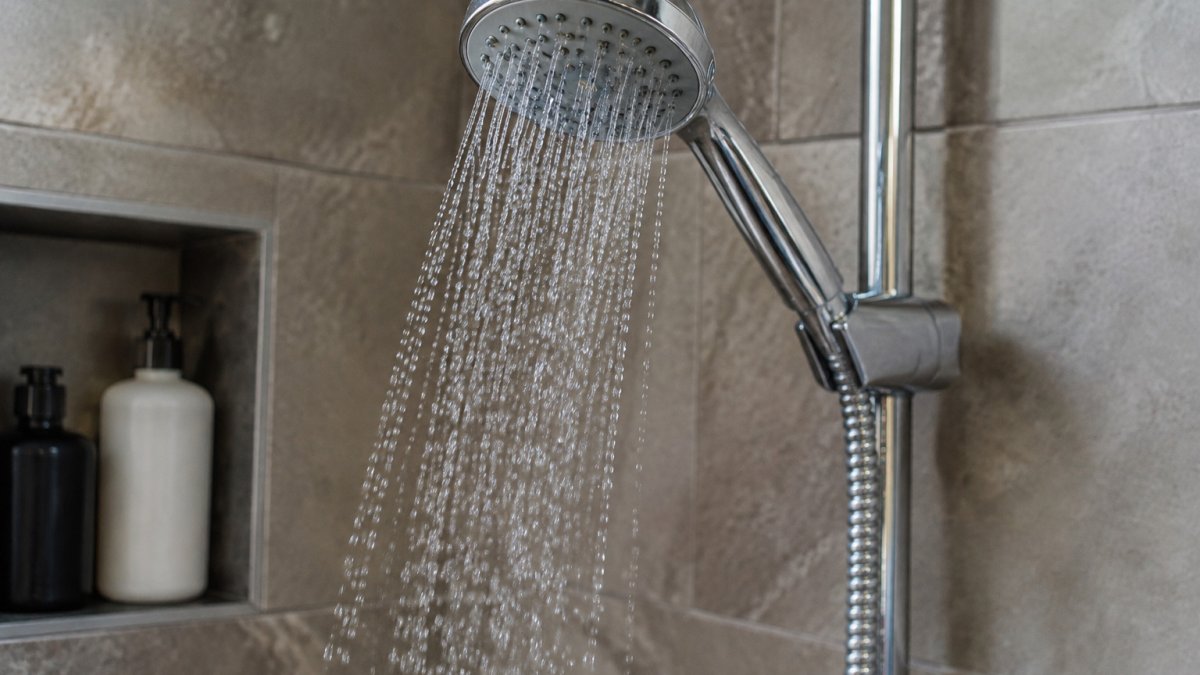
Spitting, sputtering, or inconsistent spray signals air in the lines, which comes from a failing pressure tank.
When the bladder ruptures, air enters the water supply, most noticeable at faucets and showerheads, where water sprays in odd patterns while other fixtures work fine.
Sediment can also cause sputtering, but alongside low pressure and pump cycling, the tank is almost certainly failing.
Pressure Gauge Behavior and Bouncing Needles
A healthy gauge needle stays steady; a failing tank's gauge bounces constantly.
The needle may swing from 30 PSI to 60 PSI and back within seconds, showing the tank can't regulate pressure.
Watch your gauge during normal use:
- Strong, steady reading = healthy tank
- Needle bouncing or fluctuating = tank problem
- Gauge stuck at zero = tank or gauge issue
If you don't have a pressure gauge, install one, it's an inexpensive way to monitor your well system.
Well Pressure Tank Bladder Failure Symptoms
The well pressure tank bladder is the rubber component that separates air from water.
Bladder failure is the most common reason tanks need replacement, degrading over time from age, water chemistry, and constant cycling.
Signs of bladder failure include:
- Loss of air charge (confirmed by testing)
- Water coming from the air valve
- Constant pump running
Some tanks use a diaphragm instead of a bladder; both serve the same purpose, fail similarly, and require professional replacement.
How to Test a Well Pressure Tank Safely
Testing your pressure tank confirms whether it's failing. You can do simple tests yourself, but always prioritize safety.
Step 1: Turn Off Power and Depressurize
Switch off power to your well pump at the breaker so it can't start unexpectedly while you work.
Next, depressurize the system. Open a faucet at the lowest point in your home, typically a basement sink or outdoor spigot.
Wait several minutes. Make sure no water flows from any faucet. The system is now safe to work on.
Step 2: Check the Air Valve and Pressure Settings
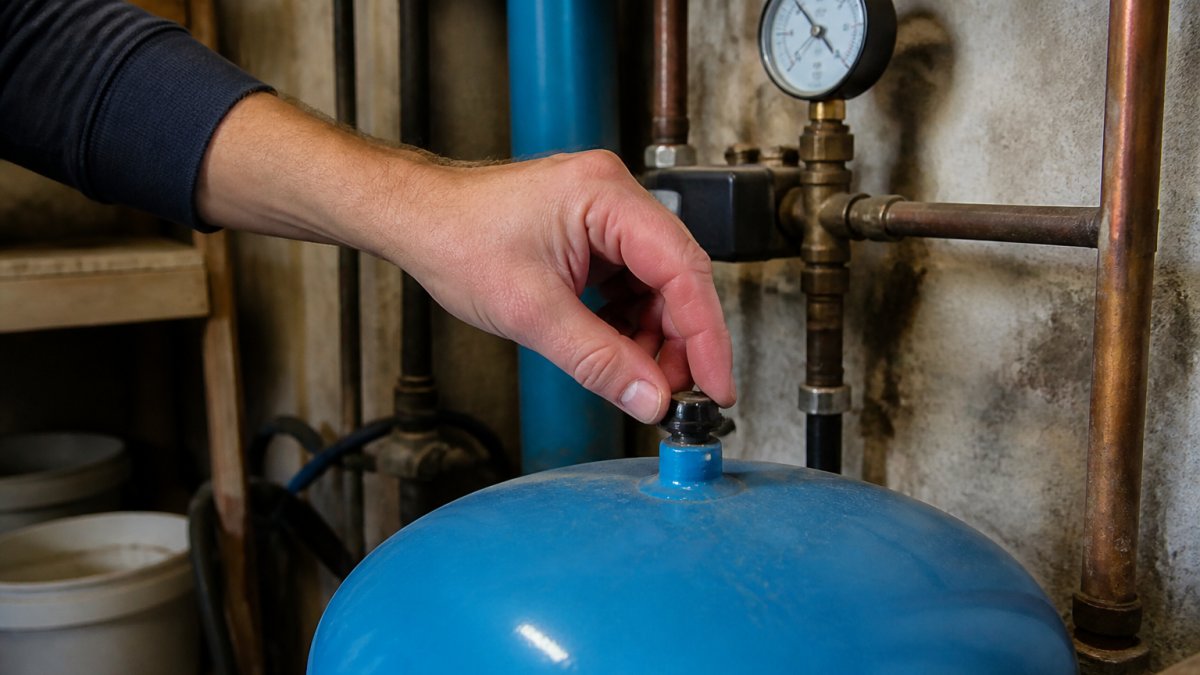
Locate the air valve at the top of your pressure tank.
Press the valve stem with your finger. If water sprays out, the bladder has failed.
If no water comes out, use a tire pressure gauge to check the air charge.
Write down your reading. This number tells you whether the tank is holding air properly.
Step 3: Perform the Tank Tap Test
With the system depressurized, tap the tank gently with a rubber mallet or your fist and listen.
A healthy tank sounds hollow and metallic when you tap the upper half.
If the entire tank sounds heavy and full, it's waterlogged.
Combined with your pressure gauge reading and air valve check, this simple test gives you confidence in your diagnosis.
Well Pump Short Cycling vs. Pressure Tank Failure
Short cycling is most often blamed on the tank, but a pressure switch, failing pump, plumbing leak, and clogged sediment filter can all produce rapid starts. Getting the diagnosis right the first time keeps you from paying for a tank you did not need.
Use this decision tree, working from the safest and cheapest checks to the most involved.
Step 1: Confirm the symptom pattern
- Pump runs in short bursts every few seconds to a few minutes, even with no water running. This points to a tank that cannot hold pressure, a switch with a narrow or drifting differential, or a check valve or foot valve that is leaking water back down the well.
- Pump runs continuously and never reaches cut-out pressure. This points to a waterlogged tank, a failing pump, a closed valve, or a serious leak on the house side.
- Pump cycles only when a fixture is open. This is often normal behavior on a small tank, but it can also indicate a tank that has lost most of its air charge.
Step 2: Rule the tank in or out
With power off and the system depressurized, check the air valve at the top of the tank. Water from the valve confirms a ruptured bladder or diaphragm and means the tank needs replacement. Air only, at roughly the correct pre-charge, means the tank is probably not the fault.
If the tank passes these checks, move to the next suspects.
Step 3: Check the pressure switch
The pressure switch is a small box, usually mounted near the tank on the pump line, with two spring-loaded adjustments and electrical contacts. With the system depressurized and power off, remove the cover and look for pitted or burned contacts, insect nests, or a sensing tube clogged with sediment. A spread that has drifted too narrow will short cycle even with a healthy tank; a switch that never reaches cut-out keeps the pump running.
Step 4: Check for leaks and clogs
A leaking check valve or foot valve lets water drain back into the well after the pump shuts off, so the pump restarts to rebuild pressure.
A simple check: with the pump off and the system at pressure, watch the pressure gauge for several minutes. A steady drop with no fixtures open points to a leak or a leaking check valve, not the tank.
Step 5: Evaluate the pump
If the tank holds air, the switch is clean and correctly set, and there are no leaks or clogs, the pump becomes the leading suspect. A worn pump may run but build pressure slowly, run hot, or trip its breaker. Pump diagnosis usually requires a professional with an ammeter and a pressure-flow test.
Quick reference
| Symptom | Most likely cause |
|---|---|
| Water from air valve | Ruptured bladder or diaphragm, replace tank |
| Tank heavy and solid when tapped | Waterlogged tank, replace or re-charge |
| Rapid cycling with no fixtures open | Tank air loss or leaking check valve |
| Pump never reaches cut-out | Waterlogged tank, failing pump, closed valve, or major leak |
| Cycling only when fixtures are open | Small tank, low pre-charge, or normal behavior |
| Pressure drops slowly with pump off | Leak or leaking check valve |
| Switch contacts pitted or burned | Replace pressure switch |
England's Plumbing & Heating can test your system properly to identify the exact cause. Our experienced team can diagnose well system problems for Chester County homeowners.
Pressure tank problems are usually straightforward to fix. Pump and switch problems are more variable. Getting the diagnosis right the first time matters.
Well Pressure Tank Replacement Cost and When to Replace
A failing pressure tank is usually replaced rather than repaired, but some problems are correctable and some are not, a difference that affects both cost and urgency.
What can be repaired versus what cannot
- Lost air charge with an intact bladder. This is repairable. With the tank drained, the pre-charge can be restored with a hand pump or compressor through the air valve. If the tank holds the charge for a week or more, the bladder is still sound.
- Water from the air valve. This confirms a ruptured bladder or diaphragm. The tank cannot be repaired in the field and must be replaced.
- Waterlogged tank that will not hold a charge. A tank that loses its pre-charge within days has a failing bladder and needs replacement.
What affects service life
Most residential pressure tanks last roughly 5 to 15 years. Variables that move a tank toward the short end include:
- Water chemistry. Hard water, acidic water, and high sediment load degrade the bladder faster.
- Cycle frequency. A tank that is undersized for the pump and household demand cycles more often and wears out sooner.
- Pre-charge maintenance. A tank that has been allowed to run with a low or lost air charge stresses the bladder on every cycle.
A simple annual check, tapping the tank and verifying the air charge with the system drained, is the most reliable way to catch a tank before it fails.
Pricing and what drives it
Replacement cost depends on tank size, tank type (bladder, diaphragm, or composite), whether the pressure switch and fittings are also replaced, and local labor rates. Because pricing varies so widely by system, get a quote based on your actual tank size and setup rather than a generic national figure.
Urgency: what can wait and what cannot
- Can usually be monitored for a short time: occasional sputtering, mild pressure fluctuation, a tank that is a few years past its expected life but still holding a charge.
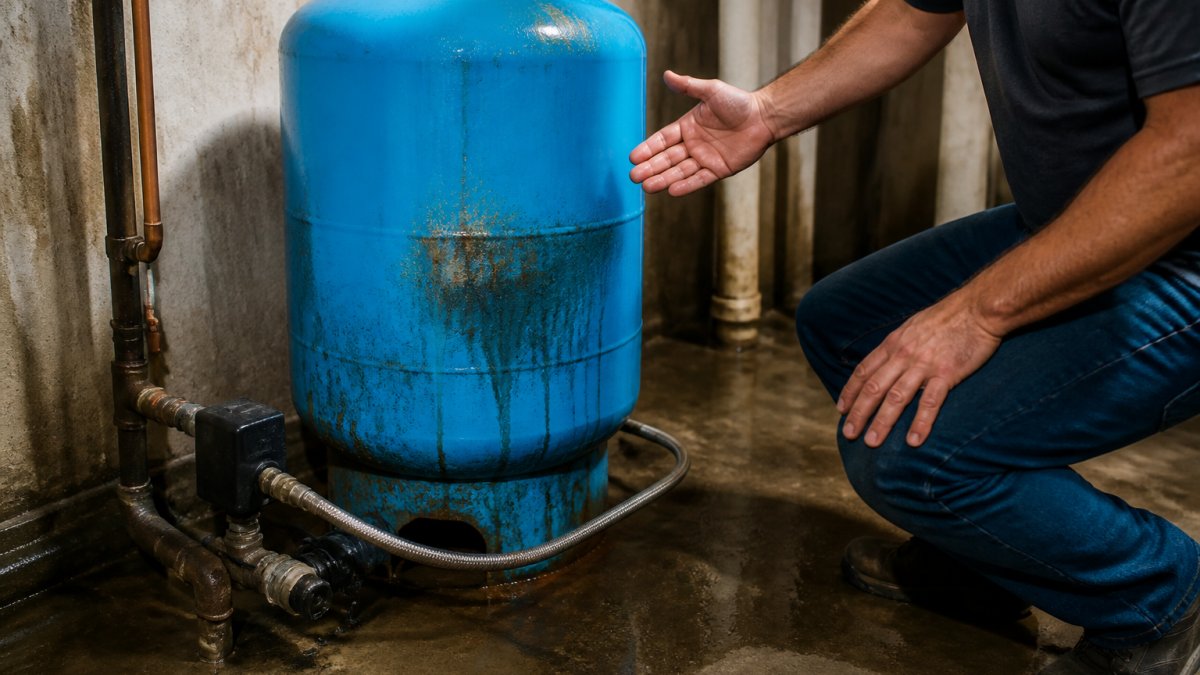
- Should be scheduled promptly: confirmed water from the air valve, a tank that will not hold a charge, visible rust or corrosion on the shell.
- Requires prompt service: continuous pump cycling, pump running without building pressure, loss of water, water leaking from the tank, or any sign of electrical trouble at the switch or breaker.
Delaying replacement risks pump damage: a failing tank forces your pump to work harder and longer, shortening its life. Replacing the tank now prevents a more expensive pump replacement later.
Replacement is straightforward. The old tank is removed, a new one installed, the air charge set correctly, and the system tested. Most replacements take a few hours.
When to Call a Professional
Call a professional immediately if:
- Water pressure drops to near zero
- Your pump runs constantly without building pressure
- Water spurts or sputters from multiple fixtures
These situations indicate serious problems that need quick attention. Waiting risks greater damage.
Call for a routine inspection if:
- You haven't had your well system checked in over a year
- You're experiencing any symptoms mentioned in this guide
- You want to confirm whether the tank or pump is failing
England's Plumbing & Heating offers online booking and live chat support.
We understand that well system problems feel urgent because they affect your entire home's water supply.
Professional testing confirms what's wrong.
A failing well pressure tank creates frustration and expense if ignored.
Frequently Asked Questions
What is the average lifespan of a well pressure tank?
Most well pressure tanks last 5 to 10 years, though this depends on water quality, usage patterns, and maintenance. Tanks with sediment buildup or corrosion may fail sooner. Hard water, high iron content, or frequent pressure fluctuations can shorten a tank's life. If your tank is approaching 10 years old and showing signs of failure, replacement may be more cost-effective than repeated repairs. Regular air-charge checks and professional inspections help extend tank life.
Can a bad pressure tank cause low water pressure?
Yes. A failing well pressure tank directly causes low or fluctuating water pressure. When the bladder or diaphragm inside the tank ruptures or loses air charge, the tank cannot store pressurized water effectively. This forces the pump to work harder and cycle more frequently, resulting in reduced water pressure at your faucets. Waterlogged tanks, where water fills the entire chamber, are especially prone to this problem. Testing the air charge and inspecting the tank for internal failure can confirm whether the tank is the cause.
How do I distinguish a failing pressure tank from a bad well pump?
A failing pressure tank usually shows rapid pump cycling, pressure gauge fluctuations, and sputtering water, but the pump itself runs normally when it does start. A bad well pump typically produces weak flow even when running, makes unusual grinding or squealing sounds, or fails to start at all. Check your pressure gauge: if it bounces wildly or drops quickly after the pump stops, the tank is likely the problem. If pressure stays stable but flow is weak, the pump may be failing. Professional testing can confirm which component needs repair or replacement.
What should I do if I suspect my well pressure tank is failing?
First, check your pressure gauge for fluctuations or abnormal readings. Listen for rapid pump cycling (short cycling) or unusual sounds. If you notice water spitting from faucets, low pressure, or the pump running constantly, turn off power to the pump immediately to prevent damage. Do not attempt to repair the tank yourself if you suspect bladder failure or internal damage. Contact a licensed plumber experienced with well systems to perform a proper inspection, test the air charge, and recommend repair or replacement. Professional diagnosis ensures your water supply remains safe and your system operates efficiently.