 how-to
7 Gas Pipe Maintenance Tips for Homeowners
Last Updated: November 1, 2026
Quick Summary
Gas pipe maintenance means checking, cleaning, and protecting your gas lines so leaks never start, and it is preventive care rather than repair work. Inspect exposed piping, joints, the meter, and appliance connectors monthly, run the soapy water test seasonally, and book a licensed plumber for a full inspection and leak test every year.
- Never use a flame, match, or lighter to test for a gas leak; it causes fires.
- The smell of rotten egg comes from mercaptan, a scent added to natural gas.
- Call 811 before any digging project near outdoor gas lines.
- Homeowners can smell, look, and run the soapy water test on visible connections only.
- England's Plumbing & Heating has served Chester County since 1989.
Table of Contents
- Gas Pipe Maintenance Tips That Protect Your Home
- Gas Line Leak Warning Signs You Should Never Ignore
- Gas Pipe Inspection: What to Check and How Often
- Outdoor Natural Gas Line Maintenance for Every Season
- When to Replace Natural Gas Lines in a Home
- DIY vs. Professional Scope: What Homeowners Can Safely Handle
- Smart Leak Detection and Record Keeping for Long-Term Safety
- Book a Gas Pipe Inspection with England's Plumbing & Heating
- Frequently Asked Questions
Gas Pipe Maintenance Tips That Protect Your Home
Natural gas pipe maintenance is the routine practice of checking, cleaning, and protecting the lines that carry gas into your home so leaks never get a chance to start.
Below, we'll show you exactly what to check, how often to check it, and where the line between DIY and professional work sits.
A quick definition worth remembering: gas pipe maintenance is preventive care for your gas piping, not repair work. It keeps pipe integrity intact and catches corrosion before it spreads.
What You'll Need Before You Start
Gather a few simple items before you begin any inspection:
- A spray bottle filled with soapy water
- A flashlight for dark corners
- A notebook or phone for record keeping
You do not need special tools for basic visual inspection. Anything beyond looking, listening, and the soapy water test belongs to a professional. Watch out: never use a flame to test for a leak. That old trick causes fires, and it is the single most dangerous mistake a homeowner can make around gas piping.
Gas Line Leak Warning Signs You Should Never Ignore
The clearest warning sign of a gas leak is the smell of rotten egg, which comes from mercaptan, a scent added to natural gas so you can detect it. If you smell it, leave the building and call your utility provider from outside. Other signs deserve the same urgency:
- A hissing sound near a gas line or appliance connection
- Bubbling soil or dead vegetation in a straight line across the yard
- White mist or dust blowing near a pipe
If you hear hissing near a gas line, learn what the sound means and what to do immediately. For a suspected hidden leak inside a wall, this guide on how to detect hidden gas leaks safely walks through the safe steps before you call anyone.
Safety protocol during a suspected leak: do not flip light switches, do not use your phone indoors, and do not try to find the leak yourself. The U.S. Consumer Product Safety Commission guidance on gas appliances explains why prompt evacuation matters.
Gas Pipe Inspection: What to Check and How Often
A basic visual inspection should happen monthly, with a deeper seasonal walkthrough each spring and fall. The goal is not to diagnose gas work, it is to notice change early and document it.
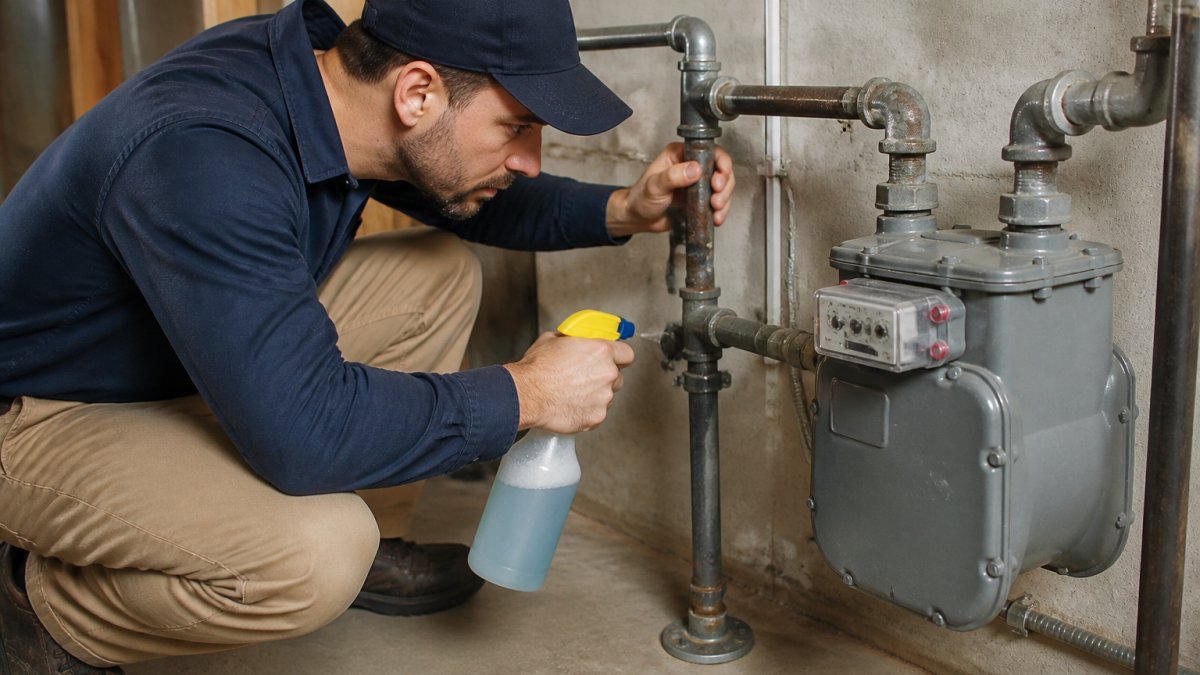
What a Homeowner Inspection Should Actually Cover
Work through the same checklist each month so nothing gets skipped:
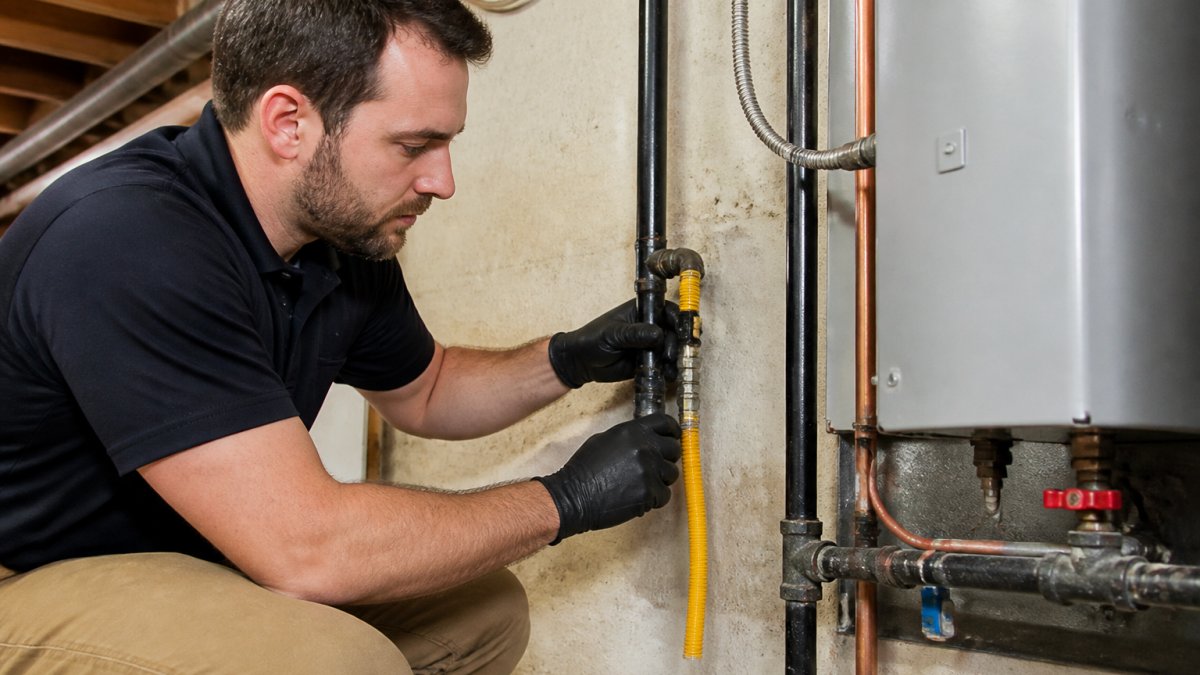
- Exposed piping runs, look for rust, flaking paint, green or white corrosion at joints, moisture streaks, and any pipe that is dented, sagging, or pulled loose from its support.
- Joints and unions, the threaded connections and union fittings are where most small leaks begin. Check for corrosion rings, oil residue, or dust collecting in a way that suggests a slow escape.
- The gas meter set assembly, the meter, the regulator, and the shutoff valve. Confirm the area is clear of stored items, the regulator vent is unobstructed, and the meter is not sitting in standing water.
How Often to Do Each Task
| Task | How Often | Who Does It |
|---|---|---|
| Smell and listen check | Monthly | Homeowner |
| Visual inspection of exposed pipes, joints, meter, and connectors | Monthly | Homeowner |
| Soapy water test on visible appliance connections | Seasonally | Homeowner |
| Shutoff valve operation check | Seasonally | Homeowner |
| Carbon monoxide detector test | Monthly | Homeowner |
| Full professional inspection and leak test | Annually | Licensed plumber |
The Soapy Water Test for Small Connections
The soapy water test is a safe way to check a small appliance connection for leaks. Mix a few drops of dish soap with water in a spray bottle, spray the joint, and watch. Growing bubbles mean gas is escaping. Do not tighten anything yourself if the fitting still bubbles, shut the appliance off and call a professional. This test works on visible connections only.
Turning Observations Into a Record
Write down what you checked, the date, and anything that looked different from last time, a new rust spot, a connector that looks cracked, a valve that is harder to turn. That log is what lets a plumber spot a pattern, such as the same joint showing corrosion twice, and it becomes part of your home's maintenance history if you sell.
Outdoor Natural Gas Line Maintenance for Every Season
Outdoor natural gas lines face weather, roots, and soil movement all year. In spring, check for bubbling soil or dead grass patches along the line's path. In summer, keep vegetation trimmed back from the meter. Fall means clearing leaves and debris so the meter can breathe. Winter brings the risk of snow piled against the meter and frozen ground shifting pipes.
A few habits keep outdoor lines healthy:
- Never build decks, sheds, or fences over a gas line
- Call 811 before any digging project
- Keep the meter clear by at least a few feet on all sides
- Watch for rust on above-ground piping
When to Replace Natural Gas Lines in a Home
Replacement becomes necessary when corrosion, rust, or repeated leaks make a line unsafe to keep. Older steel piping and certain legacy materials degrade over decades, especially where moisture accumulates. Signs it may be time include:
- Repeated leaks at the same section
- Visible rust or flaking on the pipe
- A line that has been patched multiple times
- Yellow or orange flame on appliances, which can point to gas pressure problems
Before any replacement, it helps to understand the safety standards a new gas pipe installation must meet. A licensed plumber can test pipe integrity and tell you whether repair or replacement is the right call.
DIY vs. Professional Scope: What Homeowners Can Safely Handle
Most gas pipe articles blur the line between what a homeowner can do and what requires a licensed professional. Drawing that line clearly is the single most useful thing a homeowner can learn, because the risks on the wrong side of it are fire, carbon monoxide exposure, and code violations that surface at resale.
What Homeowners Can Safely Do
Three tasks are within reach for any careful homeowner:
- Smell and listen for gas and for the hiss of an escaping line.
- Look for rust, corrosion, moisture, dents, and loose supports on exposed piping.
- Run the soapy water test on visible appliance connections, then stop and call a professional if bubbles appear.
That is the full list. Everything else belongs to a licensed plumber or gas fitter.
What Requires a Licensed Professional
- Any work on the gas piping itself, cutting, threading, joining, or rerouting a line.
- Appliance connections and disconnections, including installing a new range, dryer, or water heater.
- Gas pressure adjustments and regulator service.
- Leak testing with professional equipment (manometer, combustible gas detector).
Why the Line Is Where It Is
Gas work is restricted for two reasons. First, licensing: gas piping work generally requires a licensed professional, and new or altered lines typically need a permit and inspection under local rules. Second, technical: a visual check cannot detect a slow leak inside a wall, a partially blocked flue, or a pressure problem that produces carbon monoxide. The U.S. Department of Energy's guidance on natural gas safety notes that gas appliances and lines should be serviced by qualified technicians, and the U.S. Consumer Product Safety Commission guidance on gas appliances explains why carbon monoxide from improperly vented or adjusted appliances is a leading home hazard.
How to Hand Off What You Found
When you call a professional, the observations from your inspection log are what make the visit efficient. Tell the plumber the date you first noticed the issue, what it looked like, whether it changed, and which appliance or line it is near. A plumber who arrives with that context can go straight to the suspect joint instead of starting from scratch, and you have a written record of the visit for your home's maintenance history.
Smart Leak Detection and Record Keeping for Long-Term Safety
Two habits separate careful homeowners from lucky ones: documentation and early detection. Keep a simple log of every inspection, noting the date, what you checked, and anything that looked off. That record helps a plumber spot patterns, like the same joint leaking twice.
Smart gas detectors and carbon monoxide alarms add a layer of protection, especially in bedrooms and near gas appliances. Test alarms monthly and replace batteries on schedule.
Book a Gas Pipe Inspection with England's Plumbing & Heating
Annual professional inspection is the backbone of safe gas piping, and it is the one task you should never skip. England's Plumbing & Heating has served Chester County since 1989, with experienced plumbing and heating professionals. You can also see the full list of gas and plumbing services we provide. For current pricing or a quote, visit England's Plumbing & Heating's website.
Frequently Asked Questions
How often should residential gas pipes be inspected?
Most homes benefit from a professional gas pipe inspection every 12 to 24 months, and annually if your system is older, has had prior repairs, or sits in a humid basement. Between visits, do a monthly visual inspection of exposed piping and the gas meter for rust, moisture, or corrosion. If you ever smell a rotten egg smell, hear a hissing sound, or see bubbling soil outdoors, skip the schedule and call a licensed plumber right away.
Can homeowners perform maintenance on gas pipes?
Homeowners can safely handle light gas pipe maintenance: keeping the meter clear, checking for rust or moisture, and running a soapy water test on appliance connections. Anything beyond that, including tightening gas piping, replacing a section, or repairing a leak, belongs to a licensed plumber. Gas work requires leak testing, correct pipe sizing, and knowledge of local code, and a mistake can lead to carbon monoxide exposure or a fire.
What should I do if I smell gas in my home?
Treat it as an emergency. Do not flip light switches, use your phone indoors, or start a car in the garage. Open windows, get everyone outside, and call your utility provider's emergency line from a safe distance. If the smell is strong or you hear a hissing sound, call 911. Once the utility makes the home safe, a licensed plumber can find and repair the leak, then perform leak testing before the gas is turned back on.
How do I test a gas pipe for leaks?
For a small appliance connection, mix dish soap with water and brush it on the joint. Bubbles that grow mean gas is escaping. That soapy water test is a quick check, not a repair. If you find a leak, shut off the appliance valve, ventilate the area, and call a professional. For hidden gas piping or any leak you cannot pinpoint, a licensed plumber uses a gas leak detection meter and pressure testing to confirm pipe integrity before making repairs.
Gas safety is not a project you finish once. It is a habit you keep, month after month. If your inspection turns up rust, a hissing sound, or a smell you cannot place, do not wait for it to get worse. Get started with England's Plumbing & Heating and book a professional gas pipe inspection that protects your home and your family.