 how-to
How to Fix Water Heater Pilot Light That Goes Out
Table of Contents
- Why Your Water Heater Pilot Light Goes Out
- How to Relight a Water Heater Pilot Light Safely
- Water Heater Thermocouple Troubleshooting and Cleaning
- Water Heater Pilot Light Safety: Gas Leaks and Carbon Monoxide
- Water Heater Pilot Light Won't Stay Lit: Diagnosis and Fixes
- When to Call a Professional Plumber
- Preventing Your Pilot Light from Going Out Again
- Frequently Asked Questions
Last Updated: October 14, 2026
Why Your Water Heater Pilot Light Goes Out
A water heater pilot light that keeps going out usually has a straightforward cause.
The most common culprits are a faulty thermocouple, a dirty pilot orifice, weak gas pressure, or poor flame alignment. Knowing which one affects your system helps you decide whether to DIY or call a pro.
Thermocouple or flame-sensor failure
The thermocouple is a safety device that detects whether the pilot flame is burning. If it senses no flame, it shuts off the gas supply to prevent gas buildup.
When a thermocouple fails, the pilot light goes out within seconds or minutes of ignition, and relighting only works briefly. This is the most common reason a water heater pilot light won't stay lit.
Dirty pilot orifice or assembly
The pilot orifice is a tiny opening where gas flows to create the pilot flame. If dirt, dust, or mineral deposits block it, gas flow becomes weak or irregular, and the flame struggles to stay lit, especially with any draft or vibration.
The whole pilot assembly, gas tube, ignition electrode, and thermocouple, accumulates grime over years. Cleaning these components often solves the problem without new parts.
Gas supply and gas valve problems
Your water heater's gas valve controls gas flow to the pilot and main burner.
Listen for a hissing sound near the gas valve or pilot assembly. This could indicate a small leak or a valve that isn't sealing properly. If you smell gas, leave the area immediately and call a professional.
Weak flame or poor flame alignment
The pilot flame should be bright blue and sit directly under the thermocouple sensor.
A weak or flickering flame may stay lit until conditions change, for example, when the burner fires and causes a slight pressure shift that disrupts the pilot.
How to Relight a Water Heater Pilot Light Safely
You're working with a gas appliance. If you smell gas, see visible damage, or feel uncomfortable at any point, stop and call a professional.
Step 1: Wait and check for gas leaks
Turn the gas control knob to OFF and wait at least 5 minutes so any accumulated gas disperses. Open a nearby window or door to ventilate.
Check for the rotten-egg smell of gas. If you smell it, do not relight the pilot, leave the area and call your gas company's emergency line immediately.
Step 2: Locate the pilot assembly and control knob
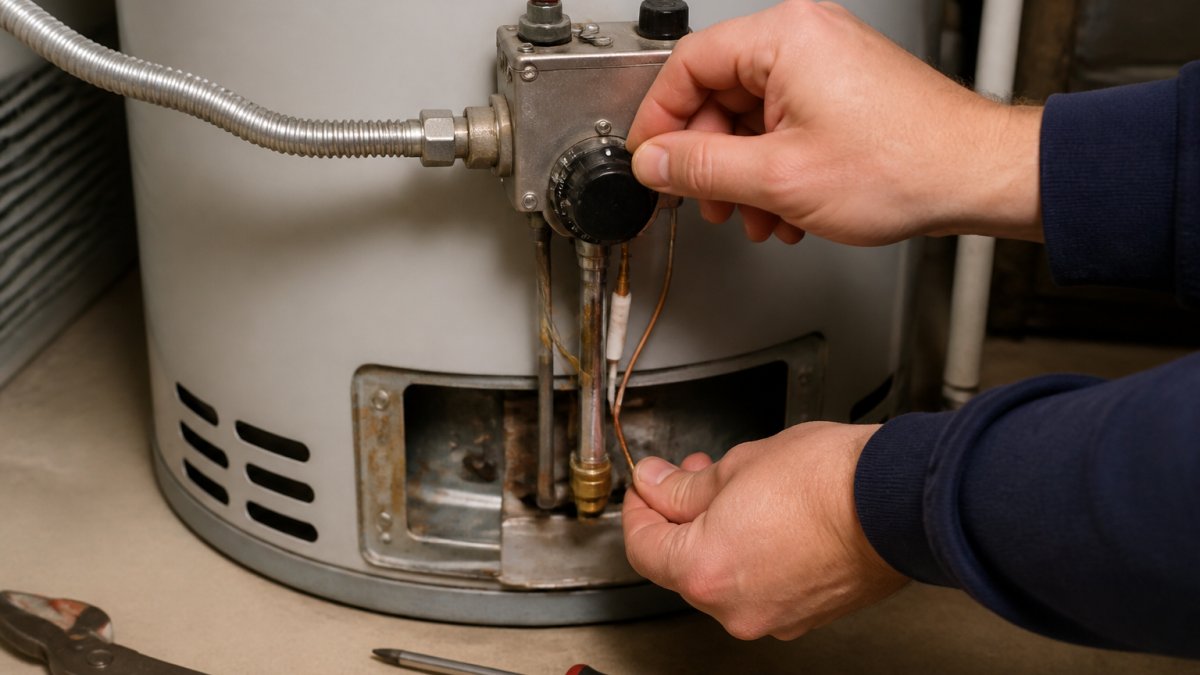
Find the gas control knob on the front of your water heater, usually with three positions: OFF, PILOT, and ON. Near it is the pilot assembly, a small group of tubes and components at the bottom of the burner section.
Look for the ignition button, typically red or black, next to the control knob, plus the small pilot tube and a spark electrode or igniter.
Step 3: Turn the gas control knob to OFF
Rotate the knob firmly to OFF and wait 30 seconds for remaining gas to clear from the pilot line.
Step 4: Wait and then turn to PILOT
Turn the knob to PILOT. You should hear a faint hiss as gas flows to the pilot assembly. If you smell a strong gas odor, wait longer and ventilate more before proceeding.
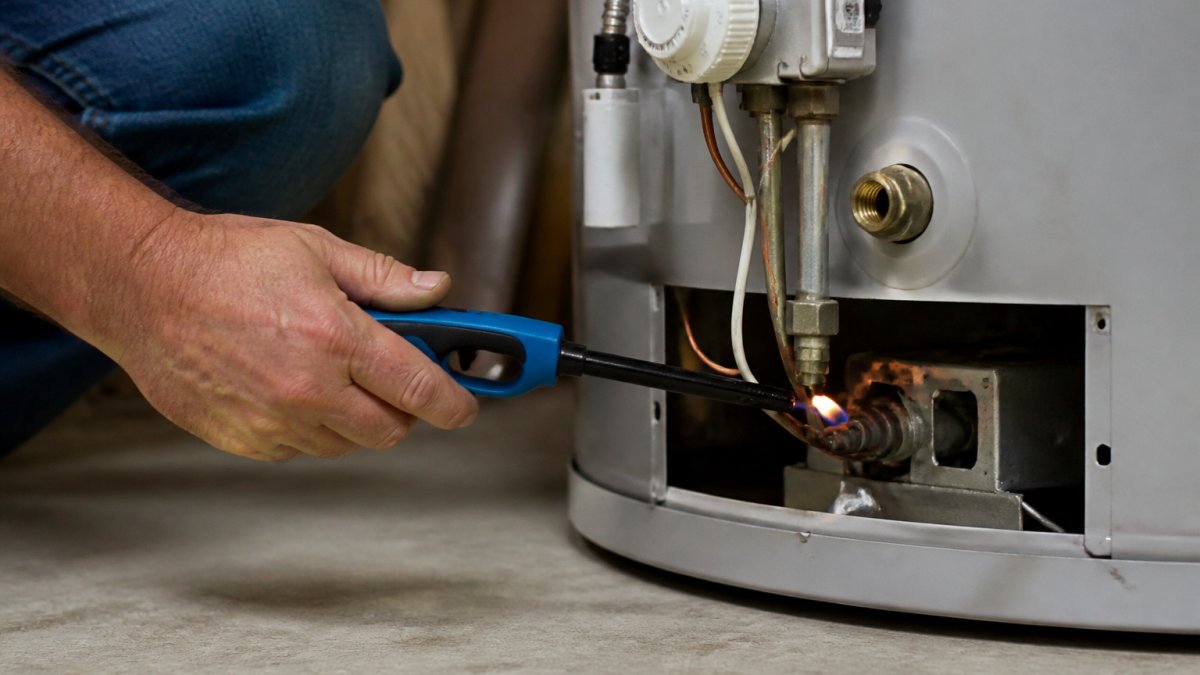
Step 5: Ignite the pilot flame
Press and hold the ignition button while looking into the viewing window near the pilot assembly (or directly at the pilot area if there's no window). A small spark or flame should appear.
Hold the button down for 10-15 seconds. With a lighter or long match instead, hold the flame near the pilot opening while gas flows.
Step 6: Hold and verify flame strength
Keep holding the ignition button 10-15 seconds after the flame appears so the thermocouple heats up and signals the gas valve that the pilot is burning safely.
Look at the flame. It should be:
- Bright blue (not yellow or orange)
- Steady and not flickering
- Positioned so it touches or nearly touches the thermocouple tip
If the flame looks weak or yellow, release the button and try again. If it goes out immediately after release, the thermocouple may be faulty.
Once the flame stays lit, turn the knob from PILOT to ON. The main burner should ignite within seconds with the roar of the larger flame.
Water Heater Thermocouple Troubleshooting and Cleaning
The thermocouple is often the culprit when a pilot light won't stay lit. Identifying and cleaning it can save money and restore hot water quickly.
How to identify a faulty thermocouple
If your pilot light goes out within seconds of releasing the ignition button, the thermocouple is likely the problem: it fails to send the "pilot is lit" signal, so the gas valve shuts off the supply.
Test it by relighting the pilot several times. If it consistently dies right after you stop holding the button, replacement is usually the only fix, but try cleaning it first, since that sometimes restores function.
How to clean the thermocouple
Turn off the gas at the control knob and wait 5 minutes.
Examine the tip.
A small brush or compressed air can also blow away loose debris. Don't use water or solvents unless the manufacturer approves them.
Reinsert the thermocouple, tighten the nut until snug (don't over-tighten), and relight the pilot to see whether it stays lit longer.
When to replace the thermocouple
If cleaning doesn't help and the pilot light still goes out within seconds, replace the thermocouple. This straightforward repair involves:
- Turning off the gas
- Loosening the nut that holds the thermocouple to the gas valve
- Removing the thermocouple from its clip or bracket
- Installing a new thermocouple (available at hardware stores or online)
- Tightening the connection and relighting the pilot
If you're uncomfortable doing the repair, a professional plumber can handle it quickly, England's Plumbing & Heating offers water heater repair and thermocouple replacement throughout Chester County.
Water Heater Pilot Light Safety: Gas Leaks and Carbon Monoxide
Working with gas appliances requires caution. Know the warning signs of gas leaks and carbon monoxide.
Gas leak indicators:
- Rotten-egg smell near the water heater or gas lines
- Hissing or whistling sounds from the gas valve or pilot assembly
- Visible cracks in the gas line or connections
- Bubbles in soapy water applied to gas connections
If you detect any of these signs, leave immediately. Don't light matches, use electrical switches, or create sparks.
Carbon monoxide warning signs:
- Headaches, dizziness, or nausea when near the water heater
- Unusual odors or soot around the appliance
- Condensation inside the water heater room
- A cracked or damaged heat exchanger (visible inside the unit)
Carbon monoxide is odorless and colorless (the CDC). Improper venting or internal damage can leak it into your home.
Never assume a pilot light problem is simple.
Water Heater Pilot Light Won't Stay Lit: Diagnosis and Fixes
When the pilot light goes out repeatedly despite relighting attempts, use this approach to narrow down the cause.
Pilot flame flickers or is weak
A weak or flickering pilot flame suggests low gas pressure or poor flame positioning.
Try cleaning the pilot orifice: turn off the gas, wait 5 minutes, and locate the small opening where the flame emerges.
If the flame is blue but very small, low gas pressure may be the cause. Check whether other gas appliances work normally; if they do, the issue is specific to the water heater's gas valve or pilot line.
Pilot orifice is blocked or dirty
To clean it, turn off the gas and wait 5 minutes.
Clear the opening with a fine needle, thin wire, or compressed air, working gently to avoid enlarging or damaging it.
Reassemble any removed components and relight the pilot. A cleaner orifice often restores a healthy, stable flame.
Burner assembly issues
The burner assembly is the metal structure holding the pilot and main burner components.
Inspect it for damage, corrosion, or loose parts. Cracks or significant corrosion mean replacement, a professional job, since it requires removing and reinstalling the entire burner section.
Minor misalignment can sometimes be fixed by gently repositioning the pilot tube or thermocouple, but these components are fragile and easily damaged by force.
When to Call a Professional Plumber
Know your limits. Some water heater repairs are safe and simple for homeowners. Others require professional expertise and tools.
Call a professional if:
- The pilot light goes out repeatedly despite successful relighting
- You smell gas or suspect a gas leak
- The pilot flame is weak or discolored and cleaning doesn't help
- The thermocouple replacement doesn't solve the problem
- You see visible damage to the water heater, burner assembly, or gas lines
- The water heater is more than 10-15 years old and has other issues
- You're uncomfortable working with gas appliances
A professional plumber can diagnose the problem quickly, repair it safely, and keep your water heater running correctly. England's Plumbing & Heating has served Chester County homeowners since 1989, handling water heater repairs and thermocouple replacement.
Preventing Your Pilot Light from Going Out Again
Once fixed, take steps to prevent a recurrence.
Maintenance tips:
- Have your water heater inspected annually by a professional
- Keep the area around your water heater clean and free of dust
- Ensure the water heater is properly vented and not exposed to excessive drafts
- Check the pilot flame color regularly, it should always be bright blue
- Listen for unusual sounds or hissing that might indicate a problem
- Replace your water heater's anode rod every 3-5 years to extend its life
Regular maintenance catches small problems before they become big ones, an inspection costs far less than emergency repairs or premature replacement.
If your water heater pilot light keeps going out despite troubleshooting, or you'd rather have a professional handle the diagnosis and repair, reach out to England's Plumbing & Heating.
A water heater pilot light that won't stay lit disrupts your comfort and hot water supply.
Frequently Asked Questions
What causes a water heater pilot light to go out?
The most common causes are a faulty thermocouple or flame sensor that stops detecting the pilot flame, a dirty or blocked pilot orifice restricting gas flow, weak flame alignment preventing proper contact with the thermocouple, or gas supply interruptions. Drafts from ventilation, damaged pilot tubes, or a malfunctioning gas valve can also extinguish the pilot light. A professional inspection identifies the exact cause.
How do I safely relight a water heater pilot light?
First, wait 5 minutes with the gas control knob in OFF position to allow gas to dissipate. Check for gas odors, if you smell gas, stop and call a professional. Locate your water heater's pilot assembly and control knob, turn it to PILOT, hold the ignition button while using a long lighter or match to ignite the pilot tube opening. Hold the knob in for 30-60 seconds while the thermocouple heats, then release. If the flame stays lit after releasing, turn the knob to ON. If it goes out immediately, stop and call a plumber.
Can a dirty thermocouple cause my pilot light to go out?
Yes. The thermocouple detects the pilot flame and signals the gas valve to stay open. If it's covered with dirt, grime, or carbon buildup, it cannot sense the flame properly, causing the gas valve to shut off and the pilot to go out. You can try cleaning it gently with fine sandpaper and a dry cloth, but if the pilot continues to go out after cleaning, the thermocouple likely needs replacement by a professional.
Is it safe to relight my water heater pilot light myself, or should I call a plumber?
Relighting the pilot is safe if you follow proper steps and detect no gas odor. However, if the pilot goes out repeatedly after relighting, if you smell gas, hear hissing near the unit, or feel unsure at any point, stop and call a professional. A plumber can diagnose whether the thermocouple, gas valve, or another component is faulty and make safe repairs. Attempting complex repairs without training risks gas leaks or improper ignition.