 listicle
7 Best Water Heaters for Residential Homes
Table of Contents
- Quick Comparison Table
- How We Evaluated These Water Heaters
- Tank vs. Tankless Water Heater: Which Type Fits Your Home
- Water Heater Sizing Guide: Matching Capacity to Household Demand
- Top Residential Water Heater Brands and Models
- Bradford White Tank Water Heaters: The Installer's Choice
- Rinnai RX180iN: Best Overall Tankless Option
- Rheem RTEX-13: Budget-Friendly Electric Tankless
- A. O. Smith: Reliable Tank and Tankless Models
- Stiebel Eltron: Premium Electric Tankless
- Noritz: Gas Tankless Performance
- Bosch Electric Mini-Tank: Space-Saving Solution
- Residential Water Heater Lifespan and Durability
- Water Heater Replacement Cost and Operating Expenses
- Energy Efficiency and Long-Term Savings
- Frequently Asked Questions
Last Updated: October 10, 2026
Quick Comparison Table
| Water Heater Type | Best For | Capacity Range | Energy Factor | Lifespan |
|---|---|---|---|---|
| Tank (Gas) | Most households | 40-80 gallons | 0.59-0.70 | 10-15 years |
| Tank (Electric) | Budget-conscious | 40-80 gallons | 0.90-0.95 | 10-15 years |
| Tankless (Gas) | High demand homes | On-demand | 0.80-0.85 | 15-20 years |
| Tankless (Electric) | Small spaces | On-demand | 0.95+ | 15-20 years |
| Mini-Tank | Point-of-use | 2.5-20 gallons | 0.95+ | 10-15 years |
How We Evaluated These Water Heaters
Choosing among the 7 best water heaters for residential homes means balancing upfront cost, long-term efficiency, and your household's hot-water demand. At England's Plumbing & Heating, we've worked with Chester County homeowners, installing and servicing tank and tankless systems. Our evaluation focused on real-world performance, reliability, and total cost of ownership.
We assessed each model on installation compatibility, energy efficiency, lifespan, maintenance, and fit for different household sizes and usage patterns.
Tank vs. Tankless Water Heater: Which Type Fits Your Home
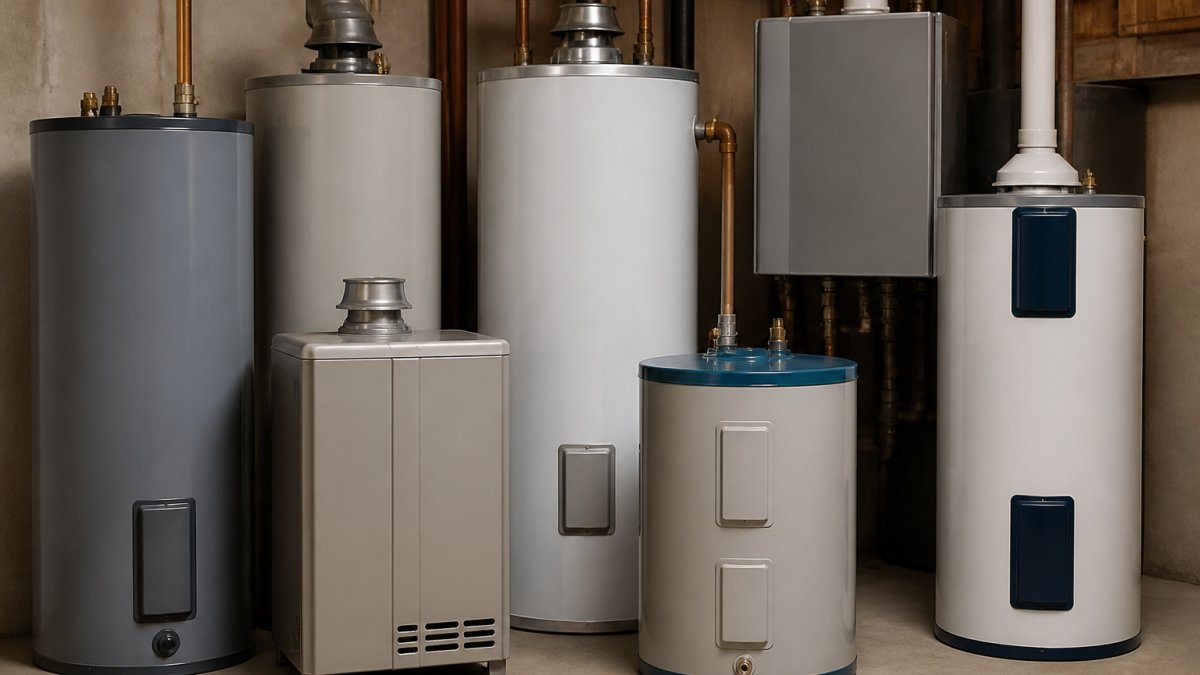
A tank water heater stores 40-80 gallons of heated water continuously; a tankless water heater heats water only when needed, eliminating standby losses. Tank models suit families with simultaneous hot-water needs and cost less upfront, but maintain heat 24/7 even when unused. Tankless systems excel in smaller households, take minimal space (about suitcase-sized), deliver endless hot water, and last longer, but cost more to install and require adequate gas or electrical capacity.
Water Heater Sizing Guide: Matching Capacity to Household Demand
The key metric is first-hour rating, how many gallons of hot water the unit delivers in the first 60 minutes. For tank models: a family of two needs 40 gallons; four needs 50-60 gallons; five or more needs 75-80 gallons.
For tankless systems, focus on flow rate (gallons per minute) and temperature rise. Most gas tankless units handle a 35-degree rise; electric models often cap at smaller flow rates.
Sizing worksheet: Count simultaneous hot-water uses during peak hours (shower: 2.5 GPM, washing machine: 1.5 GPM, dishwasher: 1.5 GPM). Add them for peak demand. For tank: choose first-hour rating above peak demand. For tankless: ensure flow rate and temperature rise meet peak demand.
Top Residential Water Heater Brands and Models
Bradford White Tank Water Heaters: The Installer's Choice
Bradford White builds tank water heaters recognized for reliability and longevity, with gas and electric models from 40-100 gallons. They offer competitive warranties, strong availability through distributors, and commercial-grade components that extend service intervals.
Pros:
- Proven reliability in the field
- Wide availability through plumbing professionals
- Strong warranty coverage
- Durable construction built for years of use
Cons:
- Higher upfront cost than budget brands
- Not the most energy-efficient option (gas models typically 0.60-0.65 energy factor)
- Requires professional installation for best results
Best for: Homeowners prioritizing durability and reliability over lowest initial cost.
Rinnai RX180iN: Best Overall Tankless Option
The Rinnai RX180iN is the best overall tankless water heater option, delivering consistent performance and preventing the "cold water sandwich" problem. It heats on-demand with no standby losses. Installation requires a dedicated gas line and venting, but efficiency gains justify the investment for families with moderate to high hot-water demand.
Pros:
- Consistent water temperature without fluctuation
- Compact size (ideal for apartments, small homes, or tight utility spaces)
- 15-20 year lifespan (longer than tank models)
- Energy factor around 0.84 (significantly more efficient than tank gas models)
Cons:
- Higher upfront cost than tank or budget tankless models
- Requires adequate gas supply and venting infrastructure
- Installation complexity may require professional help
Best for: Families wanting endless hot water with minimal space requirements and lower long-term operating costs.
Rheem RTEX-13: Budget-Friendly Electric Tankless
The Rheem RTEX-13 is the value option in tankless, delivering on-demand hot water without high gas installation costs. It works best for point-of-use applications (single bathroom, kitchen sink, small apartment) rather than whole-home demand. Electric tankless units have flow-rate limits; simultaneous showers and dishwashing will exceed capacity.
Pros:
- Lower installation cost than gas tankless
- Compact and wall-mounted
- Works in homes without gas lines
- Energy factor around 0.95+ (highly efficient)
Cons:
- Limited flow rate (typically 1.5-2 GPM)
- Cannot handle simultaneous high-demand uses
- Requires adequate electrical capacity (may need service upgrade)
Best for: Single-person households, apartments, or as a supplemental point-of-use heater in a secondary bathroom.
A. O. Smith: Reliable Tank and Tankless Models
A. O. Smith manufactures both tank and tankless models across multiple price points, competing with Bradford White on reliability. Strong customer support and parts availability matter during repairs.
Pros:
- Multiple product lines (tank and tankless)
- Good availability and parts support
- Competitive pricing across product tiers
- Solid warranty options
Cons:
- Less specialized than brands focusing solely on tankless or tank
- Energy efficiency varies significantly by model tier
- Some lower-cost models don't match premium-brand longevity
Best for: Homeowners wanting a established brand with multiple options and good service support.
Stiebel Eltron: Premium Electric Tankless
Stiebel Eltron specializes in premium electric tankless heaters with advanced temperature control, smart controls, and energy factors above 0.98+. Popular in solar-powered homes and regions with abundant, affordable electricity.
Pros:
- Superior temperature control and consistency
- Smart features and remote monitoring available
- Excellent for solar-powered homes
- Very high energy factor (0.98+)
Cons:
- Premium pricing compared to other electric tankless brands
- Still limited by electrical service capacity
- Overkill for low-demand households
Best for: Eco-conscious homeowners, solar-powered homes, or anyone wanting the best electric tankless performance regardless of cost.
Noritz: Gas Tankless Performance
Noritz manufactures gas tankless heaters known for reliable ignition and consistent performance across temperature variations, with models spanning budget to premium tiers. The brand emphasizes simplicity and durability with fewer electronic components.
Pros:
- Reliable ignition and heating consistency
- Multiple product tiers available
- Strong performance in cold climates
- Good availability through plumbing professionals
Cons:
- Less advanced temperature control than premium competitors
- Fewer smart-home integration options
- Requires professional installation and venting
Best for: Budget-conscious homeowners wanting gas tankless performance without premium pricing.
Bosch Electric Mini-Tank: Space-Saving Solution
The Bosch mini-tank stores 2.5-20 gallons and mounts under sinks or in tight spaces, ideal for supplementing the main heater or providing instant hot water to distant fixtures without long pipe delays.
Pros:
- Compact and space-efficient
- Easy installation (often DIY-friendly)
- Low upfront cost
- Reduces wait time for hot water at distant fixtures
Cons:
- Limited capacity (can't support high-demand uses)
- Standby heat loss (though minimal due to small volume)
- Best used as supplemental, not primary heater
Best for: Homeowners adding hot water to a distant bathroom, guest house, or as a secondary system.
Residential Water Heater Lifespan and Durability
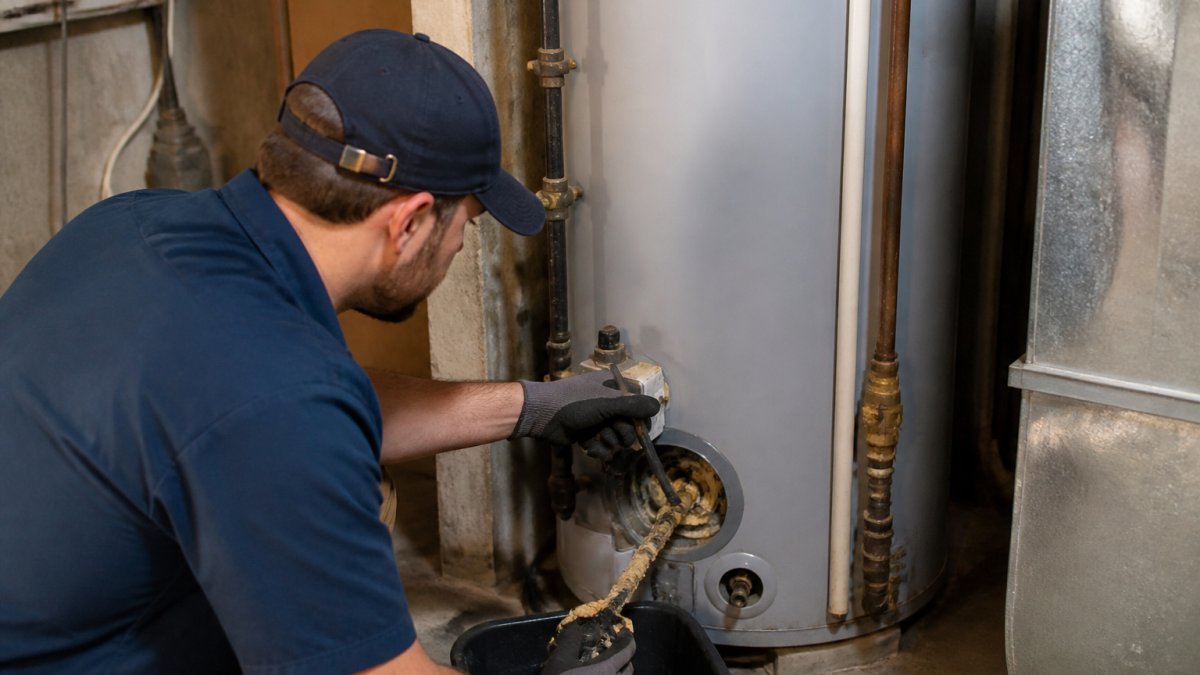
Tank water heaters typically last 10-15 years before internal corrosion or sediment buildup forces replacement. The exact lifespan depends on water quality, maintenance frequency, and usage patterns. Hard water accelerates deterioration; regular flushing extends life.
Tankless systems last 15-20 years because they don't store water continuously. No standing water means no corrosion of the storage tank itself. However, mineral buildup inside the heat exchanger can shorten life if you live in a hard-water area. Annual descaling prevents this and keeps efficiency high.
Real-world durability also depends on the brand and model tier. Premium models (Bradford White, high-end Rinnai units) often reach the upper end of their range. Budget models may fail earlier due to lower-grade components. This is where professional guidance matters. England's Plumbing & Heating can recommend models known for longevity in your specific home conditions.
Water Heater Replacement Cost and Operating Expenses
Upfront replacement cost varies dramatically by type. A tank water heater costs less to purchase but more to operate. A tankless system costs more upfront but delivers lower operating expenses over time.
For operating costs, the key is efficiency. Gas tank models typically achieve an energy factor of 0.60-0.65, meaning 60-65% of the fuel energy goes to heating water. Gas tankless units hit 0.80-0.85. Electric tank models reach 0.90-0.95, and electric tankless approaches 0.98+.
Your actual operating cost depends on your local utility rates, hot-water demand, and climate. A family in a cold climate uses more energy to heat incoming water than a family in a warm climate.
The lifetime cost calculation, purchase price plus 15 years of operating expenses, often favors tankless systems despite higher upfront investment. However, if you're selling your home within 5 years, the payback period may not justify the initial expense.
Energy Efficiency and Long-Term Savings
Energy efficiency directly impacts your monthly utility bill and total lifetime cost.
Tank models lose energy continuously through the tank walls, even when nobody's using hot water. This standby loss is why tankless systems cost less to operate.
Choosing an ENERGY STAR certified model can reduce water heating costs by 10-15% compared to standard models. For a household spending several hundred dollars annually on water heating, that's meaningful savings.
The payback period for upgrading to a more efficient system depends on your current system's age and efficiency.
England's Plumbing & Heating can help you calculate the true lifetime cost of different options based on your household's actual hot-water usage, local utility rates, and home compatibility.
Frequently Asked Questions
What is the most reliable residential water heater brand?
Bradford White consistently ranks as a top choice among installers for tank water heaters, with strong durability and widespread availability. For tankless models, Rinnai is recognized as the best overall option. Reliability depends on your heater type and fuel source. Tank models from Bradford White, A. O. Smith, and Rheem have proven track records. Tankless options from Rinnai and Noritz perform well in residential settings. The best choice matches your household's hot-water demand and fuel availability.
How long does a residential water heater typically last?
Tank water heaters usually last 8 to 12 years with proper maintenance. Tankless models often reach 15 to 20 years because they have fewer moving parts and don't store water. Lifespan depends on water quality, maintenance frequency, and local mineral content. Hard water can shorten the life of both types. Annual flushing and inspection extend performance. If your water heater is approaching 10 years old and showing signs of rust or reduced hot-water output, replacement may be worth considering even if it still works.
Are tankless water heaters better than traditional tank water heaters?
Tankless water heaters offer endless hot water and take up less space, making them ideal for homes with high demand or limited utility room space. Tank water heaters cost less upfront and require simpler installation. Tankless models have higher purchase and installation costs but lower operating costs over time. Tank heaters are more affordable initially but consume energy continuously to maintain water temperature. Your choice depends on household size, hot-water usage patterns, available space, and budget. A sizing guide helps determine which type suits your needs.
What size water heater does my household need?
Household size and hot-water demand determine the right capacity. A family of 1-2 people typically needs 30-40 gallons for tank heaters. Families of 3-4 usually require 40-50 gallons. Larger households may need 50-75 gallons. For tankless models, flow rate (gallons per minute) matters more than capacity. Calculate your first-hour rating by adding simultaneous hot-water uses: showers, laundry, and dishwashing. A professional can assess your home's demand and recommend the appropriate model. Oversizing wastes energy; undersizing causes cold-water surprises during peak use.
How much does it cost to replace a residential water heater?
Water heater replacement cost depends on the type, fuel source, and installation complexity. Tank water heaters generally cost less to purchase than tankless models. Installation expenses vary based on your home's plumbing and venting setup. Gas line modifications, electrical upgrades, or condensate drainage installation can increase costs. Contact England's Plumbing & Heating for a detailed quote tailored to your specific home and needs. Professional installation ensures safety, proper sizing, and warranty coverage. Comparing purchase price alone overlooks long-term operating costs and efficiency savings.